

CONNECT WITH US

Kaynes Semicon eyes photonics, quantum security and neuromorphic chips in India tech push

, DIGITIMES Asia, Bangalore
0

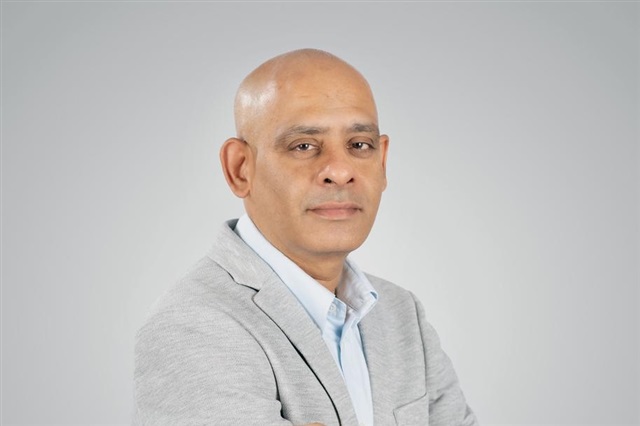
Raghu Panicker, CEO, Kaynes Semicon. Credit: Kaynes.

Kaynes Semicon is looking at silicon photonics (SiPh) and co-packaged optics (CPO), post-quantum security, and neuromorphic computing as potential areas for expansion as India prepares the next phase of its semiconductor support program, CEO Raghu Panicker said.

The company expects to apply under India Semiconductor Mission 2.0 in multiple areas, Panicker said in an interview with DIGITIMES. He argues that emerging technologies could offer India an opening in parts of the semiconductor industry where global leadership is less entrenched than in conventional chip manufacturing.

"India entered late," Panicker said, referring to the development of the traditional semiconductor industry. "The question is not about time. The question is about the next race."

Looking beyond conventional chips

Panicker's strategy centers on three technology areas: SiPh and CPO, post-quantum semiconductor security, and neuromorphic computing.

The technologies address different constraints facing future computing systems, but Panicker sees their development being increasingly shaped by AI infrastructure, where power consumption and the movement of large amounts of data have become major challenges.

Kaynes Semicon describes silicon photonics and CPO as a way to increase data throughput while reducing power requirements in AI systems. It positions post-quantum technology around hardware security and future encryption, while neuromorphic computing aims to process information more efficiently by drawing on principles used by the human brain.

Panicker said the relative immaturity of these technologies could give new entrants more room to develop expertise.

"In these three areas, everybody is becoming a student worldwide," he said. "So we can catch up."

His argument is that India does not necessarily have to reproduce every stage followed by countries that built semiconductor industries decades earlier. He compared the opportunity with telecommunications, where India moved quickly into newer mobile technologies without deploying older infrastructure on the same scale as early markets.

Test could provide an entry point

For Kaynes Semicon, that push does not begin with immediately manufacturing the most complex chips.

Panicker sees semiconductor testing as a practical starting point because India already has software and embedded programming skills that can be applied to developing test programs.

He said Kaynes Semicon has begun test-program development and chip testing work for MixxTech and is setting up test capability for post-quantum semiconductor technology.

"Test becomes very easy before assembly and packaging," Panicker said.

Kaynes Semicon places testing alongside its existing capabilities in areas including QFN, FC-BGA, power modules, system-in-package and reliability. It identifies SiPh, CPO, and other advanced packaging technologies among the areas the company wants to build toward.

The company has also invested in MixxTech and is using partnerships with technology companies as part of its effort to develop expertise in newer semiconductor segments, Panicker said.

Neuromorphic computing enters the roadmap

Neuromorphic computing is a less developed part of Kaynes Semicon's plans but features prominently in Panicker's longer-term view.

The technology seeks to reproduce some characteristics of neural processing in hardware, allowing systems to process information only when required and potentially reduce energy use.

Kaynes Semicon highlights possible applications in edge AI, sensors, autonomous systems, healthcare and industrial computing. Panicker said the company was "actively working" in the area, though he did not provide details of any specific plans.

He sees improving energy efficiency as particularly important as AI infrastructure expands. Kaynes Semicon argues that the challenge facing future systems will increasingly be power rather than simply the availability of computing resources.

Building specialist talent

Access to experienced engineers remains a hurdle, particularly in areas such as CPO.

Panicker said Kaynes SemiCon was looking to recruit senior talent from Singapore with experience in the technology and had identified optics specialists, including PhD candidates from IIT Hyderabad.

His approach is to bring in a small number of experienced engineers and build larger teams of younger engineers around them.

"If you have two or three senior executives and seven or eight juniors, you can start working on the technology," he said.

Panicker said he has discussed Kaynes Semicon's technology roadmap with government officials as preparations for ISM 2.0 continue. For him, the opportunity rests on entering emerging areas while the technologies are still developing.

"The race is not about starting first anymore," he said. "It's about learning fastest."

Article edited by Jack Wu
