Chinese AI company Z.ai, also known as Zhipu AI, is escalating its challenge to US leaders Anthropic and OpenAI with the release of its open-weight GLM-5.2 model and a new AI coding assistant, underscoring China's growing competitiveness in frontier AI.
China has imposed new export control measures on 40 Japanese entities, placing 20 organizations on its export control list and another 20 on a separate watchlist, citing national security concerns and the need to strengthen oversight of exports of dual-use items.
Nvidia is deepening its role in the AI infrastructure market by offering financial guarantees to emerging GPU cloud providers in exchange for a share of their future cloud revenue, according to The Information. The initiative is designed to help smaller cloud operators secure financing for costly AI chips while reducing Nvidia's dependence on hyperscale customers.
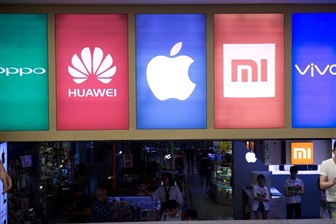
A public spat between Xiaomi and Huawei over large models has exposed growing anxiety in China's phone AI market this year, while Apple, Google, and Samsung Electronics pursue different routes to seize the AI agent entry point.
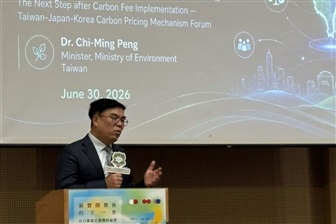
Taiwan plans to launch an emissions trading system (ETS) in 2028 as the next phase of its carbon pricing framework — a cap-and-trade market where companies buy and sell permits to emit greenhouse gases. However, environmental researchers and academics caution that the experiences of Japan, South Korea, and the European Union (EU) show that emissions trading markets take years to mature and operate effectively. With Taiwan's own carbon fee only recently taking effect, they argue the government should prioritize policy continuity and give businesses time to internalize carbon costs and implement decarbonization strategies before introducing a cap-and-trade regime.
Taiwan's carbon fee system has begun collecting payments, with the first batch covering 240 high-emitting companies across 461 factories and generating NT$4.97 billion (US$156.07 million) in initial revenue. Taiwan also plans to roll out an emissions trading system (ETS) in 2028, initially targeting 20 major emitters in the steel, cement, and semiconductor sectors.
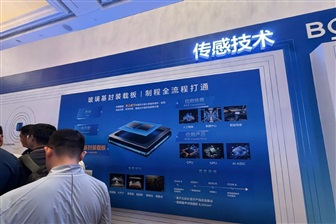
BOE, China's leading display panel maker, is accelerating its move into next-generation packaging technologies for the AI era. The company recently disclosed that it has formed a dedicated project team for Micro LED optical interconnect systems and glass substrate-based co-packaged optics (CPO), working with ecosystem partners on early-stage technology research to advance optical interconnect and glass substrate CPO development.
Chinese polarizer film suppliers are seeking higher prices from panel makers after raw-material and logistics costs rose in the second quarter, exposing a weak point in China's display-material supply chain.
The rapid expansion of AI applications is redefining what device makers need from display technology.