
CONNECT WITH US
Wednesday 20 May 2026
As Hormuz crisis hits South Korea, Arctic route gains strategic weight
South Korea depends on the Middle East for 70% of its crude oil, and relies heavily on oil refining, petrochemicals, and power generation in its industrial sector. As a result, Iran's blockade of the Strait of Hormuz has led to wide-ranging pressures on South Korea's economic security
LATEST STORIES
Tuesday 21 April 2026
Middle East transshipment and supply chain shifts double SE Asia freight rates
Given the US-China trade war, many Taiwanese businesses and Chinese manufacturers relocated production lines to Southeast Asia, boosting shipment demand from the region. Now, escalating conflict in the Middle East has driven up fuel costs, while international cargo flights are being diverted or crowded into Southeast Asian routes. This phenomenon is causing air freight rates to double
Thursday 16 April 2026
Gulf states turn to alternative air defenses as US delivery delays persist

Middle Eastern Gulf states are seeking alternative air defense systems as delays in US weapons deliveries and rising regional tensions strain existing stockpiles, according to The Wall Street Journal. Saudi Arabia, Qatar, and the United Arab Emirates (UAE) are expanding procurement beyond traditional US suppliers, turning to South Korea, Ukraine, and the UK to secure faster access to missile defense capabilities

Wednesday 15 April 2026
South Korea's 97.5% reliance on Israeli bromine puts chip supply chain at risk
Rising geopolitical tensions in the Middle East are stoking concerns over semiconductor materials supply chains, as key inputs such as helium and bromine face potential disruptions amid ongoing conflict in the region
Friday 10 April 2026
Samsung and SK Hynix reportedly secure long-term helium contracts with US firms

Industry sources report that the recent supply concerns over semiconductor-grade helium triggered by the US-Iran conflict have eased, as Samsung Electronics and SK Hynix secured long-term contracts ensuring stable access to the critical gas

Sunday 5 April 2026
Samsung and SK Hynix to reportedly bolster helium supply chain as Iran conflict risks rise
Facing the risk of a prolonged Iran conflict, Samsung Electronics and SK Hynix have reportedly begun strengthening their helium supply chain management for semiconductor manufacturing. Both companies plan to diversify suppliers beyond the Middle East and adjust import ratios by country to maintain stable supply chains
Monday 30 March 2026
Chipmakers race to secure helium as tensions disrupt supply, prices reportedly up 50%

Semiconductor manufacturers are racing to secure critical materials as Middle East tensions disrupt supply chains, with the risk of production disruption outweighing rising costs

Monday 30 March 2026
SMIC accused of supplying chipmaking tools to Iran military, US officials say
SMIC, China's largest chipmaker, is accused by senior Trump administration officials of supplying chipmaking equipment to Iran's military, escalating tensions linked to the ongoing US-Israel conflict with Tehran
Tuesday 24 March 2026
Commentary: Trump's Middle East AI data center push under threat from Iran conflict
In May 2025, US President Donald Trump led a major investment delegation to the Middle East targeting key allies Saudi Arabia, Qatar, and the United Arab Emirates (UAE). The delegation included Silicon Valley leaders from OpenAI, Nvidia, Oracle, Cisco, SoftBank, Microsoft, Amazon, and Google. This trip underscored the region's strategic focus on AI-driven economic growth through data centers
Friday 20 March 2026
Malaysia chipmakers monitor helium supply risks as Middle East tensions weigh Qatar output
Malaysia's semiconductor industry is closely monitoring helium supply risks amid escalating tensions in the Middle East, though companies have not yet reported operational disruptions
Thursday 19 March 2026
China curbs, Middle East tensions drive surge in chip material risks from gallium to helium

Global semiconductor supply chains are facing rising pressure as Middle East geopolitical tensions and China's tightening export controls on strategic minerals converge, pushing up prices for key materials and raising uncertainty over critical industrial gas supplies, according to Chosun Biz and Reuters

Tuesday 17 March 2026
As Middle East conflict further raises oil prices, air freight costs hit semiconductor supply chain
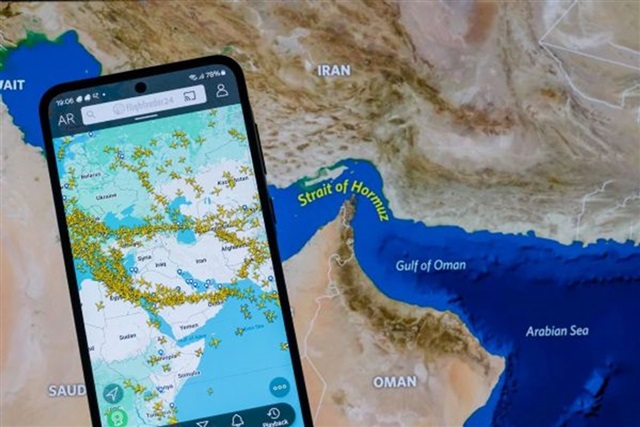
As the Middle East conflict enters its third week, global energy supply and sea-air logistics networks are facing major disruptions. Because semiconductor and electronics supply chains rely heavily on air transport to meet strict delivery timelines, freight forwarders say the surge in oil prices triggered by the US-Iran conflict is pushing air freight costs sharply higher. At the same time, the heavy cargo volume normally handled by Dubai International Airport is being forced to shift to other regions
Friday 13 March 2026
War engulfs the Gulf: worst aviation crisis since Covid
The war in the Middle East has triggered the most severe disruption to Gulf aviation hubs since the Covid-19 pandemic, forcing airlines to suspend flights and reroute global travel corridors amid missile and drone attacks across the region, according to an Aviation Week podcast and international media reports
Friday 13 March 2026
Chip material prices double, compound semiconductor supply chain on alert

The Middle East conflict is raising concerns over global energy supply and driving sharp increases in semiconductor material costs. Compound semiconductor manufacturers say prices for high-temperature metals, including tungsten, tantalum, and molybdenum, have doubled, while gallium prices have also surged. At the same time, shortages of indium phosphide (InP) substrates persist due to supply-demand imbalances and geopolitical disruptions such as export controls

Thursday 12 March 2026
Compound semiconductors emerge as critical components in modern air defense radar systems, as seen during Iran conflict
Iran's air defense shortcomings amid persistent US and Israeli strikes underscore the growing importance of high-power radar components and the supply chains that provide them. South Korea's Sky Bow 2 in the United Arab Emirates (UAE) has reportedly intercepted multiple Iranian missiles at an over 90% success rate, highlighting capability disparities
Tuesday 10 March 2026
Iran conflict threatens Gulf data center boom as attacks mount
The widening conflict involving Iran is beginning to ripple through the global AI industry, raising new questions about the security of Gulf-backed data center projects and the resilience of regional cloud infrastructure. Gulf states are expected to invest more than US$300 billion in data centers, chips, and other AI infrastructure, but recent drone strikes on Amazon Web Services (AWS) facilities have highlighted the vulnerability of these projects, according to reports by The Information and The Guardian