CONNECT WITH US
Jan 14, 07:07
FCC approves major expansion of SpaceX's Starlink satellite network
The US Federal Communications Commission (FCC) has formally authorized SpaceX to deploy an additional 7,500 second-generation Starlink satellites into low-Earth orbit, bringing the company's total approved next-generation constellation to 15,000 spacecraft.
According to data from the International Telecommunication Union (ITU), China filed in December 2025 to secure frequency and orbital resources for more than 200,000 low-earth orbit (LEO) satellites spread across approximately 14 constellations. This filing represents an unprecedented move in the global competition for LEO satellite networks.
US President Donald Trump has publicly called for raising the 2027 US defense budget to US$1.5 trillion, a sharp increase of more than 50% from the current US$901 billion. In a social media post, Trump highlighted that this funding increase is necessary to build a "Dream Military" in "these very troubled and dangerous times."
On January 6, 2026, China's Ministry of Commerce (MOFCOM) announced that, to safeguard national security and interests, it would strengthen export controls on dual-use items to Japan. It also initiated an anti-dumping investigation on specialty gases exported to Japan's chip industry. This goes far beyond its previous rare earth controls, with vague definitions for military and civilian applications.
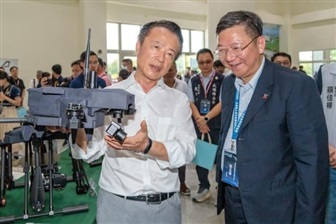
Taiwan and Europe will continue to strengthen collaboration in advanced fields such as drones, robotics, and low Earth orbit (LEO) satellites in 2026, according to Chao-chung Kuo, director general of the Department of Industrial Technology (DOIT) at the Ministry of Economic Affairs (MOEA). Kuo made the announcement at a press conference hosted by the DOIT on January 7, which showcased the results of cross-national collaborative R&D efforts with Europe. These include Innolux's entry into the market for high-voltage EV charging, and MediaTek's collaboration with Eutelsat OneWeb. In addition, the number of countries participating in the Eureka Network's Globalstars program is expected to increase to seven in 2026.

Japan has formally committed to building its own low-Earth-orbit (LEO) satellite constellation, marking a significant shift in how the country approaches communications infrastructure and national security.

As commercial space activity accelerates worldwide, Alex Haro, the chief executive of Hubble, describes the industry as undergoing a structural shift—one that is transforming satellites from experimental hardware into global digital infrastructure.

Tex Year Industries has just about completed its layout in specialty adhesives, materials, and chemicals for the AI and optoelectronics industries. It expects to see a significant increase in shipments and double-digit growth in 2026. This year, Tex Year will focus on five areas: AI cloud data centers, EVs, drones, smartphones, and Mini LED displays.
The US Federal Communications Commission (FCC) has updated its Covered List to exempt certain uncrewed aircraft systems (UAS) and critical drone components from import and authorization restrictions, but the revised exemptions do not include products from Chinese drone maker DJI, reinforcing regulatory pressure on the company's US business.

As the transformation of the auto industry comes into sharper focus, CES in Las Vegas has quietly evolved from a technology showcase into a bellwether for the global car business. In recent years, CES was often jokingly described as a "world-class auto show," dominated by demonstrations of the industry's shift from internal combustion engines to electric drivetrains. However, starting in 2025, the frenzy of brand and component competition began to cool. By CES 2026, the center of gravity had unmistakably shifted.

Transcom is targeting a return to growth in 2026 as defense procurement picks up and demand rises for counter-drone systems and air-defense infrastructure, following a steep revenue decline last year tied to delayed military certifications and shipments.

At least one of the US Air Force's most secretive drones, the RQ-170 Sentinel, may have supported the US operation on January 3 that saw the capture of Venezuelan President Nicolas Maduro and his wife, according to foreign media reports and analysis by defense observers.