As artificial intelligence becomes deeply integrated into urban governance and public services, Chunghwa Telecom (CHT), leveraging its extensive experience in smart city development, continues to empower local governments in advancing smart governance across key domains, including transportation, public safety, healthcare, and industrial transformation. Positioned at the forefront of governmental digital transformation, CHT has gained unparalleled firsthand insight into the practical challenges local authorities face when adopting AI.
Tackling Urban Governance Challenges Across Diverse Regions
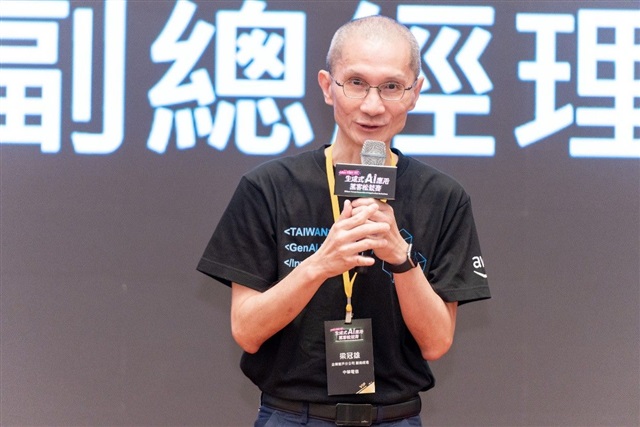
K.H. Liang, Vice President of Chunghwa Telecom's Enterprise Business Group, noted that urban governance priorities vary significantly from city to city. "Metropolitan areas tend to prioritize smart transportation, retail, and commercial development," Liang observed, "while non-metropolitan and rural areas place greater emphasis on telemedicine, industrial upgrading, and smart disaster prevention and response."
As a challenge sponsor in the "Taiwan Generative AI Applications Hackathon" - guided by the Administration for Digital Industries (ADI) and the Ministry of Digital Affairs (MODA), organized by DIGITIMES, and with technical support from Amazon Web Services (AWS) - CHT presented "Smart City" as its core challenge theme. The goal was to immerse young, talented teams in real-world governance scenarios and explore how generative AI could be harnessed to develop innovative solutions with strong potential for practical implementation.
In promoting smart cities and AI applications, "data acquisition, cross-agency integration, and computing resource allocation" are often the three core challenges faced by local governments. Taking smart transportation as an example, Liang said that intersection video surveillance data can not only be used for law enforcement and traffic prediction and guidance, but also extended to disaster prevention scenarios such as flood monitoring and interpretation; all of this requires the support of sufficient AI computing power and development platform.
To address these needs, CHT is drawing on its formidable in-house R&D capabilities while continuing to engage young talent through hackathons, bringing fresh perspectives to both problem definition and system architecture, thereby helping to innovate existing governance models.
Lowering Cloud Entry Barriers to Validate Innovative Prototypes
Liang also noted the pivotal role of cloud infrastructure. "AWS provided a comprehensive cloud development environment and technical resources for the challenge, enabling participating teams to rapidly access AI models and complete system integration within a tight timeframe," he said. "For complex smart city challenges involving diverse data sources, cloud resources significantly lower the barrier to entry, allowing teams to quickly transform innovative ideas into validated service prototypes."
In the "Smart City" challenge, the "Inspiration Mushroom" team earned special recognition for its solution. The team adopted a "dual-core architecture" that decouples factchecking from language generation, a design that significantly mitigates the risk of AI hallucination. Their solution also incorporated a human-in-the-loop (HITL) mechanism, ensuring human oversight and the flexibility to review and adjust AI-generated policy recommendations.
The solution further integrated CHT's extensive nationwide telecommunications mobility data with its edge computing capabilities. For instance, the system can analyze the proportion of international visitors at an event and extend its service to provide real-time multilingual guidance. This project not only demonstrated strong potential for practical deployment but also provided CHT with invaluable insights for designing robust safeguards and HITL mechanisms in future AI models.
Synergizing Cloud-Edge Infrastructure to Cultivate Future AI Talent
Looking ahead, Liang sees immense potential for AI-powered applications in traffic management, situational awareness platforms, and telecommunications big data analytics. "During major events, for example, anonymized base station signals can provide insights into crowd origins, dwell time, and evacuation patterns, helping authorities more accurately assess traffic management needs and event effectiveness," he stated.
Moving forward, CHT will continue to combine its core strengths in networking, cloud services, and edge computing with the rich technological resources of AWS. This synergy will provide a powerful environment for AI model development and data-driven applications. For industries with stringent data-sensitivity and regulatory requirements—such as healthcare, finance, law or high technology - a hybrid cloud architecture offers the ideal balance of application flexibility and robust data governance.
Under this model, AWS can provide cloud-native models and computing resources, while CHT contributes its resilient fixed-line and mobile networks, powerful edge computing capabilities, extensive smart city deployment experience, and localized consulting expertise. This allows for the flexible deployment of data and resources across cloud and on-premises environments, enabling seamless smart city solutions.
CHT has a long-standing commitment to engage with students and startups through initiatives like the "Smart Innovation Application Competition" and the "5G Accelerator." Liang emphasized that future initiatives will focus even more closely on the practical challenges faced by governments and enterprises. "By doing so, we enable participating teams to better address real-world market needs and increase the likelihood of their innovative solutions moving from prototype to production," he concluded. "By continuing to deepen industry-academia collaboration, CHT is dedicated to strengthening Taiwan's leadership in digital innovation and AI talent development."