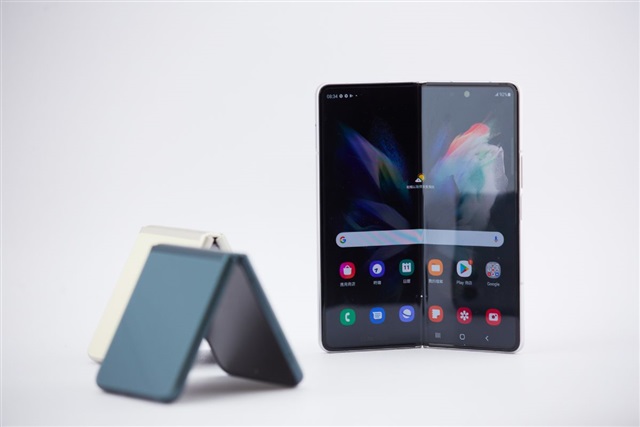
Samsung Electronics has unveiled its first tri-fold smartphone, the Galaxy Z TriFold, which will go on sale in South Korea starting December 12, 2025. The company plans to expand availability to Taiwan, the US, China, and Singapore by mid to late December.
Channel partners note that when Samsung introduced its initial Galaxy Z Fold, the product's primary mission was to showcase technological prowess and strengthen brand value rather than achieve immediate mass-market success. They expect a similar marketing strategy for the Galaxy Z TriFold. However, nearly seven years into the foldable phone era, key factors such as device performance, durability, pricing, reputation, and killer applications remain critical to expanding overall foldable smartphone adoption beyond just increasing fold counts.
Strong feature set breaks flagship conventions
The Galaxy Z TriFold features an inward folding design on both sides, revealing a 10-inch internal display when fully opened. It is powered by Qualcomm's Snapdragon 8 Elite for Galaxy chipset and supports 45W fast charging. Market attention also centers on its 200MP camera module and a triple-battery setup totaling 5,600mAh capacity.
According to industry insiders, while foldables are positioned as premium flagships, past models often compromised on camera resolution and battery size due to thickness and weight constraints aimed at achieving slimmer designs.
This new model appears to break those conventions by matching current flagship camera standards with its 200MP sensor and boosting battery capacity through a three-cell configuration, enhancing its appeal as a tri-fold device.
Pricing and usability challenges persist
Despite the Galaxy Z TriFold's strong feature set, scaling sales volume remains challenging. Although Samsung has not officially disclosed pricing, external estimates place it between US$2,500 and US$3,000. Such a steep price point is expected to attract mainly tech enthusiasts and affluent consumers, limiting wider adoption.
From a usability perspective, foldables offer large-screen advantages, and improvements have been made in screen durability, hinge reliability, and panel flatness. Yet challenges persist in extending the lifespan of the inner screen's protective film, ensuring consistent app experiences across folded and unfolded modes, and developing compelling "killer" apps that justify choosing foldables over traditional smartphones. These factors continue to be pivotal in determining whether foldable phone shipments can grow substantially.
Market momentum builds toward 2026
Beyond the buzz generated by the Galaxy Z TriFold, foldable smartphone sales have shown solid growth recently. According to Counterpoint, driven by Samsung's Galaxy Z7 series, global foldable phone shipments in the third quarter of 2025 rose 14% year-over-year, hitting a quarterly record high. Foldables now account for nearly 2.5% of total smartphone shipments.
Looking ahead to 2026, increased new product launches from various brands—including Apple's anticipated first foldable debuting around the third quarter—are expected to further boost foldable sales. This growth will benefit not only handset makers but also suppliers of hinges, memory, displays, and camera modules.
Article edited by Jerry Chen