


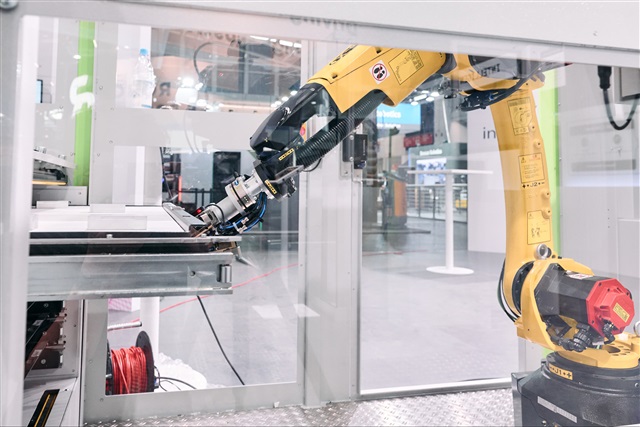
Google has announced that robotics software company Intrinsic will join its operations as a distinct unit within the company, a move aimed at accelerating the deployment of artificial intelligence in physical systems such as industrial robotics. The integration reflects Google's effort to extend AI beyond digital applications into real-world environments and scale practical physical automation solutions.
Intrinsic's integration into Google's AI ecosystem
According to an official press release, Intrinsic, originally spun out of Alphabet's experimental X division in 2021 as an "Other Bet," has been developing a software platform to simplify the creation, deployment, and operation of AI-enabled robotics applications for manufacturing and logistics. By joining Google, Intrinsic will leverage Google's broader AI infrastructure, including its Gemini models and cloud services, while continuing to work closely with Google DeepMind on advancing physical AI capabilities.
The move brings Intrinsic's robotics development technologies under Google's enterprise and AI strategy, accelerating the adoption of advanced robotics in industrial settings. Intrinsic's platform is designed to reduce the complexity of programming and operating robots, enabling systems to perceive, reason, and adapt to real-world conditions without deep robotics expertise.
Robotics software meets scalable AI tools
Intrinsic's platform — including its web-based development environment, Flowstate, and the Intrinsic Vision Model used to interpret sensor data — is designed to function across diverse robots, sensors, and AI models. This approach has been likened to providing an "Android-like" universal development platform for robotics, allowing developers to focus on solving business problems rather than integrating disparate hardware and software components.
Under Google's umbrella, Intrinsic is expected to accelerate industrial automation by combining advanced reasoning and perception capabilities with scalable cloud infrastructure. Google said the integration aims to bring AI to manufacturing and logistics at scale, enabling robots to perform complex tasks such as precision assembly or adaptive handling of materials with greater flexibility and efficiency, according to SiliconANGLE.
Industry context and next steps
The consolidation of Intrinsic within Google's AI ecosystem comes at a time when physical AI — where software and hardware converge to perform real-world work — is gaining momentum across the tech industry. Companies are increasingly embedding machine learning into systems that operate in physical environments, from factory floors to logistics centers. By integrating Intrinsic's robotics platform with Google's AI and cloud resources, Google aims to speed the transformation of industrial operations and lower barriers for developers and businesses adopting intelligent automation.
Article edited by Jerry Chen


