
For much of the past decade, Taiwan watched from the sidelines as global venture capital poured into software. The island's world-class manufacturers, semiconductor giants, and precision hardware suppliers were celebrated — but they weren't what investors were chasing. That window has now closed. Plug and Play, one of the world's largest startup accelerators, has decided the time is ripe for it to make a move into Taiwan.
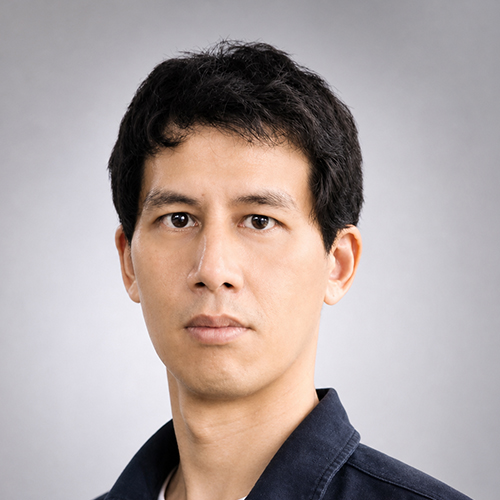
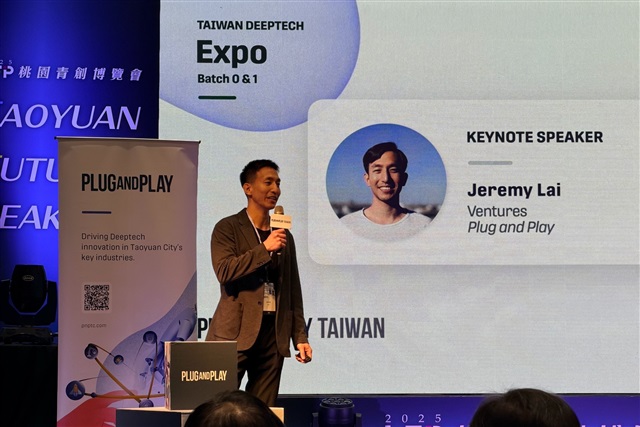
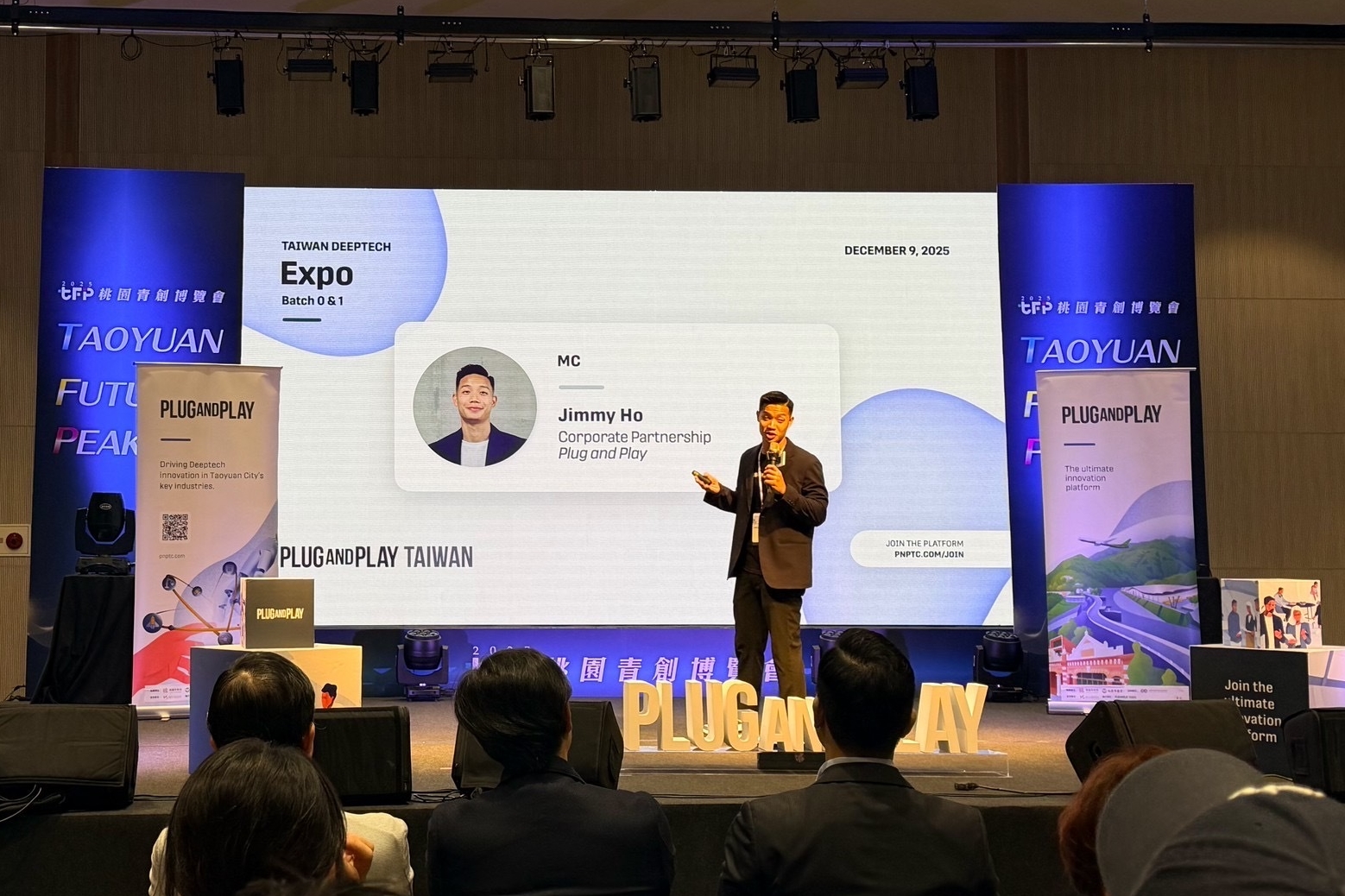
In February 2025, Plug and Play officially established its Taiwan office in Taoyuan, ending a pandemic-era pause on the island. The timing coincides with a fundamental shift in where global capital is flowing — away from SaaS and toward the hardware, infrastructure, and physical AI systems that make the AI era run. The following is drawn from a conversation with Plug and Play Taiwan's Jeremy Lai, Venture Associate, and Jimmy Ho, Corporate Partnerships Associate.
Why Taoyuan, why now
The choice of Taoyuan was strategic. "Taoyuan's location is quite unique," says Ho. "Going north, you have Taipei with the most opportunities. Going south, you reach Hsinchu, which is an extremely technical and technology-dense hub. Being right in between means you can access resources from both sides."
The broader timing reflects a longer arc. Plug and Play had maintained a presence in Taiwan roughly a decade ago through introductions from ITRI and other institutional partners, running annual programs that brought Taiwanese startups to Silicon Valley for training. That activity wound down during the pandemic. By the time conditions aligned to reestablish a local team, the industrial landscape had shifted considerably in Taiwan's favor.
"From around 2012 to 2022, it was the decade of SaaS," says Lai. "Taiwan simply wasn't able to capture significant ground then. But with the rise of AI and the surging demand for data centers, the focus has slowly but surely pivoted back to hardware and infrastructure. Taiwan has suddenly become a very important strategic hub — whether you're talking about semiconductors, smart manufacturing, advanced materials, or biotech. We've seen a steady stream of strong startups emerge in these areas over the past few years."
Credit: Plug and Play Taiwan
The platform behind the pitch
Plug and Play's operating model is worth understanding before examining what it's building in Taiwan. The platform runs on three parallel tracks: an accelerator, corporate partnerships, and investment. The accelerator takes no equity from the startups it accepts — a deliberate choice that has helped attract over 100,000 startups to its global network across more than 25 industry verticals.
"We don't take equity, we don't segment by stage, and we don't limit by industry," Ho explains. "That's what allows us to create meaningful matchmaking between corporates and startups across a very wide range. Both sides benefit." The model depends on volume and network density. Plug and Play's accelerator pipeline sees between 2,000 and 3,000 startups globally each year, feeding its investment decisions.
In Taiwan, the team of three — Lai, Ho, and a program manager — focuses on deep tech verticals that map directly onto the island's industrial strengths: smart manufacturing and software-hardware integration, advanced semiconductor and thermal materials, aerospace and defense technology, frontier biotech, and, to a lesser extent, ESG. Pure B2B SaaS is largely off the table. "The entry barrier has dropped significantly with AI," Lai notes. "And Taiwanese startups face too many structural disadvantages — in fundraising scale, founder experience with overseas markets, and local market familiarity — to compete internationally in that space."
Five startups, one shot at Silicon Valley
Each year, Plug and Play Taiwan runs two accelerator cohorts of twelve startups each. From those, the team selects the strongest five to bring to the biannual Plug and Play Summit in Silicon Valley — the organization's flagship global event. This May's cohort will be the third group to make the trip.
The selection process is revealing. "There are three main criteria," says Lai. "First, industry fit — does this startup's category have genuine traction potential in the American market? Second, product-market fit — not every technology that works in Taiwan will resonate overseas. And third, the founders' strategic clarity. We look for teams that know exactly what they want to accomplish internationally within the next three years, have already earned some validation from overseas partners, and can communicate in the language of American investors."
Ho adds a dimension beyond product: "The founders who do well here are the ones who take the time to genuinely understand who they're meeting, what language that market speaks, and how to position themselves accordingly. It's not just about having great technology. It's about showing up prepared to build relationships, not just pitch."
The outcomes bear this out. Anivance AI, a biotech startup focused on organ-on-a-chip technology, attended a previous Plug and Play US summit and went on to establish its American office directly inside Plug and Play's headquarters. "We connected them to our health vertical partners — major hospital systems, pharmaceutical companies," Ho recalls. "But we also introduced them to leaders in the insurance sector, who pointed out that their technology could help reduce long-term underwriting costs by improving drug development accuracy. That was a direction Anivance AI had never considered. It completely opened a new avenue for them." Plug and Play also connected Anivance AI with prominent Bay Area wet labs, accelerating its localized R&D. The startup has since entered Plug and Play's Japan accelerator, where organ-on-a-chip technology has drawn comparable institutional interest.
The funding trap slowing Taiwan's global ambitions
For all of Taiwan's hardware credentials, its startup ecosystem carries a well-documented structural vulnerability — one that shapes how founders think and build, often at the expense of international ambitions. Nearly 70% of startup funding in Taiwan is driven by Corporate Venture Capital, according to Lai.
"Because CVC investors are primarily looking for synergies with their own business units, startups end up designing products to satisfy a specific corporate partner," Ho observes. "They become very good at serving their anchor clients in Taiwan. But when they try to expand overseas, they often discover that no international client needs their hyper-customized solution." The startup that dominated its local niche finds itself starting from zero in a new market — regardless of how substantial its Taiwan revenues were.
Lai points to a broader cultural pattern. "Taiwanese founders tend to operate in a mode of taking one project, generating revenue, then taking another project — always looking for something along the way that might be scalable. In contrast, American startups will define their ultimate ambition very broadly from day one. That difference in mindset makes it very hard to compete in large international markets."
Their advice to founders eyeing overseas expansion centers on three themes. Think strategically about every corporate project — not just for the revenue, but for what market access, supply chain credibility, or investor network it might unlock. Build with localization in mind from the outset, because what resonates with enterprise clients in Taiwan will likely need meaningful adaptation for the US, Japan, or Southeast Asia. And pursue alliances actively. "The most common path to successful international expansion isn't going it alone," Lai says. "It's identifying a more established local partner in the target market, developing something together, and entering as a unit."
Taiwan as a magnet for global innovators
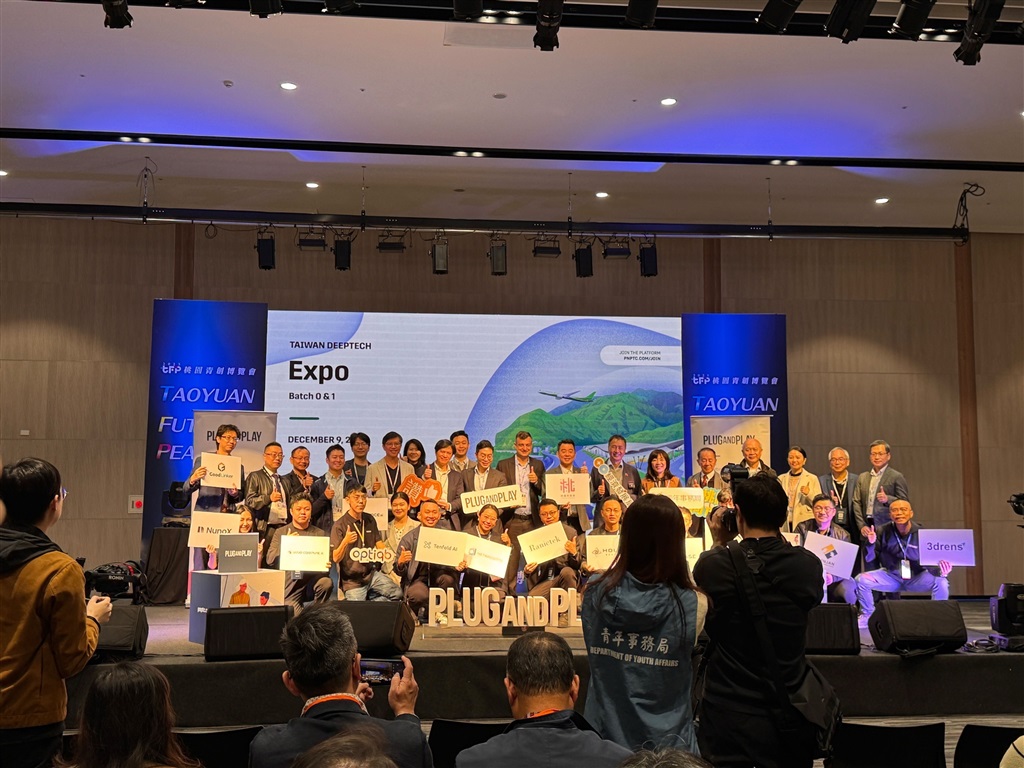
Plug and Play Taiwan's mandate runs in both directions. Beyond helping Taiwanese startups go global, the accelerator is actively drawing international startups into Taiwan's industrial ecosystem — and overseas interest is growing.
"Companies that want to come to Taiwan are usually not coming for the domestic consumer market," Lai explains. "They're coming for strategic reasons — to tap into the semiconductor supply chain, to find manufacturing partners, to build credibility within a globally significant industrial network."
He points to hardware startups at the scaling stage seeking a reliable, flexible production partner: "Taiwan can handle high-end precision manufacturing and cost-sensitive volume production with a speed and adaptability that's genuinely hard to replicate elsewhere."
The current cohort includes two international cases that illustrate the dynamic well.
"We have a Japanese ESG compliance software startup that identified Taiwan's export-oriented economy as a compelling market, given tightening global regulations," Ho says. "We've helped them connect with some of Taiwan's larger enterprises, and they're now in advanced commercial discussions."
The second is a Korean satellite imaging and data analytics company. "We matched them with a major Taiwanese investor who is also a telecom operator. That relationship is developing into something more substantial."
Lai adds a note on the broader trend: "We're also seeing significant inbound interest from defense and aerospace companies — including a Scottish satellite hardware startup building modular systems — who are looking to connect with Taiwan's aerospace sector and institutional partners. This is a vertical that's accelerating fast."
Credit: Plug and Play Taiwan
Beyond the cohort: building for the long run
Accelerators offer time-limited engagement by nature. A three-month program can only do so much for a startup whose growth arc may span a decade. Plug and Play Taiwan is therefore focused on building a more durable platform for founders beyond the accelerator stage.
"Previously, Plug and Play has primarily invested through small, high-volume checks connected to our accelerator activities," Lai explains. "That model worked well because of the scale of startup deal flow we see globally. But over time, we saw an opportunity to support strong founders more systematically as they continue to grow beyond the initial program."
Plug and Play has since expanded its global investment platform along two axes. In the US, it now operates four sector-specific funds — covering supply chain, fintech, future commerce, and sustainability. Geographically, EA Ventures backs European startups, and the firm recently closed a JPY6 billion (US$38 million) Japan-focused fund, with 80% allocated to Japanese startups and 20% reserved for international startups with strong Japan ties.
Ho frames the vision simply: "We want Plug and Play Taiwan to support founders across multiple stages of company-building — from early market validation and corporate engagement to international expansion and long-term ecosystem building. The accelerator is an important entry point, but the broader objective is to become a lasting partner for startups as they grow."
Article edited by Jerry Chen