China has unveiled what developers describe as the country's first robot operating system built on OpenHarmony, underscoring Beijing's broader push to establish a domestic software and hardware ecosystem for humanoid robots, industrial automation, and embodied AI systems.
Shenzhen Kaihong Digital Industry Development Co. (Kai Hong) launched M-Robots OS 2.0 during the OpenHarmony Smart IoT Ecosystem Conference in Shenzhen, positioning the platform as a distributed multi-robot operating system capable of coordinating different robot types, devices, and AI agents under a unified architecture.
According to IT Home, the latest version shifts beyond standalone robotics toward large-scale multi-robot collaboration, targeting long-standing industry problems including fragmented standards, duplicated software development, and disconnected robotics ecosystems.
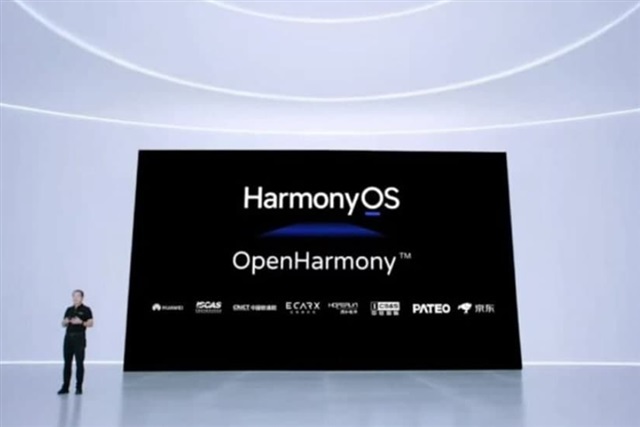
M-Robots OS is built on OpenHarmony, the open-source operating system project widely regarded as the community-driven foundation behind Huawei's HarmonyOS ecosystem.
China accelerates AI-native robotics operating systems
Kai Hong said M-Robots OS 2.0 integrates six core capabilities designed to support robots ranging from lightweight service machines to large industrial systems:
● Modular architecture: A decoupled hardware-software "building block" framework supporting deployment across systems ranging from 20KB embedded devices to GB-scale industrial robots.
● Hybrid real-time deployment: Single-chip multi-kernel deployment balancing human-machine interaction with hard real-time response, with interrupt and task-switching latency below one microsecond.
● M-DDS low-latency communications: A self-developed distributed communications framework based on OpenHarmony's distributed soft bus architecture, enabling robot-to-robot and robot-to-device connectivity with audio and video latency as low as four milliseconds, roughly 42% lower than Fast-DDS.
● Cross-device collaboration: A "super device" architecture enabling sharing of algorithms, sensing, and execution capabilities across robot clusters.
● AI-native multi-agent coordination: Native AI capabilities supporting multimodal interaction and AI agent-driven autonomous collaboration among multiple robots.
● Middleware compatibility: Support for ROS1, ROS2, and Dora-rs ecosystems, reducing migration costs for developers by roughly 80%.
The platform is designed to provide what developers describe as a unified full-stack robotics framework capable of supporting "unified underlying architecture and diversified application scenarios," according to Sohu.
Open-source ecosystem expands across robotics industry
The project has expanded rapidly since M-Robots OS 1.0 was introduced in April 2025.
The platform became fully open-source in July that year, adding robotics core subsystems, third-party middleware libraries, package managers, and visual development tools. In November, Kai Hong donated the M-Robots project to the OpenAtom Foundation, establishing an independent project management committee to support broader community-led development.
The project now includes 16 specialised SIG working groups covering kernels, BSP and drivers, system services, and communications middleware.
Kai Hong said the ecosystem has attracted more than 30 industry, academic, and research organisations, including Harbin Institute of Technology, Chongqing Research Institute, Beijing University of Technology, and Beijing Institute of Technology.
The operating system has already completed adaptation for more than 20 robot categories, including bipedal humanoid robots, wheeled humanoids, quadruped robots, robotic arms, and industrial drones.
OpenHarmony ecosystem pushes robotics localisation
The M-Robots ecosystem is also expanding through partnerships spanning robotics hardware, healthcare, education, and AI computing platforms.
According to Sina, robotics computing platform developer D-Robotics plans to integrate its RDK S100 platform with M-Robots OS to help establish a domestic AI-native robotics hardware and software foundation.
Guangzhou Saite Intelligent Technology has completed full-chain adaptation of its unmanned cleaning vehicles to M-Robots OS and plans to continue adapting autonomous driving systems to OpenHarmony-based architectures.
Other ecosystem partners include Shenzhen Creality 3D Technology, which developed an OpenHarmony-based composite robot called Leo-H, and DeyeeMed, which is adapting rehabilitation robots and diagnostic devices to the platform.
Industry observers view the project as part of China's broader effort to reduce dependence on foreign robotics software frameworks while building domestic alternatives for AI-native robotics, industrial automation, and embodied intelligence systems.
Article edited by Jerry Chen