

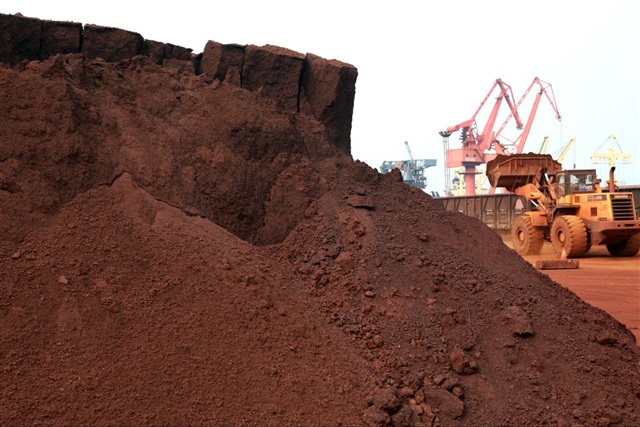
Vietnam's parliament has approved sweeping amendments to its geology and minerals law that tighten state control over the country's rare earth resources, reaffirm a ban on ore exports, and introduce new limits that effectively restrict shipments of refined materials in a bid to build a domestic processing industry.
According to Reuters, Bloomberg, and China Daily Asia, the revised law, passed on December 11, designates rare earths as a strategic resource and mandates that exploration, mining, and processing activities be "strictly controlled." Existing bans on raw ore exports are reaffirmed, while new language requires that deep-processing activities serve the development of a modern industrial ecosystem — a provision that indirectly limits the export of refined rare earth products. The reforms will take effect in January 2026.
Reserves revised sharply lower
Vietnam holds an estimated 3.5 million metric tons of rare earth reserves, ranking sixth globally, according to the US Geological Survey's March 2025 report. The estimate was sharply revised downward from a previous figure of 22 million tons, which had positioned the country as one of the world's largest reserves. Despite its large deposits, Vietnam has struggled for decades to build a viable rare earth industry due to regulatory delays and limited refining capacity.
The government is aiming to change that. Under the amended law, only state-designated enterprises will be permitted to explore, exploit, and process rare earths, and the state will retain control of geological data, trade regulation, and mineral reserves. International collaboration is encouraged, particularly in advanced mining, separation, and deep-processing technologies, to help Vietnam establish a more competitive rare earth supply chain.
Global diversification drives momentum
The push comes as the US, Europe, and Japan accelerate efforts to diversify away from Chinese supplies. Beijing dominates the global production and processing of the 17 metallic elements essential for products ranging from electric vehicles and wind turbines to smartphones and missile systems. China tightened export controls in April amid intensifying trade tensions with Washington, adding urgency to global diversification efforts.
However, Vietnam's new restrictions are unlikely to have an immediate global impact. The country currently has almost no commercial-scale refining capability, and a long-standing ore export ban — in place since at least 2021 — has already limited international access to its unprocessed minerals. Regulatory uncertainty and bureaucratic hurdles have also deterred both domestic investors and foreign partners seeking to develop the sector.
Vietnam's Ministry of Agriculture and Environment is preparing a national rare earth strategy, expected to be submitted to the government early next year. The plan will outline long-term development targets, industrial priorities and technology partnerships required to move the country up the value chain.
World rare earth production and reserves (tons) | |||
2023 | 2024 | Reserved | |
US | 41,600 | 45,000 | 1,900,000 |
Australia | 16,000 | 13,000 | 5,700,000 |
Brazil | 140 | 20 | 21,000,000 |
Burma | 43,000 | 31,000 | NA |
Canada | — | — | 830,000 |
China | 255,000 | 270,000 | 44,000,000 |
Greenland | — | — | 1,500,000 |
India | 2,900 | 2,900 | 6,900,000 |
Madagascar | 2,100 | 2,000 | NA |
Malaysia | 310 | 130 | NA |
Nigeria | 7,200 | 13,000 | NA |
Russia | 2,500 | 2,500 | 3,800,000 |
South Africa | — | — | 860,000 |
Tanzania | — | — | 890,000 |
Thailand | 3,600 | 13,000 | 4,500 |
Vietnam | 300 | 300 | 3,500,000 |
Other | 1,440 | 1,100 | NA |
World total (rounded) | 376,000 | 390,000 | >90,000,000 |
Source: USGS, January 2025
Article edited by Sherri Wang