
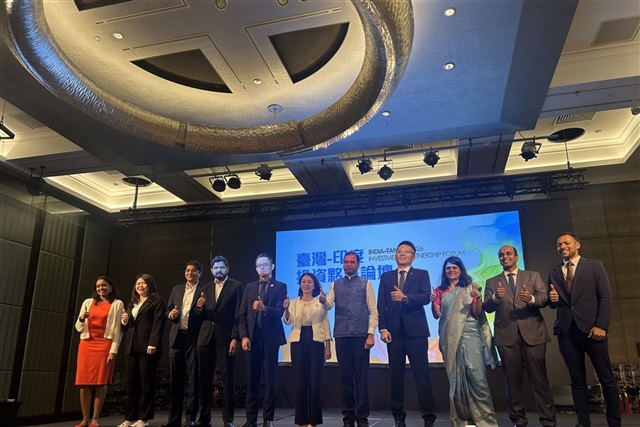
Five of India's most industrialized states sent high-level officials to pitch their regions as the next anchors for global electronics and AI supply chains this week at the 2026 Taiwan–India Investment Partnership Forum.
Held during Computex week, the forum drew more than 130 industry representatives from 100 companies as Taiwanese tech giants look to diversify their manufacturing hubs amid ongoing global supply chain restructuring.
"The question on the table is no longer only about technology," said Ninad Deshpande, Director General of the India Taipei Association. "It is about where things will be made, and with whom." Deshpande noted that India is now positioning itself as a "trusted partner" for Taiwan's semiconductor and precision engineering industries.
India state-level industrial incentives | |||||
State | Incentives | Strengths | Key Features | Sectoral Focus | Infrastructure Highlights |
Telangana | TG-iPASS (single-window clearance under 15 days), 'Meet or Beat' incentives for Mega Projects (investments >US$25M), and specific policies for EV, Life Sciences, and Semiconductors. | 3rd in India for net positive talent balance; over 1 million tech employees; total ecosystem value of US$80 billion in Life Sciences. | T-Hub (world's largest incubator), T-Works (prototyping center), WE Hub (women's startup ecosystem); Hyderabad ranked 'Most Livable City' for 6 consecutive years. | IT/ITeS, Pharmaceuticals, GCCs, Aerospace & Defense, Electronics & Semiconductors, and Food Processing. | Outer Ring Road (158 km), upcoming Regional Ring Road (340 km), Net-Zero Future City (14,000 acres), and Genome Valley. |
Tamil Nadu | Dedicated Guidance Taiwan Desk in Taipei; sectoral policies for Footwear, EVs, and Electronics; Logistics Ease Across Different States (LEADS) exemplar status. | Highest female workforce participation in factories (41%); 2.7 million people employed in factories (highest in India); talent pool of 143k engineers annually. | Ranked 3rd in SDG Index; multiple regional growth hubs; host to the largest number of Taiwanese expatriates in India. | Automotive & EVs, Electronics Hardware, Non-leather Footwear, Textiles & Garments, and Life Sciences. | Highest road length in India (271,000 km); 4 international airports; 4 large commercial seaports; all locations within 3 hours of an airport. |
Karnataka | Green corridor for plant-to-airport exports to facilitate assembled phone shipping; weekly issue-resolution meetings for industry. | Home to the Silicon Valley of India; highest per capita Net State Domestic Product (24-25); 1st in FDI for FY 26. | Leading state for tech and IT; accounts for 40% of India's electronics design and 65% of India's aerospace manufacturing. | Tech & IT, Electronics Design, Aerospace & Defense, Machine Tools, and Biotech. | 800+ R&D centers; Bengaluru International Airport connected via green corridors. |
Andhra Pradesh | Capital subsidies for IT hardware/components; dedicated fast-track single-window FDI clearance; high-uptime power and water allotments tailored for OSAT/ATMP packaging units. | Historical development of IT infrastructure and HITEC City (prior to state division). Strong port-led supply chain network; pre-existing electronics clusters (EMCs) near Tirupati/Nellore. | Historical strategic development of key tech hubs like HITEC City and Genome Valley. | IT and Pharmaceuticals (historically linked to Telangana evolution). | Development of industrial SEZs and Software Technology Parks (STP). |
Uttar Pradesh | Electronics Component Policy 2025: 100% stamp/electricity duty waiver; central subsidy top-ups; up to 20% capital subsidy for PCBs/components; custom packages for projects >$240M. | Proximity to India's largest consumer electronics assembly base (Noida); established anchor ecosystem with HCL-Foxconn semiconductor packaging joint venture. | Focus on high-growth industrial corridors including electronics and aerospace hubs. | Defence & Aerospace, Agri-export, Electronics Manufacturing, MRO, Civil Aviation, EV Manufacturing, and Textiles. | Warehousing & Logistics zones. Noida International Airport (Jewar) dedicated cargo hub integrated into the Delhi-Mumbai Industrial Corridor. |
Source: Compiled by DIGITIMES Asia, June 2026
States make their case
Representatives from Tamil Nadu, Karnataka, Telangana, Andhra Pradesh, and Uttar Pradesh engaged in matchmaking sessions, each highlighting specific sectoral leadership:
Tamil Nadu
Guidance Tamil Nadu MD & CEO Deepak Jacob pitched the state as the "Manufacturing Heavyweight," accounting for 41% of India's electronics exports. Jacob emphasized the state's goal to combine "Taiwan's precision and Tamil Nadu's production power," noting that it has established an exclusive "Expat Desk" to assist Taiwanese citizens with local housing and schooling.
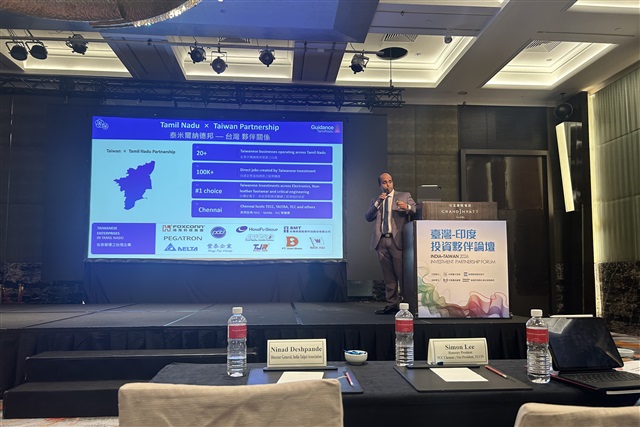
Deepak Jacob, IAS, Managing Director & CEO of Guidance Tamil Nadu. Credit: DIGITIMES Asia
Karnataka
Commissioner for Industrial Development Khushboo Goel Chowdhary described the state as the "Silicon Valley of India," claiming a 40% national share in electronics design. "We are no longer a back office operation," Chowdhary said, highlighting that the state is home to India's only Taiwan government-backed industrial park and offers the lowest industrial water tariffs in the country.
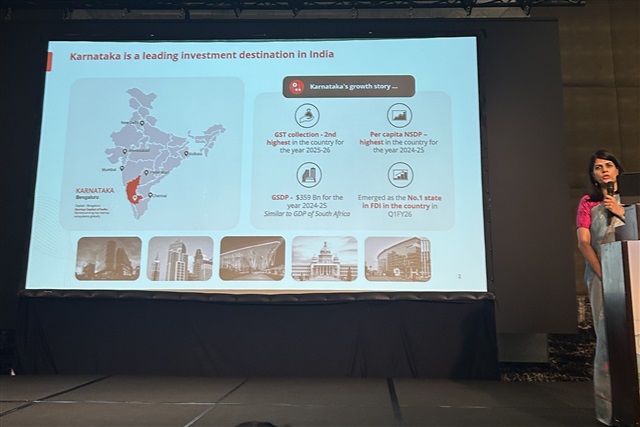
Khushboo Goel Chowdhary, IAS – Commissioner for Industrial Development and Director, Department of Industries & Commerce, Govt. of Karnataka. Credit: DIGITIMES Asia
Telangana
Director of Industries Nikhil Chakravarthi focused on speed, highlighting the TG-iPASS system, which guarantees project approvals in fewer than 15 days. Chakravarthi also touted a "Meet or Beat" incentive policy for mega-projects, offering to match or exceed the incentives of any competing Indian state.
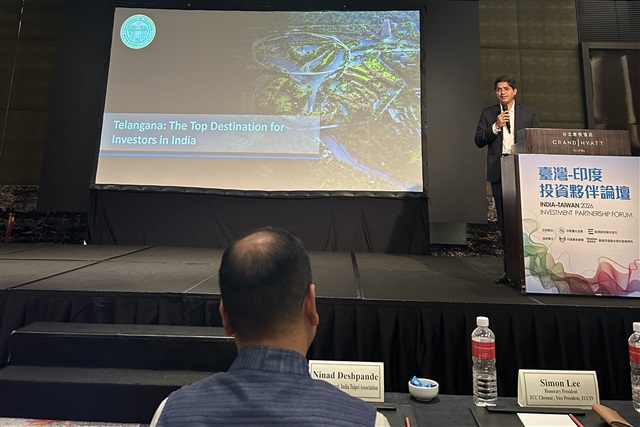
Nikhil Chakravarthi, IAS – Commissioner/Director of Industries, Govt. of Telangana. Credit: DIGITIMES Asia
Andhra Pradesh
Secretary Bhaskar Katamneni told investors that "India is not one India. There are many Indias within India," urging firms to look at specific state competencies. He highlighted the state's 1,053 km coastline and 35%–45% investment subsidy for electronics, positioning Andhra Pradesh as a cost-competitive export hub.
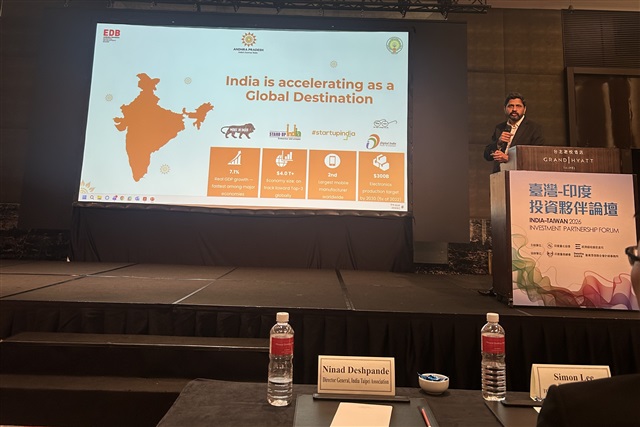
Bhaskar Katamneni, IAS – Secretary to Govt., ITE & C Dept., Govt. of Andhra Pradesh. Credit: DIGITIMES Asia
Uttar Pradesh
Invest UP CEO Vijay Kiran Anand showcased the state's rise as a mobile manufacturing powerhouse, now producing 55% of all mobile phones in India. Representing a market of 250 million consumers, Anand cited a year-on-year growth rate of 15% to 20% and highlighted aggressive policies for semiconductor packaging (OSAT).
Execution over incentives
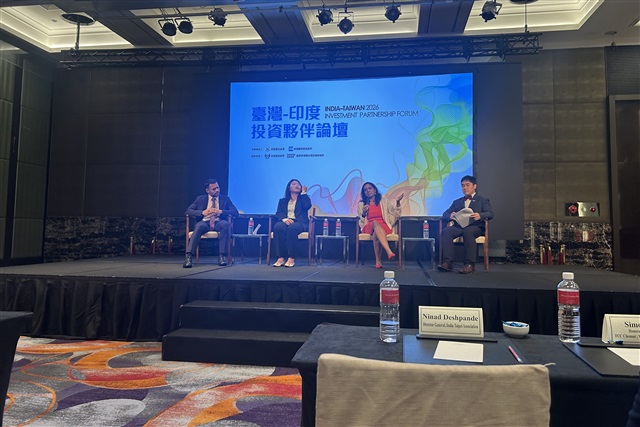
On top of the state presentations, a panel of strategic advisors detailed the practical realities of entering the Indian market.
"For companies waiting for the perfect time to enter India, there is never a perfect time," said Aarthi Sivanandh, Senior Partner at AZB & Partners. She advised firms to anticipate a 12-to-18-month runway to fully integrate into the market and urged them to lead with what they want to own — such as intellectual property or supply chain control — rather than just legal structures.
Sajad Sadiq of KPMG India noted that while state-level incentives are a "handsome" addition that can return 70% to 80% of total investment costs, they should remain secondary to factors like logistics, talent, and local culture in a firm's decision-making process.
Credit: DIGITIMES Asia
The long game
Eric Chang, President of TCC Chennai, concluded he's session by advising Taiwanese firms to view India as a long-term commitment. "The Indian market is essentially about running a marathon," Chang said. "If you stay until the end, the fruits of your harvest will be very large."
Article edited by Jingyue Hsiao