The megatrend in electronic design today is end-to-end collaboration across ICs, packaging, PCBs, systems, data centers, and physical applications, with rapidly evolving artificial intelligence playing an increasingly critical role.
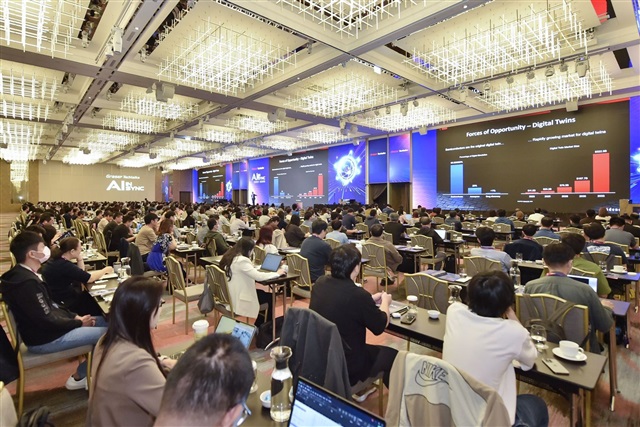
In early June, Graser Technology held its annual technology forum, Graser TECHTALKS 2026, under the theme "AI in Sync: Intelligent Design, Accelerated Manufacturing." The event focused on how AI connects design, analysis, and manufacturing workflows. It brought together industry speakers, in-house engineering experts, and customer representatives to share professional insights and real-world experience, outlining a new paradigm for electronic design workflows and industrial applications in the AI era.
In her opening remarks, Graser Chairwoman Lillian Pan said the company has, for more than 30 years, upheld the principles of fast response, professional service, and long-term partnership, helping customers turn ideas into products faster. She added that Graser will continue promoting the leverage of AI across engineering workflows, introducing advanced design tools, and supporting Taiwan's semiconductor and electronics industries in remaining globally competitive.
AI as a Design Workflow Collaborator
In the first keynote, "Paradigm Shift of System Design in the AI Era," Michael Shih, Corporate Vice President for APAC and Japan at Cadence, said electronic design is facing a new level of complexity as Moore's Law becomes harder to sustain and the cost of advanced process technologies and system integration continues to rise.
He noted that the challenge is no longer limited to designing a single chip. Instead, engineering teams must increasingly solve complex issues across chips, advanced packaging, PCBs, system-level design, and multiple physical domains. Against this backdrop, Cadence has been expanding its focus from IC design into packaging, PCB design, multiphysics simulation, data centers, and system analysis, evolving from a traditional EDA tool provider into an Intelligent System Design platform company.
Shih explained that Cadence's Intelligent System Design platform brings together AI, EDA and IP, system design and analysis, and computational software. This enables engineering teams to perform simulation, analysis, optimization, and design verification at the system level. Within this framework, Cadence is pursuing AI in two directions: Design for AI, which helps customers build AI infrastructure, and AI for Design, which embeds AI directly into design solutions. In other words, AI is not only an application enabled by advanced ICs and systems; it is also becoming a core collaborative capability within the electronic design process.
A major part of this shift is the introduction of agentic AI into design workflows. Shih said Cadence is bringing AI agents into front-end design and verification, digital implementation, and custom and analog design processes.
These AI agents can help engineers understand design goals, break down tasks, execute workflows, and accelerate iterative design cycles. Their value goes beyond labor savings: by automating repetitive and time-consuming work, AI agents allow design teams to explore feasible options faster, shorten development cycles, and reduce the time and cost pressures created by rising complexity of designs.
Shih noted that, for example, many companies must complete large numbers of board designs every year, involving repetitive yet expertise-intensive tasks such as placement, routing, layout, and design checks. By introducing AI into these workflows, engineers can spend more time on system architecture, reliability, and innovation. This suggests that design automation in the AI era is moving beyond point-tool acceleration toward broader efficiency gains across ICs, packaging, PCBs, and system-level simulation.
AI Deployment Through System Integration
Focusing on system integration design trends in the AI era, Eric Kao, Business Development Director at Giga Computing, shared his perspective from the data center infrastructure side. He noted that as enterprises adopt AI agents and generative AI applications, inference workloads are growing rapidly, pushing data center architectures originally optimized for AI training to shift.
This shift is also redefining the role of the CPU. Because AI agent workflows involve task decomposition, step-by-step planning, API calls, tool invocations, and other logic-heavy and I/O-intensive operations, the CPU is no longer just a supporting component next to GPUs or accelerators. Instead, it is becoming the control and orchestration hub inside the AI data center.
Kao pointed out that future AI infrastructure will move toward more refined heterogeneous computing configurations. Effectively managing different platforms and resources—and matching the right hardware to the right models and workloads—will become a critical system design challenge.
Giga Computing's own technology roadmap also reflects this transition. According to Kao, the company has expanded from server motherboards and system development into HPC, OCP, GPU servers, liquid cooling, heterogeneous computing platforms, and broader AI infrastructure services. This shows that competition in AI data centers is shifting from standalone server specifications to integrated capabilities across racks, cooling, networking, software, POD design, and system-level simulation.
Po-Ting Lin, Professor in the Department of Mechanical Engineering and Director of the Center for Intelligent Robotics (CIR) at National Taiwan University of Science and Technology (NTUST), approached AI from the perspective of physical system applications. He shared his team's experience applying AI to obstacle-avoiding path planning for robotics.
Lin explained that when a robot encounters nearby people or obstacles during operation, it must quickly determine a safe trajectory to avoid collisions. Traditional optimization methods can be used to search for safe paths, but they often require significant computation time. By incorporating AI models, the system has the potential to greatly shorten response time.
Lin emphasized that robot obstacle avoidance is not about taking the longest possible detour. The goal is to find a path that avoids obstacles just enough while maintaining task efficiency. NTUST's robotics research covers human-robot collaborative robotic arms, UAV inspection, and dual-arm robotic systems, with a common focus on balancing safety and operational efficiency.
Through the insights shared by these two speakers, it is evident that bringing AI into real-world applications depends not only on a single chip or algorithm but also on the integration of computing, software, sensing, simulation, and physical systems.
Intelligent Tools and Simulation Integration Across the Design Flow
The afternoon sessions of Graser TECHTALKS 2026 focused on two major tracks: electronic system design automation and multiphysics simulation. Graser's engineering team highlighted the latest advances in Cadence Allegro/OrCAD X 25.1 and Allegro X AI, demonstrating how automation and AI-assisted design can improve PCB development workflows.
The program also featured technical experts from AIC, Supermicro, and Cadence, who shared practical insights into power integrity, electrothermal co-simulation, AI server system design, and multiphysics optimization, spanning packaging to system-level design, using Cadence Sigrity, Clarity, Celsius 3D, Sigrity HPC, and Aurora.
Graser also presented updates to its in-house software portfolio, including GraserWARE, GIMS, and CAMPro, addressing requirements such as circuit reliability checks, component and BOM management, and manufacturing data validation.
Building on features introduced last year, the company added several practical tools to GraserWARE MSAPack, including simulation schedule management, stackup format conversion, S-parameter port-naming optimization, temperature-dependent material parameter fitting, and automatic Power Tree generation. These capabilities help streamline SI/PI simulation workflows while improving analysis efficiency and data consistency.
The key takeaway from Graser TECHTALKS 2026 is that in the AI era, design competitiveness goes beyond upgrading individual tools—it depends on how effectively organizations can synchronize design, analysis, verification, and manufacturing data to enable faster, more agile system-level development.