
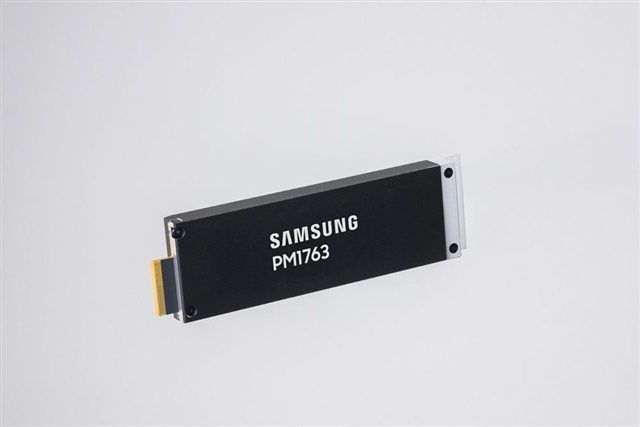
Enterprise SSDs are emerging as a bigger priority in AI infrastructure as generative AI workloads move from training to inference and data centers need faster storage. Reports from Wccftech and ZDNet Korea said Samsung Electronics and SK Hynix are positioning eSSD products to help hyperscalers reduce server space and energy use while capturing a fast-growing market.
The shift comes as HBM and DRAM capacity growth slows and prices keep rising. Industry sources said multimodal and inference-driven AI applications are expanding the role of storage in AI data centers, making fast data access nearly as important as GPU performance for enterprise deployments.
Market data showed that revenue at the world's top five eSSD vendors reached about US$18.46 billion in the first quarter of 2026, up 86.1% quarter-over-quarter. During the same period, eSSD contract prices rose by about 80%, underscoring how quickly demand has accelerated across the segment.
Samsung Electronics and SK Hynix are leading the market with high-capacity QLC-based eSSD products. While QLC SSDs are less durable than TLC and MLC options, a single drive can deliver higher capacity at lower cost, which can help hyperscalers save significant data center space. The market is still early in its growth cycle, but industry insiders said its expansion is already outpacing consumer SSD demand.
As the eSSD market matures, controllers and system software are expected to gain importance alongside memory components. In South Korea, Fadu has emerged as a notable beneficiary, with cumulative revenue in the first half of 2026 reaching KRW132.7 billion (US$96.24 million), nearly matching its annual revenue scale over the past two years. About half of its newly disclosed orders in 2026 came from next-generation Gen5 eSSD controllers.