

2025 proved turbulent for downstream applications and end-user devices. Tariffs and geopolitical tensions dominated the first half, while AI gained momentum later in the year. Global market unpredictability pushed many brands—particularly in China, the epicenter of geopolitical tensions—toward domestic markets and self-sufficiency.
This review covers six major themes: DeepSeek's emergence in the large language model (LLM) sector, BYD's overtaking of Tesla in China, AI-driven power shortages, tariff-fueled supply chain shifts, export control volatility from geopolitical tensions, and notebook and smartphone shipments under these circumstances.
DeepSeek emerges as disruptive force in 2025 LLM landscape
by Jingyue Hsiao
In 2025, large language model (LLM) development grew increasingly competitive. Major technology companies raced to establish dominance in both proprietary and open-source AI. Google, OpenAI, Meta, and Amazon Web Services (AWS) pursued distinct strategies, reflecting diverging priorities in model accessibility, commercial application, and hardware integration.
Amid these developments—DeepSeek, a new entrant from China in 2025—disrupted the sector by combining proprietary LLMs with an open, modular architecture optimized for edge deployment and integration across heterogeneous hardware. Unlike established players tying performance gains to specific cloud or GPU ecosystems, DeepSeek emphasized interoperability and low-latency inference on both on-premises and cloud platforms.
This approach could reshape competitive dynamics by reducing vendor lock-in and offering enterprises more deployment flexibility. Analysts note that DeepSeek's modular LLM design allows rapid customization for domain-specific tasks, potentially challenging incumbent providers whose models require extensive retraining or fine-tuning.
DeepSeek's disruption carries multifaceted implications. First, it may accelerate pressure on incumbents to relax hardware or cloud dependencies, potentially eroding the ecosystem advantage of companies like Nvidia and AWS. Second, it underscores the importance of balancing performance, accessibility, and integration costs in enterprise AI adoption. Finally, DeepSeek's success could catalyze a broader shift toward open, interoperable LLM ecosystems, forcing established firms to rethink strategies around proprietary models, licensing, and developer engagement.

Credit: DIGITIMES
In China's EV race, BYD pulls ahead of Tesla
by Elaine Chen
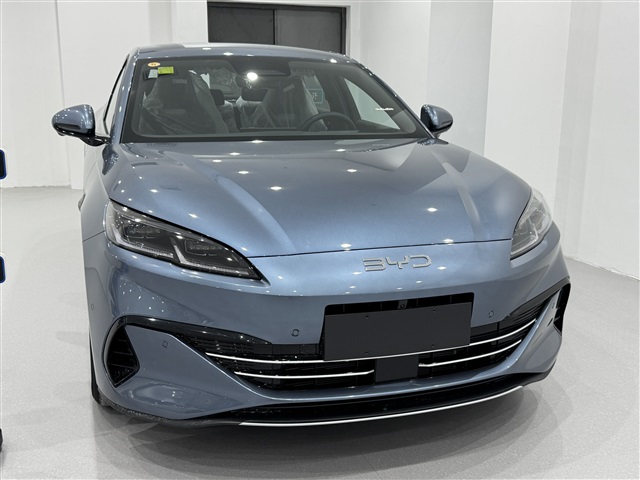
In 2025, BYD has clearly taken a leading position over Tesla in China's electric vehicle (EV) market, surpassing it in both volume and revenue. BYD reported over 4.25 million passenger car sales in 2024 with continued strong growth into 2025. In the first half of 2025 alone, BYD sold more than 1.02 million battery electric vehicles (BEVs), outpacing Tesla by over 30%. Tesla experienced declining BEV sales during the same period. BYD's total new energy vehicle sales reached nearly 2.146 million units in the first half of 2025, making it the only Chinese automaker to cross the 2 million threshold for that timeframe.
BYD's success stems from its focus on advanced technology, including fast-charging capabilities and widespread smart-driving features that resonate with Chinese consumers. The company also benefits from vertical integration, producing key EV components in-house and enabling competitive pricing roughly half that of Tesla. Meanwhile, Tesla faces challenges, including stagnating demand and declining China shipments over several months.
Financially, BYD's revenue topped US$100 billion in 2024, exceeding Tesla's US$97.7 billion, although Tesla still leads in market valuation and absolute net income. Despite this, BYD's rapid expansion and technological advancements have positioned it strongly against Tesla in the highly competitive Chinese EV market throughout 2025
BYD's strength lies in rapid innovation, vertical integration, and competitive pricing tailored to local demand. While Tesla retains higher global valuation, slowing China sales highlight its growing challenges. The shift signals a broader market change where scale, cost efficiency, and localized technology now matter more than brand prestige.
Credit: DIGITIMES
AI's significant energy demands challenge power grids worldwide
by Emily Kuo
AI undeniably caused electricity bills to skyrocket in 2025. As hyperscale data centers multiplied to support AI training and inference, governments and tech companies have been forced to address the power supply issue, especially in the US. As clusters emerge in states such as Texas, major companies are adopting energy strategies and solutions to secure a sustainable power supply.
Just as renewable energy was becoming mainstream—with solar setting new installation records worldwide—US President Donald Trump's administration shifted federal priorities toward economic profits and growth. Fearing lost AI leadership, the Trump administration rolled back sustainable development programs and decarbonization initiatives.
Nuclear energy resurfaced as an option. Despite drawbacks in public skepticism, risks, and waste, nuclear power gained attention for its low greenhouse gas emissions. Governments and companies explored new small modular reactor (SMR) projects as alternative solutions. Technology firms are increasingly open to long-term nuclear power purchase agreements, reframing nuclear as strategic infrastructure rather than legacy energy.
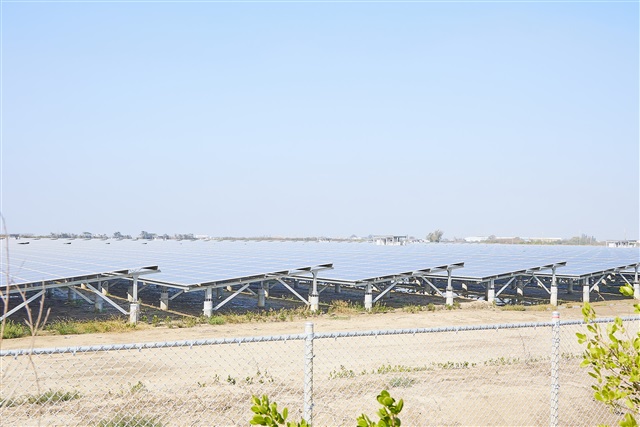
In contrast to the US, China's centrally planned power grid continued to prove advantageous in 2025. Building on its long-standing west-to-east power transmission program, China expanded ultra-high-voltage (UHV) corridors capable of moving tens of gigawatts of electricity from sunny and windy western regions to coastal industrial and AI demand centers with relatively low losses. This ability to mobilize generation and transmission infrastructure reduced power constraints as electricity demand from data centers, EVs, and advanced manufacturing increased.
While the US and parts of Europe struggled to align grid development with AI demand, China's power grid supported lower power costs, faster data center deployment, and greater energy security, strengthening its position in the AI race. As demand accelerates into 2026, the balance between speed, sustainability, and security will determine the next phases of global energy development.
Credit: DIGITIMES
US tariffs lead companies to seek alternatives to Chinese manufacturing
by Levi Li
In 2025, shifting tariffs reshaped China-linked semiconductor and electronics supply chains through clear cause-and-effect dynamics. Early US tariff hikes of up to 125% pushed ODMs to accelerate production moves outside China to blunt cost pressure.
That push eased as tariffs were partially rolled back, with US rates cut from 20% to 10% and China responding in kind. Narrower tariff gaps led many ODMs to scale back non-China production targets from about 60% to roughly 40%, reflecting China's enduring cost and efficiency advantages.
Southeast Asian alternatives like Vietnam and Thailand proved costlier than expected. Higher post-processing costs and less mature ecosystems weakened the case for large-scale relocation.
Supply chain realities further slowed diversification. Even when assembly shifted abroad, key components and molds still came from China, adding freight costs and lengthening lead times.
In tariff-sensitive sectors like game consoles, suppliers including Foxconn and Luxshare expanded capacity in Vietnam to shield clients such as Sony and Microsoft. Vietnam offered a viable hedge, though policy risks, including anti-subsidy probes, lingered.
Overall, partial tariff rollbacks reduced urgency to exit China, while higher costs elsewhere limited alternatives. Diversification proceeded selectively, leaving China dominant in semiconductor and electronics manufacturing through 2025.
China wields rare earth exports in response to US export controls
by Charlene Chen
In early to mid-2025, China continued using rare earth export controls as a strategic lever amid escalating US-China trade and tech tensions. Beijing initially tightened rules on key rare earth materials—including controls on raw elements and related technologies—widely viewed as responses to US tariffs and high-tech export restrictions. These curbs were described as choking global tech supply chains, especially for semiconductors, EV motors, and AI hardware, prompting companies and governments to explore supply-chain diversification.
In October 2025, China issued Announcements No. 61 and 62, significantly expanding export controls to midstream materials, equipment, technology, and assemblies involving rare earths, and tightening approvals for products containing Chinese-origin rare earths—even at very low content percentages. This marked a major shift linking rare earth export controls to semiconductor and AI sectors under national security justifications.
Export controls also targeted graphite and other strategic materials used in semiconductors and batteries. Taiwan semiconductor supply firms responded by accelerating domestic compound semiconductor material development amid concerns over reliance on imports—a trend driven in part by Chinese export curbs.
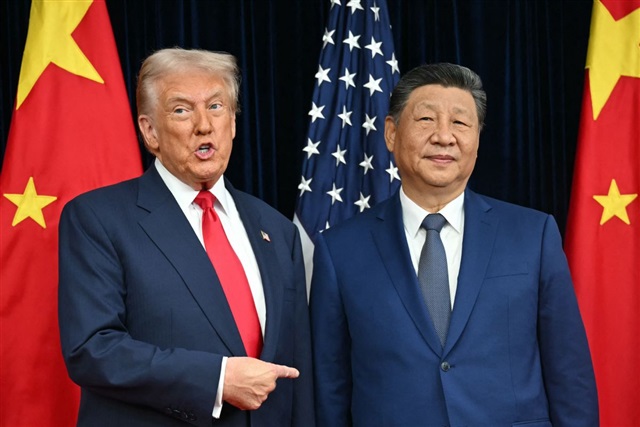
Following a late-October Xi-Trump summit in Busan, China suspended many of these export control measures through late 2026, a tactical pause framed as part of broader US-China trade easing. However, some underlying licensing requirements and earlier restrictions remained in force, underscoring that long-term structural leverage persists.
DIGITIMES analyses noted that China's rare earth chokehold reshaped global supply strategies, compelling Taiwan and other tech hubs to pursue recycling, alternative sourcing, and upstream risk mitigation. These export controls became intertwined with geopolitics, signifying resource dominance as a negotiating tool in tech and trade disputes.
Credit: AFP
Global notebook and smartphone market-
by Joseph Tsai
DIGITIMES estimates that global notebook shipments will exceed 180 million units in 2025, outperforming expectations set at the end of 2024.
Following US President Donald Trump's inauguration in 2025 and his immediate announcement of reciprocal tariffs on products from most trade partners, notebook brands aggressively built inventory in the first half of 2025, keeping the traditional off-season robust.
However, after announcing tariff rates, electronic products like notebooks and smartphones—except those produced in China—temporarily received exemptions, maintaining zero tariffs on US exports. The semiconductor Section 232 investigation linked to notebook tariffs remained pending, leading notebook brands to adopt more cautious shipping strategies in the second half, focusing on meeting full-year shipment targets. Overall, 2025 shipments are expected to grow about 3.8% from 2024.
Lenovo will remain the largest notebook brand worldwide in 2025, followed by Hewlett-Packard (HP), Dell, Apple, Asustek Computer, and Acer. Both Lenovo and HP are estimated to ship over 40 million notebooks in 2025, while Dell and Apple will each ship between 20 and 30 million units, and Asustek and Acer between 10 and 20 million. Together, the top-six brands will contribute over 90% of worldwide notebook shipments.
Meanwhile, global smartphone shipments are expected to rise slightly more than 2% from a year ago to hit over 1.2 billion units in 2025, with 24% of the volumes shipped to China.
Under the shadow of a US government-launched tariff war in 2025, companies across the electronics supply chain continued shifting production capacity out of China. Apple accelerated efforts urging its iPhone assembly partners to expand capacity and increase output in India.
Samsung will remain the largest smartphone brand worldwide in 2025, with Apple trailing closely behind by four million units. China-based Xiaomi, Oppo, Transsion, and Vivo—the fourth through seventh brands—will each ship more than 900,000 units.

Credit: AFP
Article edited by Jerry Chen