
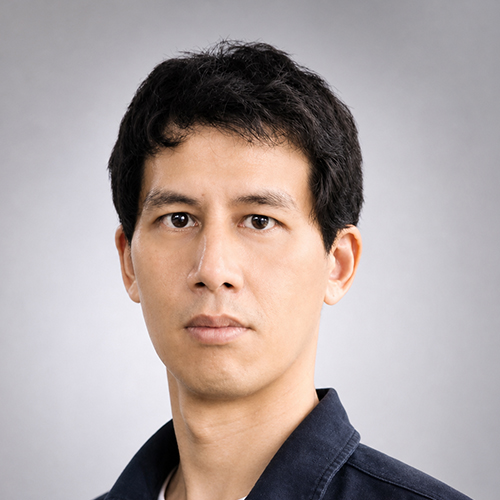
Taiwan-based startup Fortune AI will attend the Plug and Play Silicon Valley Summit in May, one of five Taiwanese startups selected for this year's cohort. Its flagship product, SAFE SWIM, uses computer vision with a large language model (LLM) backend to detect drowning risks in real time, delivered as a B2B SaaS subscription to aquatic facilities. Founder and CEO Andrew Chen spoke with DIGITIMES Asia ahead of the event, discussing the product's commercial logic, technical moat, and the realities of entering the US market.
The company's English name carries a cultural footnote for Summit attendees meeting Chen for the first time. "Fortune" references the Mandarin New Year greeting gōngxǐ fācái — loosely translated as "wishing you prosperity." The intent, Chen says with a laugh, was simple: he wanted people to make money through AI. It is, in hindsight, consistent with how he runs the company — strip away abstraction, say what you mean.
The pitch that doesn't mention AI
In a market where every startup claims an "AI solution," Chen has taken the opposite approach: SAFE SWIM's marketing deliberately avoids the word. His reasoning is blunt. When the barrier to calling something "AI-powered" is zero, the label stops being a differentiator. Worse, it creates noise for his actual target customers — operators of public pools, municipal beach authorities, and traditional sports facilities — who are not technology buyers and have little patience for jargon that doesn't map to a problem they recognize.
The product name follows the same logic. SAFE SWIM is direct and self-explanatory, a deliberate contrast to the abstract naming conventions common in deep tech. "Strip away the AI label," Chen said, "and people immediately understand what we do." The approach appears to be working. Fortune AI has deployed across three to four international markets, which Chen cites as partial validation that the no-AI-branding strategy travels across cultures.
A data moat built on privacy constraints
Aquatic environments pose a data challenge that most computer vision applications don't face. Pool settings involve minimal clothing, making video data collection privacy-sensitive. Licensing usable footage is difficult. Not all pool video is useful either — footage showing only splashing water with no visible persons has no training value for a drowning detection model. The data that matters is rare, ethically complex to collect, and hard to source at scale.
Chen acknowledges that early access to a limited set of licensable public data gave Fortune AI a meaningful head start — one that new entrants cannot easily replicate. In a market where training data is the binding constraint, that early library is a structural advantage that doesn't show up on a spec sheet but matters considerably in practice.
Designed to assist, not replace
Chen is direct about what SAFE SWIM is not: a replacement for lifeguards. At peak summer capacity, a typical public pool might have three lifeguards managing over 200 swimmers, leaving each swimmer only a few seconds of attention per rotation. The system is designed to catch what human attention inevitably misses, not to eliminate the human role. "Can any system truly replace a person's job?" Chen asks. "I don't think so. So by my definition, this is a very good assistive tool."
The alert design reflects this. When SAFE SWIM flags an incident, it triggers on-site lights and audio cues and pinpoints the exact location on a facility floor plan. The lifeguard sees the alarm and location simultaneously — no extra steps, no confirmation screens. The goal is actionable information within seconds.
On accuracy and false positives — standard concerns for AI-assisted safety systems — Chen offers a less conventional answer. Error rates alone are an incomplete measure of a safety tool's value, he argues. How operators are trained to use the system matters more. Fortune AI invests heavily in onboarding, drawing an analogy to ChatGPT: the same tool produces vastly different outcomes depending on whether the user treats it as a novelty or engages with it seriously. "The method of using the tool," he says, "is a qualitative indicator that can't be quantified."
Beyond the pool: open water and 24-hour surveillance
Fortune AI has extended its technology to open-water environments. The company's deployment at Tainan Golden Coast — a public beach on Taiwan's southwestern coastline — is its first commercial smart beach application. Unlike indoor pools, open-water sites have no operating hours. Unauthorized entry can happen at any time, including overnight, making continuous AI-assisted monitoring more operationally valuable than in a staffed facility. The system allows local government agencies to maintain surveillance without round-the-clock personnel on site.
Chen also flagged a structural risk to broader adoption: regulation. If purchasing decisions hinge on regulatory mandates rather than proactive risk management, the unit economics of a SaaS-based safety tool become fragile. His preferred path is to establish value independent of policy changes — through demonstrated outcomes and sustained operator education.
Japan in under a year; US requires a different playbook
In Japan, Fortune AI completed distributor onboarding and initial customer deployment in under a year — faster than typical for cross-border enterprise SaaS in a market known for lengthy procurement cycles. Chen is candid, however, that speed of entry and depth of integration are different things. Cultural and business practice differences created friction that the company is still working through. The Japan experience is instructive: replicable in outline, but not frictionless in execution.
The US presents a different challenge: capital. A direct sales operation in America requires resources Fortune AI does not yet have. Chen is not interested in burning cash without a clear return. The Plug and Play Summit is partly about finding a smarter path in learning from founders and investors who have navigated US market entry, and identifying where limited resources can have the most leverage.
A second product, built for North America
Fortune AI plans to release an MVP of a second product before the end of this year, designed specifically around feedback from North American operators. Chen declined to share details but was clear that this is not an adaptation of the Taiwan product — it addresses a distinct need identified through direct conversations with potential US customers.
The longer arc, Chen says, is to reposition Fortune AI as a computer vision technology company that started with aquatic safety, not a pool monitoring vendor with AI features. SAFE SWIM gave the company its commercial foundation and, in his words, remains important nourishment for what comes next. The next phase is about showing up differently — same technology, new story.
Article edited by Jerry Chen