US President Donald Trump ended the transatlantic tariff truce on May 1 by raising import tariffs on EU-made vehicles and auto parts from 15% back to 25%, with the new rate taking effect on May 4. The abrupt reversal is widening pressure on European automakers already losing ground in China, leaving them squeezed on two fronts.
Supply chain executives said the tariff increase is prompting a reassessment of cost-benefit structures for European carmakers. Relying on a playbook that emphasizes high-margin, high-priced models to offset tariffs may have a limited effect, as the US premium consumer market is finite, and some demand had already been pulled forward ahead of the policy change. Absorbing the extra costs would further compress margins already being eroded by tariffs, they added.
Product mix, brand strategy, and pricing for European imports to the US will be closely watched as companies weigh whether to pass costs on to buyers, protect margins, or reshape their US portfolios. "Made in the US" has emerged as the most direct and stable response for automakers seeking to reduce tariff exposure, but building plants, expanding capacity, and ramping up production are time-consuming and capital-intensive. Frequent short-term shifts in the US regulatory environment are also making global automakers cautious about accelerating local investment.
Plant capacities and who is most exposed
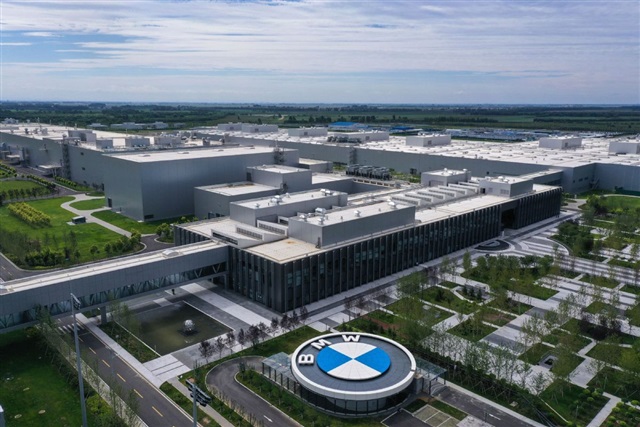
Volkswagen's Chattanooga plant has an annual capacity of about 175,000 vehicles, Mercedes-Benz's Alabama plant about 263,000 vehicles, and BMW's South Carolina plant can reach 450,000 vehicles, according to foreign media reports. Among the three, Volkswagen relies most heavily on imports and is therefore the most directly affected; the company said the new tariffs will raise group expenses by about EUR4 billion (US$4.69 billion).
The combined pressure from higher US tariffs and shrinking Chinese business threatens operations, profits, and competitiveness for the major German automakers. In China, European brands have continued to lose market share to local rivals and face persistent margin pressure. At the same time, Chinese manufacturers such as BYD Co. Ltd., Geely Automobile, and Chery Automobile are experiencing intensifying price competition domestically while accelerating overseas expansion; BYD's export share has approached half of total sales.
Reciprocal measures and wider implications
The tariff dispute is not one-sided. In response to the US move, the EU announced it will suspend tariff concessions on US goods, a step expected to erode the existing advantage of US-made products entering Europe duty-free. US automakers currently benefit from closer alignment with the "Made in the US" policy agenda. Still, supply chain watchers warn that prolonged tariff protection could erode their long-term competitiveness.
Analysis points to three main factors behind the tariff hike: allegations by President Trump that Germany has not contributed enough to support the war in the Middle East; frustration that the EU has moved too slowly and imposed strict conditions on implementing a proposed mid-2025 trade agreement; and a view that military and economic interests between the two sides are insufficiently aligned — a concern that emerged alongside the announced withdrawal of 5,000 US troops from Germany. The EU countered that the relevant agreement remains in the legislative process, accused the US of repeatedly breaching commitments, and said it would cancel duty-free treatment for US products in response to the tariff adjustment.
Article translated by Jingyue Hsiao and edited by Jerry Chen