Taiwan broadband CPE industry, 1Q 2026: 10G upgrades drive volume but pricing pressures linger
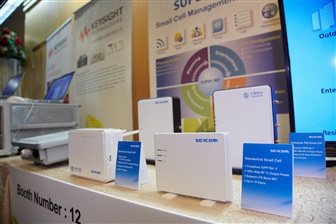
Global broadband CPE shipments in the second quarter of 2026 are estimated to see a yearly growth of 3.4%, with PON CPE supporting shipment growth.
The Physical AI Report provides structured analysis of technologies and markets enabling artificial intelligence to interact with and operate in the physical world. Coverage spans robotics, autonomous systems, industrial automation, machine vision, sensors, edge AI, and intelligent infrastructure.
The report examines how AI is being deployed across manufacturing, logistics, healthcare, mobility, and smart environments, while tracking developments in hardware, software, and ecosystem partnerships. It serves as a practical reference for understanding the emergence of Physical AI and its impact on industries worldwide.
Please enter at least 2 characters.

Global broadband CPE shipments in the second quarter of 2026 are estimated to see a yearly growth of 3.4%, with PON CPE supporting shipment growth.

Memory shortage drives up ASP; Global 5G FWA CPE shipments projected to decline 4% YoY in 2Q26; ASP, conversely, supports production value resilience

Wi-Fi 7 upgrades and cost pressures coexist as Taiwanese Wi-Fi router shipments rose 1.1% sequentially in the first quarter of 2026.

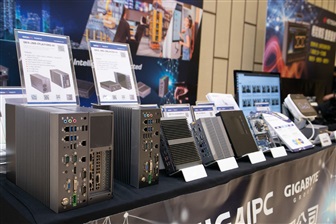
Large Taiwanese IPC players begin reaping early edge AI deployment dividends in 2025, with estimated 2026 revenue growth of 12%.

OpenClaw craze accelerates personalized edge AI agent applications, driving demand for VPS and personal workstations.

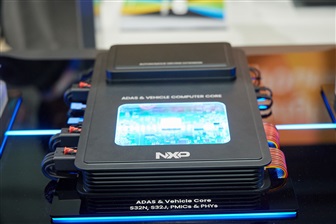
Software-defined vehicles (SDVs) enter the accelerated deployment era; integration of AI models by automotive processor players becomes an inevitable direction.

Zhipu and MiniMax's rapid revenue growth but expanding losses highlight that Chinese AI service startups will face severe elimination challenges in 2026.

Outlook for the 2026 global data center ASIC competition: The changing strategic alliances between Arm, Qualcomm, and Nvidia will be the core key.

Edge AI chip startups split adoption between TSMC's mature processes and Samsung's advanced technology; Samsung seeks to gain trust from the market with innovations for edge AI.

Edge AI drives revenue growth for Taiwanese IPC firms as operators actively seek software partners in the AI field.

Humanoid robots use FPGA chips as the core to realize multi-axis motion control and AI model adaptation.

GPT-5 significantly reduces hallucination rates in academic applications, enhancing the potential of generative AI in education.

Top-4 Chinese cloud service providers are expanding their investment in AI infrastructure, accelerating the promotion of AI hardware and software solutions with Chinese characteristics in 2025.

China's humanoid robots are founded upon the collaborative robot supply chain, with cost control and motion capabilities becoming key advantages.

Three major clusters of China's humanoid robot industry have taken shape; breakthroughs in humanoid robot mobility achieved, but practical applications remain limited.

Taiwan's AI medical devices are developing toward imaging and assistive applications, while the three major AI centers for smart healthcare in Taiwan help accelerate adoption and expand the industry scale.

DeepSeek opens the competition in closed-source LLMs, yet hybrid models balancing technological accessibility and profitability are becoming the trend in commercial development.

Reciprocal tariffs accelerate US capacity expansion plans for Taiwanese IPC companies; IPCs' highly customized nature makes them difficult to replace in the short term.

DeepSeek influences US-China competition and cooperation, temporarily impacting the US AI industry while also triggering stricter chip controls on China.

Taiwanese IPC players will see combined revenues have a good chance of achieving a double-digit on-year increase in 2025, while the impact from the US' potential tariffs is estimated to be light.

China invests in data centers with an infrastructure-driven approach to accelerate the development of its sovereign AI ecosystem.

Trump 2.0 policies will aim to loosen domestic regulations to strengthen control over AI technologies and ecosystems while intensifying AI-related restrictions against China.

Rapidly rising demand for edge AI prompts chip players to enter the competition.

Sovereign AI poses challenges to the three major public CSPs over the global deployment with local players welcoming new business opportunities.

The IPC market's inventory digestion is nearly at the end in the second half of 2024 with applications such as smart retailing, becoming the key deployment focus of related makers.

China is pushing domestically developed AI chips and deployment of RISC-V structure in a bid to break through US chip sanctions.

Image analysis makes a major contribution to the AI healthcare industry with Taiwan enjoying rapid development in related applications.

Manufacturers are pushing to adopt digital technologies such as AI to strengthen their supply chain resilience, a common issue that the whole manufacturing industry has been eyeing to address.

OpenAI's and Google's development of LLM technologies is differentiated as each has strengths in different areas.

Companies are accelerating their development of humanoid robots with labor shortages being the key driving force.

As geopolitical tensions have been spreading, IPC makers' customers are demanding to have more production capacity outside of China and Taiwan to lower the risks of being affected.

Chinese and US public cloud providers have invested in self-developed chip projects to achieve cost reduction and service differentiation in cloud services through vertical software and hardware integration

Taiwan's IPC industry suffered a minor on-year decline in overall 2023 revenues, but the amount is expected to pick up in 2024 to arrive at above NT$300 billion.

With the growing popularity of AI, Google is also pushing keenly to adopt Gemini Nano in Android for generative AI and LLM applications.

AI-enabled products as a proportion of China's IoT market have been increasing year after year with AI has grown to become more important for related products

With the rise of edge computing, network processing units (NPUs) will be one of the key developing directions for AI accelerator chips.

AI network cameras and edge computing devices play crucial roles in driving smart road development.

Japan's delivery robot market is still at its initial stage of development and the costs for producing the machines and their operation afterward are still high.

The Taipei International Logistics and IoT Exhibition 2023 and Taipei International Cold Chain Technology Exhibition 2023 were jointly held from August 23 to 26, with more than one hundred cold chain and logistics operators participating in the events.