
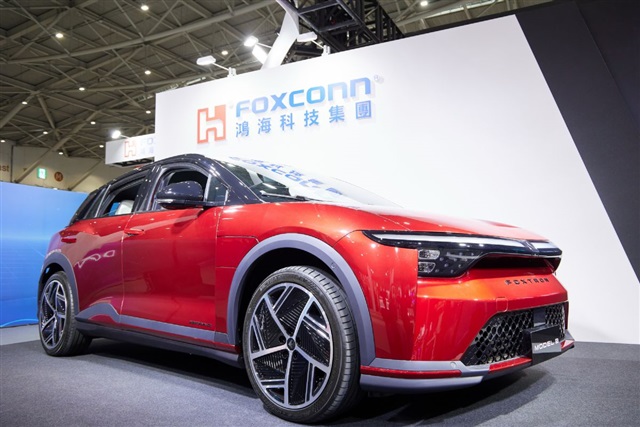
Foxtron Inc. has confirmed its acquisition of 100% of Luxgen Motor from Yulon Group for NT$7.876 billion (US$250 million), aiming to solidify its foothold in Taiwan's electric vehicle (EV) market. The deal, announced at a joint press conference on the evening of December 19, marks a significant step in Foxtron's strategic expansion within the local EV sector.
The transaction includes Luxgen's parent company assets, five sales subsidiaries, retail outlets, and personnel, with Foxtron assuming full operational control. Under the new structure, EV models in Taiwan will be marketed under the Foxtron brand, starting with the Bria model, which is based on the Model B platform.
Concurrently with the announcement, Foxtron updated its official website to reflect the changes. For overseas markets, the company will maintain a contract design and manufacturing service (CDMS) business model to further its international growth.
Focus on customer rights and the Luxgen brand's future
Following the takeover, market attention has shifted towards existing Luxgen customers and the fate of the Luxgen brand. Yulon assured that current Luxgen owners will retain all benefits, including warranties and maintenance services, despite the change in ownership.
Sales of existing Luxgen N7 models will continue through Foxtron via entrusted dealers. However, the continuation of the Luxgen brand itself remains under Yulon's discretion. It has been confirmed that the N7 will be the last Luxgen EV model, and Foxtron will not own or operate the Luxgen brand. Should Yulon decide to do so, new Luxgen vehicles may still be released independently.
Foxtron's pursuit of an independent EV brand reflects its ambition to develop a comprehensive EV ecosystem in Taiwan, spanning product development, sales, and after-sales services.
Foxtron CEO Adam Chen emphasized that Foxtron aims to leverage Taiwan's strengths in information and communications technology (ICT) and artificial intelligence (AI) to drive innovation in automotive electrification and software-defined vehicles. This approach is intended to reinforce Taiwan's strategic role in the evolving global automotive industry.
Supporting global clients and building market presence
Foxtron intends to continue servicing international brand clients through its CDMS model, helping partners optimize time-to-market and cost efficiencies while securing competitive advantages.
In regions without current CDMS collaborations, Foxtron plans to act as a market enabler by establishing sales and service networks, building brand awareness, and integrating local partners to facilitate smoother market entry. This strategy involves developing full lifecycle solutions rather than focusing solely on vehicle sales.
To execute this plan, Foxtron will engage in activities beyond vehicle production, including marketing, distribution, warranty management, and maintenance services. Establishing these capabilities domestically is viewed as critical for the company to demonstrate credibility to potential global clients and attract manufacturers interested in leveraging Foxtron's CDMS model for international expansion.
Industry implications and outlook
Foxtron's emergence as a significant player in Taiwan's EV industry could narrow competitive gaps or heighten interest in related products among established automakers.
Experts point to the company's successful performance as a potential catalyst for building brand recognition and forming strategic partnerships. As the automotive industry undergoes fundamental shifts driven by the growth of electric vehicles, collaborations across brands and technologies are becoming increasingly common. Foxtron's ability to showcase its value proposition to potential clients will be central to its success.
The acquisition highlights clear strategic and tactical ambitions from both Foxtron and Yulon, but the key challenge lies in executing these plans effectively in real-world markets. The ultimate judgment of Foxtron's expansion will depend on its capacity to translate strategic intent into tangible results over time.
Article translated by Jingyue Hsiao and edited by Joseph Chen