

Cancer is no longer considered untreatable, yet improving the accuracy and timeliness of diagnostics and treatment remains one of the most pressing challenges in clinical practice. Traditional cancer detection methods carry inherent limitations: tissue biopsies are highly invasive, causing discomfort and risk for patients, while blood-based biochemical tumor markers often lack specificity and fail to clearly differentiate between pathological signals and normal physiological fluctuations. As a result, liquid biopsy - valued for its safety, convenience, and ability to complement traditional pathology - has rapidly emerged as a global trend in cancer diagnostics.
Developed by CytoAurora and distributed and supported by HUA TEC International, the Nano CAST AI semiconductor liquid tumor imaging system integrates semiconductor processes, AI imaging analysis, optical engineering, molecular pathology, and precision mechanics. The next-generation cancer cell detection platform will officially make its public debut at CES 2026, drawing significant attention from both medical and semiconductor communities.
Chung-Er Huang, Chairman of HUA TEC International, noted that CytoAurora has long focused on single-cell biotechnology and device development, offering highly accurate solutions for genomic and protein-level analysis. To support the specialized needs of medical equipment deployment - installation, training, and maintenance - HUA TEC was established to lead Nano CAST's commercialization and technical support, helping hospitals and health examination centers rapidly adopt the system. The platform is already in clinical use at institutions such as Tzu Chi Hospital and Taipei Tzu Chi Hospital.
According to Chien-Hsiang Tang, Vice President of HUA TEC International, Nano CAST utilizes semiconductor wafer-level surface modification to efficiently capture target cells circulating in the bloodstream. The system integrates precision mechanics and optical modules to automate cell capture, staining, and imaging. AI-driven image analysis then identifies and differentiates cancer cells from other cell types, enabling clinicians to execute targeted cell isolation, image interpretation, and downstream diagnostic analysis directly from blood samples.
Nano CAST Supports the Full Cancer Care Cycle
As semiconductor processes continue to advance, complex biochemical analyses that once required large laboratory setups can now be executed through highly integrated semiconductor biochips - making real-time testing more accessible and scalable. While genomic sequencing remains the most common application of such semiconductor-enabled medical technologies, HUA TEC is one of the few Taiwanese companies to extend semiconductor-based diagnostics into protein and biomarker analysis, particularly demonstrating strong breakthroughs in the field of liquid biopsy for oncology.
Huang explained that Nano CAST is built upon two core components: the Cell Reveal Series and the CMS 200. The Cell Reveal Series uses semiconductor biochip technology to isolate specific or abnormal cells, forming nanoscale structures through plasma treatment, etching, and chemical modification that significantly enhance cell capture efficiency. The CMS 200 serves as the AI-driven imaging system that rapidly and objectively interprets captured cell and tissue images.
Together, the system covers the complete clinical pathway of cancer care - from early detection of rare circulating tumor cells in blood, to monitoring treatment response, to identifying minimal residual disease (MRD) after therapy. By providing clinicians with earlier, more precise, and more actionable insights into disease progression, Nano CAST strengthens decision-making across the continuum of cancer management.
TTA's High-Impact Global Pavilion Strategy Helps Drive Expansion into Central Asia, Europe, and the US
After achieving notable milestones in Taiwan and obtaining BSI ISO 13485:2016 certification for medical device quality management, HUA TEC has accelerated its international expansion in recent years, establishing a presence in Thailand, Singapore, Japan, and Hong Kong. The company plans to further extend its footprint into Central Asia in 2026 as part of its broader global medical collaboration strategy.
Huang emphasized that HUA TEC's consecutive participation in CES is driven by the strong curatorial and matchmaking capabilities of Taiwan Tech Arena (TTA). TTA's expertise in pavilion design, international outreach, and cross-border business facilitation significantly elevates the global visibility of Taiwanese startups. This enables companies such as HUA TEC to directly engage with major medical distributors, technology corporations, and investment groups across Europe and the United States, accelerating their path to market adoption.
He stressed that Nano CAST demonstrates proven clinical performance, verifiable technical foundations, and scalability for commercial manufacturing - making CES the most important launchpad for HUA TEC's entry into the US and European markets. Through CES, the company aims to pursue strategic partnerships, initiate local clinical validations, and expand cross-border commercial activities, ultimately establishing a solid international presence. HUA TEC seeks to ensure that Taiwan's advanced semiconductor-enabled liquid biopsy technologies gain broader adoption across global clinical settings.
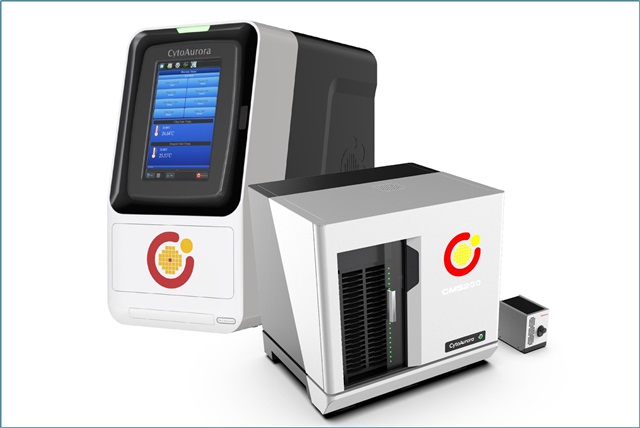
The Nano CAST Cancer Solution for cancer cell detection. Credit: HUA TEC