Taiwan's tech sector is advancing its global layout amid a worldwide push for restructuring supply chains and promoting localized manufacturing. As evidenced in the recent trade agreement between the US and Taiwan, in which Taiwan received reduced tariffs in exchange for increased investments in the US, the so-called "Taiwan model" offers a viable pathway for Taiwanese firms planning to invest in capacity in the US.
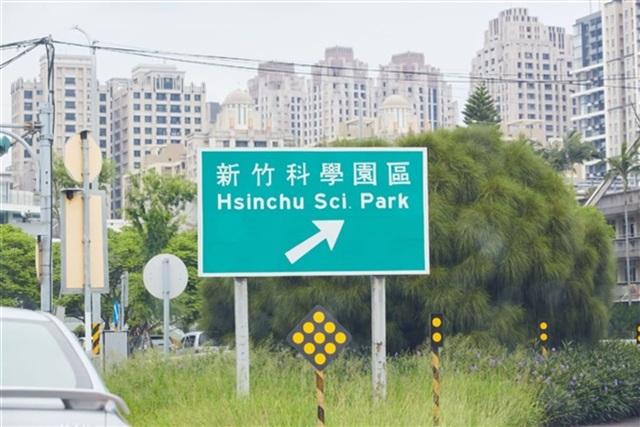
In this regard, the science park strategy advocated by the Taiwan Electrical and Electronic Manufacturers' Association (TEEMA) serves as a key model for bringing abstract blueprints into tangible infrastructure on the ground.
Intergovernmental collaboration meets industry-driven solutions
The Taiwan model primarily functions as a policy framework, centering on intergovernmental collaboration and financial mechanisms that help to reduce institutional barriers and uncertainties for companies seeking to invest in the US. This includes measures for supporting financing guarantees, land and infrastructure acquisition, regulatory processes, and workforce mobility.
Similarly, the TEEMA parks concept also aims to facilitate investments through a collective model, in which a park association serves as the single point of contact with local authorities in negotiating land use, taxation, utilities and infrastructure, and administrative criteria, thereby offering companies a clearly defined and predictable environment for investments.
However, the TEEMA parks concept differs from the Taiwan model by offering an industry-driven, ready-to-occupy framework, with the science park itself serving as a comprehensive solution. Instead of individual companies managing their own construction, infrastructure, and administrative burdens, these responsibilities are unified under the park's comprehensive planning and management. Initial locations under consideration include the US, Mexico, Poland, and India.
From cautious followers to coordinated movers
Using past overseas investments in the ICT sector as an example, Taiwanese supply chain firms generally tended to follow in the footsteps of large contract manufacturers, with suppliers each independently evaluating whether or not to join; however, suppliers would often take a more cautious approach due to incomplete information or unclear cost structures. In contrast, TEEMA parks aim to offer a common starting point for evaluation and planning, and facilitate alignment among upstream and downstream players in terms of information and timing. Ultimately, however, actual occupancy will still depend on individual judgments at each company.
Long-term clustering effects remain uncertain
The potential benefits from industrial clustering and supply chain integration will be in the realm of medium- to long-term prospects, rather than immediate outcomes. As industry insiders point out, whether these parks can attract enough tenants to form a relatively complete industrial ecosystem will depend on multiple factors, including corporate decisions, market conditions, and investment timelines.
At present, TEEMA mainly serves as a platform for integrating information and early-stage matchmaking to assist companies in assessment and planning. Any potential cluster effects and industrial synergies will continue to be influenced by shifts in the global political-economic environment and local policy conditions.
Article edited by Jerry Chen