CONNECT WITH US

Analysis: Why Foxconn and Hotai are targeting Japan's toughest market

Annabelle Shu, analysis; Elaine Chen, DIGITIMES Asia 0

Credit: DIGITIMES

Taiwan's industrial heavyweights are moving into Japan's commercial vehicle market with a level of ambition and visibility rarely seen before.


In recent months, Foxconn and Hotai Motor have independently begun expanding into Japan's large commercial vehicle segment—a move that, on the surface, appears to be a straightforward response to policy-driven opportunities. Beneath that, however, lies a more complex interplay of industrial transformation, strategic complementarity, and geopolitical calculation.

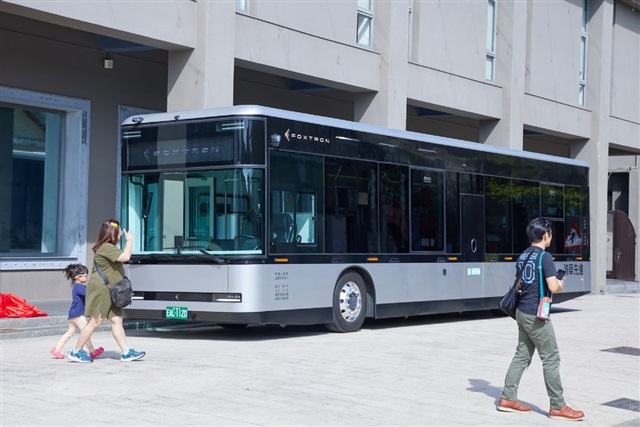
Japan's passenger car market has long been defined by intense brand loyalty, making it notoriously difficult for foreign players to gain a foothold. Yet climate policy is reshaping the landscape. Under mounting pressure to reduce emissions, the Japanese government has laid out clear electrification timelines for buses and logistics trucks, backed by generous subsidies. Those measures have opened a rare entry point for new participants—one that closely aligns with Foxconn's push to scale its Model T electric bus platform.

For Foxconn, the strategic value of Japan goes far beyond securing orders. The country's exacting regulatory standards, demanding service expectations, and complex urban driving conditions offer what industry insiders describe as a "certification premium." If Foxconn's electric buses can operate reliably in Japanese cities, it effectively validates the company's electric vehicle manufacturing capabilities for the global market.

This is no longer just about selling vehicles. It represents Foxconn's effort to put its build-operate-localize (BOL) model into practice—leveraging the efficiency of Taiwan's supply chain to compensate for the slower pace of electrification among Japanese automakers.

Hotai Motor, by contrast, is pursuing a very different strategy—one centered less on technology and manufacturing than on operational expertise.

A longtime partner of Japan's Hino Motors, Hotai has earned a strong reputation in Taiwan for the profitability and service quality of its commercial vehicle distribution network. As Hino confronts channel consolidation and operational pressures at home, its decision to bring Hotai "back" into the Japanese market as a distributor signals confidence in Taiwan's export of managerial and service-oriented know-how.

Hotai is investing tens of billions of yen to build out its presence in Japan's commercial vehicle channels, targeting what it sees as the sector's most stable and enduring source of profits: after-sales and maintenance services. Unlike one-time vehicle sales, trucks and buses generate steady cash flows over maintenance cycles that often span a decade or more.

By securing control over front-line distribution, Hotai is not only taking advantage of favorable currency conditions to acquire assets at relatively low cost. It is also positioning itself to transplant Taiwan's mature management systems into Japan, evolving from a single-market distributor into a cross-border mobility services group.

Taken together, the two strategies highlight a broader division of labor. Foxconn is exporting the "hard power" of the electric vehicle era—hardware, platforms, and manufacturing scale—seeking to reshape the rules of contract manufacturing. Hotai is exporting "soft power" through channel management, service quality, and operational efficiency, extracting value from even the most established markets.

At the intersection of energy transition and industrial restructuring, Japan's commercial vehicle market has emerged as a pivotal testing ground for Taiwanese companies. These moves are not merely about winning local contracts. By gaining traction in one of the world's most demanding markets, Taiwan's industrial champions aim to use Japan as a springboard, demonstrating their relevance across Asia and beyond in the next generation of the global mobility supply chain.

Article edited by Jerry Chen