The human hand is an engineering marvel. With up to 27 degrees of freedom, it can perform tasks ranging from heavy lifting to the delicate threading of a needle. Replicating this dexterity in a machine has long been considered the "Holy Grail" of robotics.
At the upcoming COMPUTEX 2026, one Canadian startup is set to demonstrate that this goal is finally within reach. Sarcomere Dynamics, founded in 2021, is bridging the gap between mechanical rigidity and human-like finesse by combining sophisticated hardware with what industry experts call "Embodied AI" where software intelligence is translated into high-performance, real-world interaction.
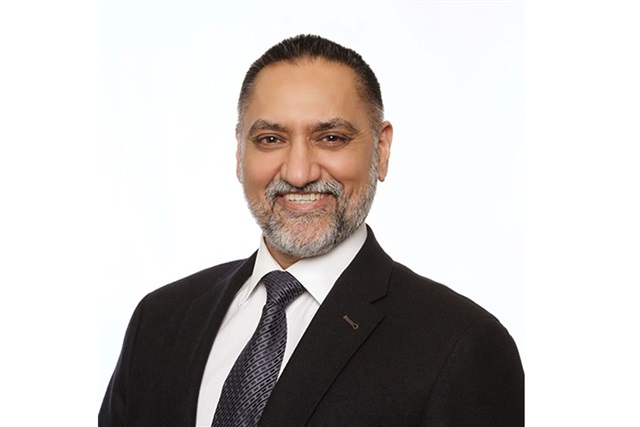
CEO Harpal Mandaher, a 32-year veteran of the Canadian Armed Forces, discussed the company's journey from a student project to a pioneer in the next generation of robotics.
From a Son's Vision to Industrial Reality
The story of Sarcomere Dynamics is a family affair. The company was founded by Harpal's son, Avtar, the current CTO, while he was studying at the University of British Columbia. Initially, the mission was deeply personal: to create an affordable, highly functional prosthetic hand for upper-limb amputees.
"The first prototype was sophisticated, with 11 degrees of freedom," Harpal explains. "But it was too complex for a patient to control easily. However, we noticed immediate interest from industrial players who saw the potential for this hand to automate assembly, sorting, and pick-and-place tasks".
Seeing the opportunity to impact both the medical and industrial sectors, Harpal and his wife, Nancy - also a military veteran and retired professional nurse - joined as initial investors and co-founders.
Solving the Weight-to-Power Puzzle
Most robotic grippers today are simple "pinchers" designed for specific repeating tasks in controlled settings, but not suitable for complex manipulation of objects of different sizes, shapes, textures, or weights. For these high-mix tasks, the human hand is ideal. To create a hand that truly replicates human capabilities, Sarcomere had to overcome significant mechanical hurdles.
"Ideally, for every movement, you need a motor," says Harpal. "Juggling 27 motors leads to massive problems such as heat, weight, interference, and movement control".
Their solution, the Artus robotic hand, is a masterclass in compact engineering: 1. Form Factor: the size of an average human male's hand (it is actually modelled off the CTO's hand). 2. Lightweight: Weighing only 1.1 kg to 1.4 kg, the Artus hand can be used on smaller, more cost-effective robotic arms without exhausting their payload capacity. 3. Durability: Rated for millions of cycles in industrial applications. Key structural components are reinforced with aircraft-grade aluminum to handle payloads up to 20 kg.
The Move to Embodied AI and "Artificial Skin"
Dexterity is nothing without a sense of touch. Sarcomere is currently working with technology partners like Nanosen (Germany) to integrate a layer of "artificial skin" over the hand. This thin sensor layer allows the robot to feel grip force and detect proximity, adding a critical layer of safety.
"If someone touches the back of the robot arm, the machine will know," Harpal notes. "It can pause or react, just as a human would".
This technology is paving the way for Teleoperation in hazardous environments. By wearing a haptic glove, a technician in a safe zone can control the robotic hand naturally and intuitively from a distance. Inside the glove are tiny inflating bubbles to provide tactile feedback (sense of touch), allowing the operator to "feel" what the robot is touching - a gamechanger for nuclear decommissioning, bomb disposal, or handling hazardous chemicals.
Why Taiwan?
As Sarcomere Dynamics eyes global scale, Taiwan sits at the center of their roadmap. Their presence in Taipei for COMPUTEX underscores the island's growing role as the indispensable foundation for the next generation of robotics. Harpal is focused on three key goals, including securing supply chain resilience, exploring the potential to outsource manufacturing and assembly to Taiwan's world-class OEM ecosystem, as well as to find "embodied AI" experts and local robotic arm manufacturers to create integrated, plug-and-play systems.
"We haven't lost sight of why this started," Harpal says. "As we harden the technology for industrial use, we're continuing prosthetics development in parallel, so the same advances in dexterity, sensing, and control translate into a more capable and more affordable prosthetic hand. "