

The US is moving to reinforce critical mineral and semiconductor supply chains with key allies as the West's push to expand rare earth magnet production runs into a worsening shortage of heavy rare earth elements. Officials from eight allied nations will gather at the White House on December 12, 2025, to negotiate new agreements on energy, advanced manufacturing, semiconductor production, AI infrastructure, and logistics, according to Bloomberg. The initiative seeks to limit dependence on China, which controls more than 90% of global rare earth and permanent magnet refining capacity.
Summit targets supply-chain vulnerabilities
The meeting will include representatives from Japan, South Korea, Singapore, the Netherlands, the United Kingdom, Israel, the United Arab Emirates, and Australia.
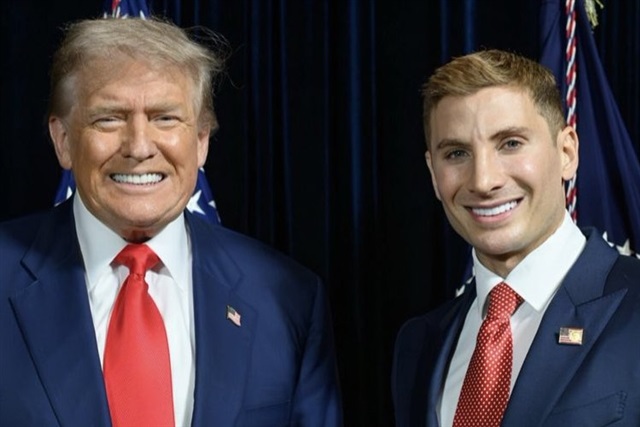
Under Secretary of State for Economic Growth, Energy, and the Environment Jacob Helberg said the countries were chosen for their semiconductor strengths and their access to minerals essential to AI hardware.
Helberg described today's strategic landscape as a "two-horse race" between the US and China. He said Washington wants a stable relationship with China while ensuring American companies are not exposed to coercive supply risks.
The initiative marks a shift from earlier broad coalitions toward focused partnerships with mineral-producing and manufacturing nations. It now spans the full technology stack supporting AI systems. Helberg previously served as a senior adviser to Palantir Technologies CEO Alex Karp and co-founded the Hill and Valley Forum on national security and emerging technology.
This push builds on earlier bipartisan attempts to secure materials like lithium, cobalt, and rare earths. Despite those programs, the International Energy Agency reports that China retains over 90% of global rare earth and permanent magnet refining capacity, compared with approximately 4% in Malaysia.
Western magnet plans face heavy rare earth shortfall
As the US expands diplomatic coordination, the West's attempt to build a rare earth magnet supply chain remains hamstrung by a scarcity of heavy rare earths, Reuters reported. The shortage threatens industries including defense, electric vehicles, consumer electronics, and wind power.
Nevada-based MP Materials, backed by billions of dollars in US government support, is expanding its Mountain Pass operations to integrate mining through to magnet production. The company reported a 51% increase in processed output of two light rare earths. But analysts told Reuters that limited availability of dysprosium and terbium remains the key obstacle. These materials allow magnets to retain strength at high temperatures, particularly in EV motors.
MP Materials' California deposit contains only trace amounts of heavy rare earths. The company is pursuing external feedstock and recycled materials, including under a US$500 million agreement with Apple. Benchmark Mineral Intelligence estimates China will still supply 91% of Western heavy rare earth demand by 2030.
China's export restrictions disrupted output at some automakers earlier this year and accelerated Western diversification efforts. Prices for dysprosium oxide in Rotterdam have surged to US$900 per kilogram, more than three times China's domestic price of US$255, according to Fastmarkets.
New projects advance slowly
Companies across the US, Canada, Australia, and Brazil are working to secure alternative supplies, though progress has been slow. Germany's Vacuumschmelze has signed agreements with miners in Quebec and Brazil to support its new South Carolina plant. Australia's Lynas Rare Earths has begun heavy rare earth separation in Malaysia, becoming the first producer outside China, and plans to increase output of dysprosium and terbium once approvals are in place.
Australia's Iluka Resources is building a refinery designed to process as much as 750 tons of heavy rare earths annually, though operations are not expected to begin until 2027. Northern Minerals aims to supply Iluka with material from a new Western Australia mine starting in 2028.
Despite new investment, the supply gap is widening. CRU forecasts a global deficit of nearly 3,000 tons of dysprosium and terbium oxides by 2035. Mines outside China are projected to meet just 29% of the heavy rare earths needed for auto and wind turbine applications. Environmental constraints, high processing costs, and limited refining capacity continue to impede expansion.
China's dominance looms over AI supply chain push
The US is working to align AI and mineral strategies with trusted partners as Western governments attempt to diversify technology supply chains away from China. While next week's White House summit aims to strengthen cooperation on semiconductor and AI infrastructure, the deepening shortage of heavy rare earths threatens one of the most essential components for advanced computing and clean energy systems.
Helberg told Bloomberg that participating nations understand the economic and military stakes of AI leadership and want to join the next wave of growth. Whether that ambition can be realized will depend on diplomatic coordination and progress in easing structural bottlenecks in heavy rare earth supply, where China's dominance remains largely unchallenged.
Credit: Jacob Helberg
Article edited by Jerry Chen