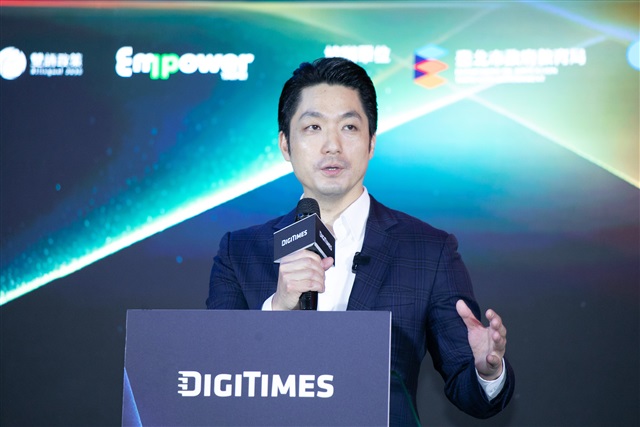
Driven by a wave of massive technological investments and strategic corporate partnerships, Taipei City is rapidly transforming into a premier global hub for Artificial Intelligence. Speaking at the highly anticipated AI Expo Taiwan 2026, Taipei Mayor Wan-an Chiang outlined a comprehensive vision for the city's economic and structural future, highlighted by landmark commitments from industry titans such as Nvidia, Google, and key domestic supply chain players like Wistron.
The cornerstone of Taipei's recent economic triumphs is the successful negotiation with Nvidia. Addressing a crowd of international representatives, tech executives, and citizens, Mayor Chiang enthusiastically announced that as of February this year, the Taipei City Government has officially signed a contract with Nvidia, confirming the AI chip powerhouse's decision to establish a definitive operational foothold in the capital.
"Last year... we were still discussing whether Nvidia would definitely settle in Taipei, and at that time, we couldn't be certain," Chiang reflected on his previous meetings with tech leaders. "Today, I am thrilled to share with everyone that it is confirmed".
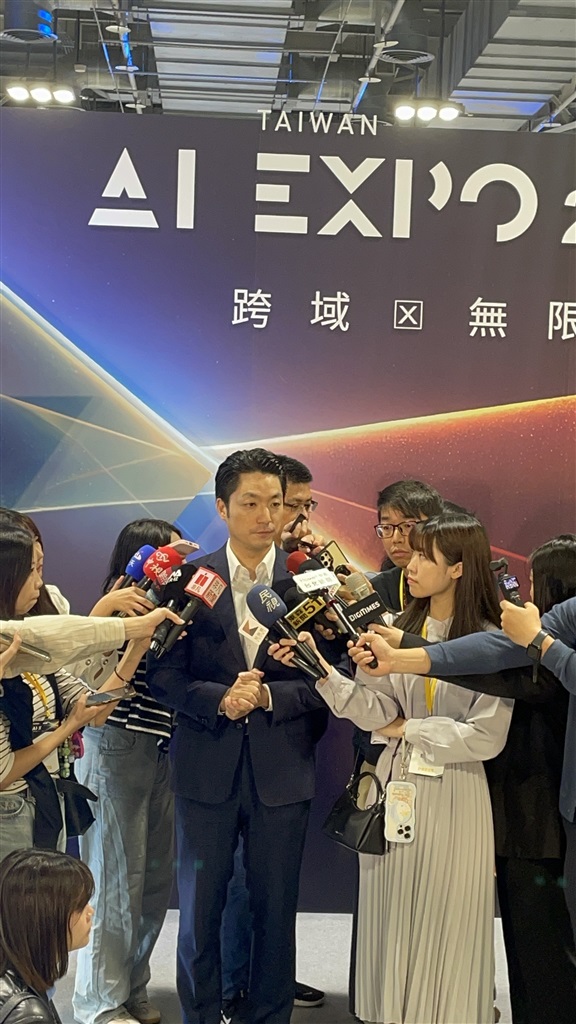
Credit: Joseph Chen
This monumental agreement with Nvidia is part of a broader, aggressive trend of tech giants choosing Taipei as their innovation core.
Mayor Chiang highlighted that Google made a strategic move last October by selecting Taipei's Shilin District to establish its largest AI infrastructure research and development center outside the US.
Furthermore, Taiwan's own vital supply chain partners, Wistron and Wiwynn, completed the construction of their new state-of-the-art R&D headquarters in the city's Neihu District last year.
Together, these strategic investments by Google, Nvidia, and Neihu-based enterprises like Wistron are accelerating Taipei's capacity to serve as a critical nexus for the global tech supply chain.
However, Taipei's AI ambitions extend far beyond merely attracting corporate real estate developments and tech headquarters. The city government is actively integrating artificial intelligence into its own civic infrastructure.
According to Chiang, Taipei stands proudly as the first city in Taiwan to establish official, comprehensive AI operational guidelines.
AI already in everyday lives
The practical implementation of these AI solutions has already yielded dramatic, measurable improvements in the daily lives of Taipei's citizens. For public inquiries, the city's 1999 citizen service hotline has deeply incorporated AI technology, which has significantly enhanced operational efficiency, improving the handling capacity of a single call by an impressive 90%
Even more critically, AI is fundamentally saving lives in Taipei's medical sector. The city has introduced AI-driven electrocardiogram (ECG) interpretation systems directly into its emergency medical services.
As patients are being rushed to the hospital in ambulances, their health data is instantly analyzed and transmitted to the receiving hospital, effectively saving 14 crucial minutes of "golden rescue time".
Additionally, the Taipei Water Department's adoption of AI monitoring systems has drastically optimized municipal resource management, successfully reducing the city's water pipe leakage rate from a historical high of 26% down to just 9%.
These pioneering public-private collaborations and smart city initiatives have commanded attention on the global stage. Chiang shared the proud news that Taipei City has just been awarded a Special Mention at the prestigious Lee Kuan Yew World City Prize in Singapore. Widely regarded by the international community as the "Nobel Prize of city governance," the award involves an incredibly rigorous global evaluation process, culminating in comprehensive on-site inspections by an international jury of experts.
This marks the first time a Taiwanese city has ever received such an honor, directly underscoring the success of Taipei's citizen-centric AI governance and public-private synergy.
Looking ahead, Chiang remains deeply confident that the convergence of progressive domestic policies, the anchoring of international tech giants like Nvidia and Google, and the relentless innovation of local heavyweights in Neihu will propel the city to unprecedented heights.
"We hope to align with the role Taiwan plays in the global wave of AI industrial development," he stated to the Expo attendees, expressing his ultimate goal to lead Taiwan's AI industry to become "the strongest heart and the most powerful engine" for the next two decades and beyond
Article edited by Jack Wu