
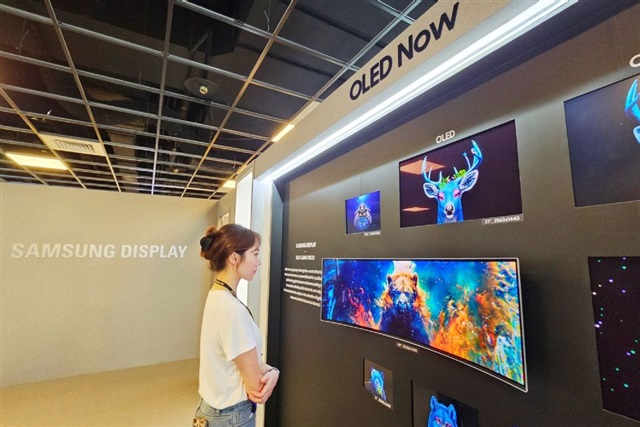
Sony's decision to form a TV joint venture with TCL is being read in South Korea less as a routine corporate reshuffle than as a structural challenge to the country's long-held dominance in premium TVs and OLED panels. The deal has triggered unease not only about Sony's future role in TVs, but about whether Samsung Electronics can continue to dictate the industry's technological and competitive agenda.
According to South Korean media outlets The Elec and Digital Daily, Sony and TCL jointly announced on January 20 that they had signed a memorandum of understanding to establish a TV and home entertainment joint venture, with TCL holding a 51% stake and Sony retaining 49%. The partners aim to conclude a binding agreement by the end of March 2026, with commercial operations targeted for April 2027, pending regulatory approvals.
Under the proposed structure, TVs will continue to be sold under the Sony and Bravia brands, but will increasingly rely on TCL's hardware platforms and manufacturing capabilities. For South Korean industry watchers, this detail is crucial. It implies that one of Samsung's most respected premium rivals may soon be powered by a Chinese supply chain, rather than by South Korean display technology.
Scale is the first source of concern. Market researchers estimate that Samsung will ship about 35 million TVs in 2025, maintaining its position as the world's largest TV vendor. TCL is close behind with just over 30 million units, while Sony's shipments have fallen to around 4 million, placing it outside the global top tier by volume. Combined, however, TCL and Sony approach Samsung's scale, particularly if the joint venture allows tighter coordination between brand positioning and manufacturing.
The implications are sharper in the premium segment. Sony's TV volumes are small, but disproportionately influential. Of its roughly 4 million annual shipments, close to one million units are either OLED or MiniLED models, categories that anchor brand perception and profitability. For TCL, which still derives most of its revenue from mid- to low-priced TVs, Bravia offers an immediate upgrade path into the high end.
OLED technology sits at the centre of South Korea's anxiety. Sony entered the OLED TV market in 2017 using panels supplied by LG Display and later Samsung Display. TCL, by contrast, remains the only major global TV brand without a commercial OLED lineup. That gap may soon close. TCL's panel subsidiary, TCL CSOT, is accelerating investment in an 8.5-generation OLED fabrication line based on inkjet printing, with mass production of large-size panels targeted for 2026-2027, precisely when the Sony-TCL joint venture is due to launch.
If Sony's future Bravia models were to adopt TCL CSOT's OLED panels, the impact would extend well beyond one brand. South Korean panel makers would face the loss of a prestigious customer, while Samsung's own premium TV narrative—built around OLED, QD-OLED, and brand leadership—would confront a stronger, vertically integrated Chinese challenger.
Some analysts in Seoul describe the deal as part of a broader "de-Koreanisation" of the global TV and panel supply chain. Over the past decade, South Korean firms replaced Japanese leaders; now Chinese manufacturers are pressing upward, combining scale, state-supported capital investment, and growing technological ambition. In this reading, the Sony-TCL alliance is not an isolated partnership but another data point in a gradual rebalancing of power.
For Samsung and its domestic peers, the warning is less about immediate market share loss than about trajectory. Maintaining leadership will require continued differentiation at the technology frontier, tighter control over premium branding, and a broader customer base for advanced panels. The Sony-TCL joint venture does not dethrone South Korea's TV champions overnight, but it underscores how fragile dominance can become when scale, technology, and branding begin to align elsewhere.
Article edited by Jack Wu