
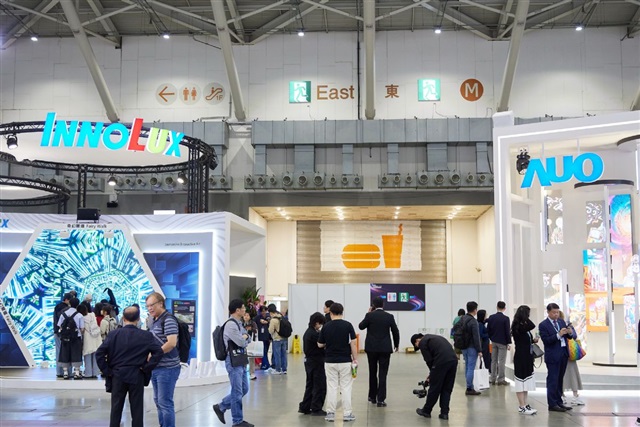
BOE former chairman Wang Dongsheng once predicted that panel production lines below Generation 7.5 would eventually be phased out following the end of the industry's oligopolistic phase. Yet Taiwan's leading panel makers are taking a more nuanced path. While capacity reductions continue, both AUO and Innolux reject a blanket shutdown approach, opting instead for selective and strategic adjustments.
The stance reflects a broader recalibration across the display sector, where prolonged supply-demand imbalances and structural shifts are forcing manufacturers to rethink how, rather than how much, they produce. For both companies, the answer lies not in eliminating entire generations of capacity, but in aligning production more closely with product mix, cost structure, and long-term competitiveness.
Innolux adopts flexible capacity model tied to competitiveness
Innolux chairman Jim Hung said plant closures do not follow a fixed formula. The company has never defined a cutoff generation for shutdowns, choosing instead to continuously reassess its competitive position while maintaining stable, long-term customer relationships. This approach allows Innolux to adjust capacity dynamically in response to market conditions.
Hung noted that Innolux operates the world's largest Generation 5 fab, now in service for 15 to 20 years. Rather than immediate decommissioning, the company is optimizing utilization. The planned closure of Fab 2 and Fab 5 is expected to improve cost efficiency and support profitability.
Innolux president Jeffrey Yang added that the company's LCD TV panel business is concentrated in small- to mid-sized segments. These products remain viable across Generation 6, 7.5, and 8.5 lines, and in some cases are better suited to smaller-generation fabs. As a result, Innolux sees no need to impose a rigid threshold for retiring lower-generation capacity.
Hung emphasized that differences in capabilities, talent, intellectual property, markets, and customer structure mean that each panel maker must chart its own path. BOE and Innolux operate under distinct strategic frameworks, and adjustments will reflect those differences.
He added that the industry benefits when companies move beyond competing within a single narrow segment. Diversified investment directions, he said, ultimately contribute to a healthier and more sustainable ecosystem.
AUO pivots to value-driven production and selective consolidation
AUO chairman Paul Peng outlined a similar but more structurally defined approach, rooted in the company's shift toward a "small-volume, high-mix" and value-oriented business model. While high-generation fabs remain suited for large-scale, standardized output, AUO does not view them as essential for all product categories.
Peng identified three structural challenges facing Generation 5 lines: smaller panel sizes in certain applications leading to higher cost per unit area, aging equipment — much of it built before 2000 — and rising carbon costs under tightening net-zero and emissions requirements.
Against this backdrop, AUO will gradually phase out less competitive lines, but avoids using generation level as the sole benchmark. Instead, decisions are guided by technology relevance and application fit.
He pointed to Generation 6 LTPS lines as an example, noting their strong competitiveness in low-power notebook panels. This underscores a broader shift in industry logic, where technological attributes increasingly outweigh generation hierarchy. Under a high-mix production strategy, the right combination of capacity scale and process configuration can deliver better economics than simply relying on larger fabs.
AUO's capacity strategy centers on parallel integration and consolidation. The company currently operates four Generation 5 fabs, with the number expected to decline over time. At the same time, it is repurposing existing facilities into higher-value application bases. Its Longtan site, for instance, has been transformed to focus on Micro LED, medical displays, and specialty applications.
Peng said production allocation will continue to be determined by product characteristics. AUO retains two Generation 6 a-Si LCD lines and will maintain its Generation 6 LTPS capacity, alongside two Generation 7.5 and two Generation 8.5 fabs. Future adjustments will remain dynamic, aligned with evolving business strategy.
Capital freed up from capacity optimization and asset sales will be redirected toward higher-growth technologies and applications, reinforcing AUO's long-term positioning in a display industry that is becoming less about scale alone and more about precision, flexibility, and value.
Article translated by Levi Li and edited by Joseph Chen