中文網
繁體
简体
SUBSCRIBE
TECH
Tech Home
Semiconductors
Communications
ICT
Displays
Electric Vehicles
Sustainability
Aerospace
REGIONS
Asia Home
East Asia
Southeast Asia
South Asia
Middle East
RESEARCH
OPINIONS
Opinions Home
Interviews
Commentary
Research Insights
Column
FINANCE
BIZ FOCUS
Biz Focus Home
Trending Issues
COMPUTEX
SEMICON
CES
Electronica
EVENT+
Event+ home
Featured Events
MULTIMEDIA
SUBSCRIBE
Trending
Apple
Nvidia
Terafab
AI Search
Scaling AI Glasses
Inference Era AI
Advanced Packaging
Trending
SUBSCRIBE
CONNECT WITH US
Home
Tech
Oct 23
SEMICONDUCTORS
Why is TSMC suddenly looking at Texas?
Oct 23
SEMICONDUCTORS
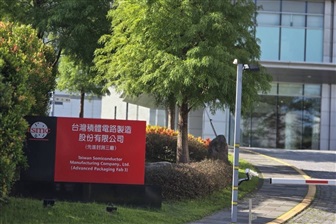
TSMC advances CoPoS packaging at Taoyuan Longtan site
Oct 23
SEMICONDUCTORS
SK Hynix halts Solidigm IPO review in face of broader AI and market volatility
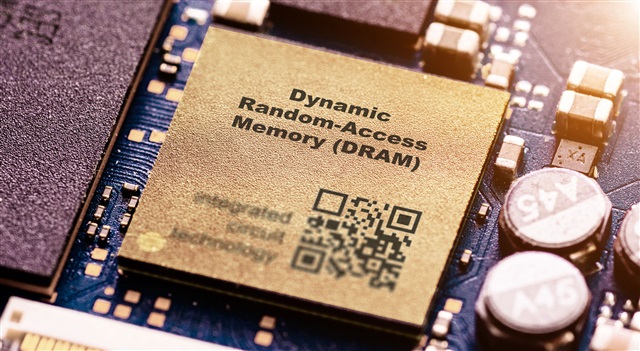
4F2 DRAM development
Memory leaders are making progress with the next-generation 4F2 DRAM designs, a part of the industry's move toward vertically stacked 3D architectures to increase performance.
Micron skips 4F² for 3D DRAM as CXMT pushes ahead
CXMT's next DRAM milestone: 4F² server memory with hybrid bonding by end-2026
AI dividend drives Taiwan's memory makers from trough to transformation
...More
SEMICONDUCTORS
Oct 23
TSMC reportedly surveys suppliers on rare-earth-free motors as China's export-control pause nears legal expiry
The world's largest contract chipmaker is weighing whether the motors inside its factory-automation equipment can run without rare-earth magnets, a sign that China's grip on rare earths now reaches the machinery that keeps fabs running, just as a key Chinese export-control pause approaches its legal expiry date.
Oct 23
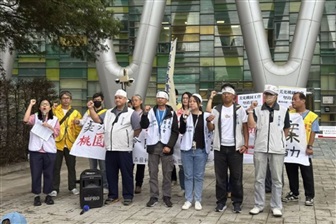
Taiwan's inaugural semiconductor strike pauses as nearly 70% of Micron Taoyuan Union rejects new bonus offer
Taiwan's first-ever strike in the semiconductor industry has temporarily drawn to a close. A 24-hour warning strike spearheaded by Micron Technology's Taoyuan union concluded on the morning of October 23, 2026. During the action, an internal ballot saw nearly 70% of all union members sign statements opposing management's proposed compensation structure. Formal labor-management negotiations are set to resume on October 27.
Oct 23
Nvidia B300 chips reportedly surface on China Telecom-linked network, raising export-control questions
Israeli security firm Lava identified 32 Nvidia Blackwell Ultra B300 GPUs through monitoring endpoints linked to China Telecom, a state-owned carrier. The chips are barred from sale to China under US export controls. The finding adds to questions about whether the restrictions can keep advanced AI processors out of the country, but the network data does not establish where the GPUs are physically located.
ICT
Oct 23
Commentary: How long can the humanoid robot bubble last? Unitree's valuation correction puts physical AI to the test
Concerns over a potential AI bubble are intensifying. From large language models (LLMs) and AI data centers to humanoid robots, investors are increasingly questioning when massive capital investments will translate into corresponding revenue and profits.
Oct 23
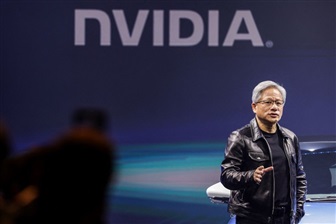
Analysis: Nvidia's Vera CPU takes on Intel and AMD with a platform play
Nvidia has won a CPU supply order from AI startup Modal, challenging Intel and AMD in the server CPU market as it expands beyond GPUs into general-purpose computing. Although Modal's annual revenue is below US$1 billion, and neither the order's value nor its deployment scale has been disclosed, the deal underscores a broader shift in AI infrastructure competition toward full-stack system integration.
Oct 23
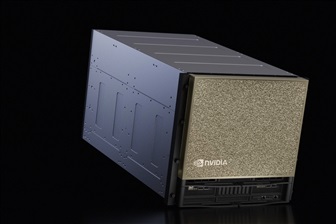
Analysis: Nvidia's DSX POD reshapes AI factory supply chains
As AI data centers accelerate construction, supply-chain competition is expanding beyond servers and fully integrated racks to the integrated delivery of computing modules and site engineering. Nvidia unveiled its DSX POD reference design based on the Vera Rubin platform at GTC Berlin, with partners installing, integrating, and validating equipment inside containerized modules before transporting them to customer sites for final assembly and operation.
TRENDING
SEMI
SUBSTRATE
3D
2025
BUSINESS
CXMT
COMMUNICATIONS
Oct 23
Apple's foldable iPhone Duo launches in China with delivery stretching into 2027
Apple Inc.'s first foldable iPhone, the iPhone Duo, went on sale in China on October 23, with limited initial supplies pushing some preorder delivery dates to late January 2027. The launch, just ahead of China's Single's Day shopping season, has become a key indicator for the country's smartphone market.
Oct 23
Oppo targets premium smartphone growth with global Find X10 launch
Oppo unveiled the international version of its Find X10 smartphone series in Spain on October 22 (Taiwan Standard Time), following the line's China launch in late September. The move marked the company's latest effort to strengthen premium smartphone shipments as competition intensifies and overall demand remains under pressure.
Oct 24
SpaceX's 80,000-site push turns Starlink from satellite overlay into full mobile challenger
SpaceX has firmly established itself in direct-to-device connectivity through Starlink's expanding satellite constellation. But the space giant is now pushing beyond orbital coverage as it seeks an equally consequential position in terrestrial mobile infrastructure.
ELECTRIC VEHICLES
Oct 23
Analysis: Can Tesla's thruster-equipped Roadster hit public roads? US, China, EU regulations pose hurdles
Tesla's three new Roadster variants could face different regulatory pathways before they are allowed on public roads—or take to the skies.
Oct 23
Chinese luxury carmakers face barriers in Europe's premium market
Chinese luxury carmakers are expanding in Europe but face barriers that differ from those in China. Brand recognition, sales and repair networks, financing, leasing, and used-car values could slow progress, while established German manufacturers retain most of Europe's premium market. The Chinese carmakers' efforts will test whether technology can overcome entrenched expectations.
Oct 23
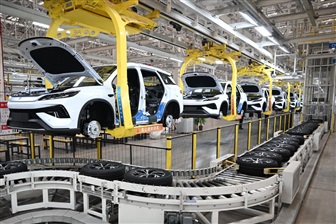
China's weak car market squeezes automakers, suppliers and dealers
China's weakening car market is challenging automakers, parts suppliers, and dealers as exports rise but domestic demand contracts. For global industry watchers, the downturn is a test of electric-vehicle resilience, subsidy dependence, and manufacturing overcapacity. Over time, planned capacity controls and corporate consolidation could reshape competition and supply chains worldwide.
SUSTAINABILITY
Oct 23
Taiwan, UK expand offshore wind, CCUS energy cooperation
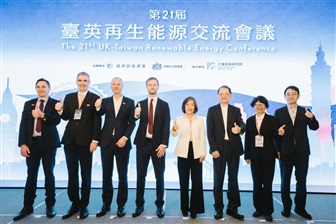
Taiwan and the UK deepened cooperation on offshore wind, carbon capture, and energy security at two bilateral meetings held recently in Taipei. The 21st Taiwan-UK Renewable Energy Exchange Conference brought together about 80 government, industry, and research representatives to discuss energy policy, technical practices, and collaboration on low-carbon technologies. The eighth Taiwan-UK Energy Dialogue Conference followed that afternoon.
Oct 22
Tesla's Megapack boom meets AI power crunch, but margin gains raise questions
While Tesla is expanding its ambitions in autonomous transportation and embodied AI, developments in its energy-storage business are drawing attention following a mixed set of financial results in the company's third-quarter 2026 earnings report.
Oct 22
Amazon backs 960MW nuclear project for AI power
Amazon plans to invest in a proposed 960MW nuclear power plant in Indiana and become its first power purchaser, securing long-term electricity for its AI data centers as it expands its nuclear energy strategy.
AEROSPACE
Oct 23
Elan targets drone market with solutions contributing revenue in 2026 and 2027
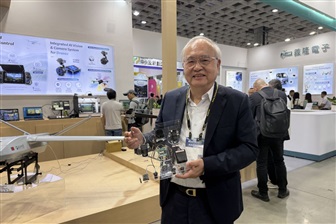
Elan Microelectronics is pursuing drone opportunities across multiple applications, showcasing a broad range of solutions at the 2026 TAITRONICS expo. Solutions developed with Taiwanese drone maker Thunder Tiger stood out at the company's exhibition area, with several offerings expected to begin contributing to revenue in 2026 and 2027.
Oct 22
Taiwan's Aero Win expands role in next-gen engine programs amid global aircraft backlog
Taiwan's aerospace components maker Aero Win Technology is positioning itself for a new growth cycle, capitalizing on robust aircraft engine demand while expanding its role in next-generation development programs. With global aircraft production struggling to keep pace with orders, the company's gross margin reached a record 26% in the first half of 2026, up 8pp year-over-year.
Oct 22
Racing Electric Instrument expands across drone systems
Motor manufacturer Racing Electric Instrument (REI) is expanding from propulsion systems into electro-optical/infrared (EO/IR) payloads and inertial navigation for drones, targeting gaps in Taiwan's unmanned systems supply chain and supporting the development of locally controlled drone technologies.
DISPLAYS
Oct 23
Apple reportedly taps BOE for LCD iMac development, keeps OLED timetable in question
Apple has reportedly asked BOE Technology and other panel makers for technical information on LCD panels for a future iMac, raising questions about the pace of its OLED transition. The potential LCD model's launch around 2029 overlaps with industry expectations for the first OLED iMac in 2029-2030.
Oct 23
Chinese phone brands beat Samsung, Apple to high-refresh OLED
Chinese smartphone brands have brought high-refresh-rate OLED displays to market ahead of Samsung Electronics and Apple, with Visionox and BOE supplying 185Hz panels for the iQOO Neo 12 and RedMagic 12 Pro+, respectively. The move sets a new standard for smartphone applications, where power consumption remains a major concern, and has drawn market attention.
Oct 23
LG Display sees foldables growing faster than expected, but Apple's first foldable panels reportedly go to a rival
LG Display expects foldable smartphones to grow faster than the market had forecast. That outlook carries a complication: the company reportedly does not make folding phone screens. On its third-quarter earnings call on October 22, Seung-ryong Baek, vice president for small display planning, said a customer's new foldable had drawn growing interest since pre-orders opened on October 16.
BIZ FOCUS
Oct 23, 08:00
AI Wealth Management: MaiCoin Leverages Startup Energy for Next-Gen Fintech
Thursday 22 October 2026
HOYA BIT Explores AI Data Analysis Solutions for Smarter Trading
Wednesday 21 October 2026
Starting with Data Challenges: TS Holdings Explores AI Through Hackathon
Tuesday 20 October 2026
Cincoze's EMC Solution Boosts Equipment Stability and Production Efficiency
MOST-READ
7 DAYS NEWS
TSMC, Intel named as Musk's Terafab ambitions face reality check
GlobalFoundries wins US$2 billion TSMC interposer deal, closing a US packaging gap
Beyond 16 layers: HBM stacks test advanced packaging equipment makers
TSMC breaks silence on Musk's Terafab: Talks underway, but fab control non-negotiable
TSMC advances CoPoS packaging at Taoyuan Longtan site
Taiwan wafer-testing supplier Hermes Testing Solutions commits more than US$215 million to advanced chip testing expansion
Interview: From afterthought to bottleneck, circuit boards move to the heart of AI hardware
Podcast highlights: TSMC's 3nm demand story, Samsung HBM shift, and A14 ramp
Meta prioritizes high-margin AI inference as Wiwynn, Quanta eye CPU server demand
India roundup: India's tech build-out opens new markets, but foreign suppliers are first in line
Full list
MULTIMEDIA
K-Safety Expo 2026: Safety, rewired, AI takes the front line at the edge of Busan blue
Members only
×
Sorry, the page you are trying to open is available only for our paid subscribers.
Please
login
to read more
New users, please
register
first