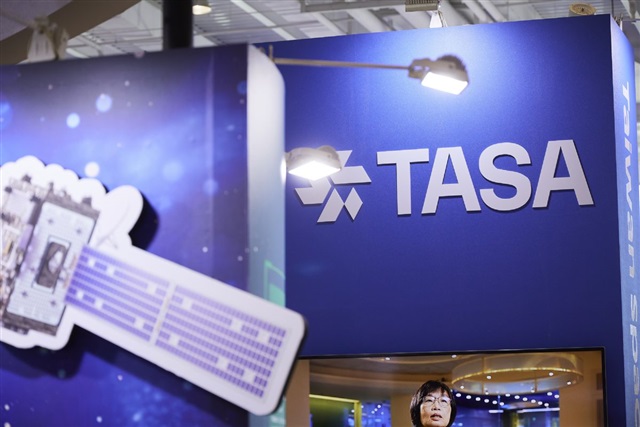
The global space economy is entering a period of rapid expansion, with global space tech private investment reaching a record US$12.4 billion in 2025. Against this backdrop, Taiwan's National Space Organization (TASA) has launched the country's first space accelerator, "TASA iSPARK." Drawing from international ecosystems such as NASA SBIR Ignite and ESA BIC, the initiative aims to help Taiwanese companies leverage their existing supply chain strengths and translate them into space-qualified performance, enabling entry into the global space supply chain.
Benchmarking global space ecosystems
Countries that designate space as a strategic industry have largely developed similar startup support mechanisms. Typically led by national space agencies, these programs integrate technical resources, funding, and market access to lower barriers to entry.
NASA's Small Business Innovation Research (SBIR) Ignite program emphasizes commercialization. Under the program, Phase I awards provide up to US$225,000 in non-dilutive funding, while Phase II awards provide up to US$1.275 million to support further development and market transition. Early recipients such as Firefly Aerospace and Redwire have since entered the commercial market.
In Europe, the ESA Business Incubation Center (ESA BIC), under the European Space Agency (ESA), operates 37 centers across 23 countries. It provides office space, technical mentoring, and seed funding and has incubated more than 2,000 startups to date.
Japan's JAXA operates J-SPARC under a co-creation model, with JAXA engineers working directly with companies to develop projects and reduce technical and R&D risks. Axelspace Holdings, a small Earth observation satellite developer, was listed on the Tokyo Stock Exchange Growth Market on August 13, 2025, and is one of J-SPARC's success cases.
Dr. Evin Liao, Department Director of Space Industry Promotion of TASA, noted that low Earth orbit satellite giant SpaceX also faced financial distress in its early years and ultimately survived with critical funding support from NASA. Successful markets require an accelerator program as a foundation, Liao said, adding, "This is precisely why we established iSPARK."
Taiwan's industry structure and margin constraints
According to Liao, about 90% of Taiwan's space satellite output value in 2024-2025 is concentrated in ground equipment, or user terminals, including low-noise amplifiers (LNA), RF transceivers, and phased array antennas.
While ground equipment has provided the fastest path to profitability for Taiwanese companies, intensifying competition has begun to compress margins. To pursue higher technical barriers and higher margins, Liao said, Taiwanese firms must move into critical components within the satellite platform itself.
Liao added that once satellite components pass validation, they can generate profits far exceeding those of ground equipment, even at relatively low shipment volumes.
Satellite application services represent another relatively untapped opportunity for Taiwanese companies. Liao suggested that integrating Taiwan's existing AI computing capabilities to deepen data analytics and application services could provide strong differentiation. In this context, the strategic value of iSPARK lies in linking domestic and international resources and providing rare in-orbit verification opportunities, helping Taiwan's space industry enter the global supply chain.
Policy support and supply chain positioning
Liao said TASA plans to launch more than 30 satellites over the next five to six years, including FORMOSAT-8, FORMOSAT-9, and B5G communication satellites. These national missions effectively serve as training grounds for Taiwan's supply chain.
In a global space industry that places a premium on reliability, Taiwanese companies that obtain "flight heritage" are more likely to secure entry into the supply chains of international players such as SpaceX and OneWeb.
In addition, the TASA Act recently advanced in the US House Committee on Science, Space, and Technology, a move expected to further elevate Taiwan's strategic position and de-risking advantages within the global space supply chain.
Article edited by Jack Wu