
These are the most-read DIGITIMES Asia stories in the week of December 15 to December 21, 2025.
'Father of Immersion Lithography' warns: Intel's TSMC talent grab invites process tech scrutiny
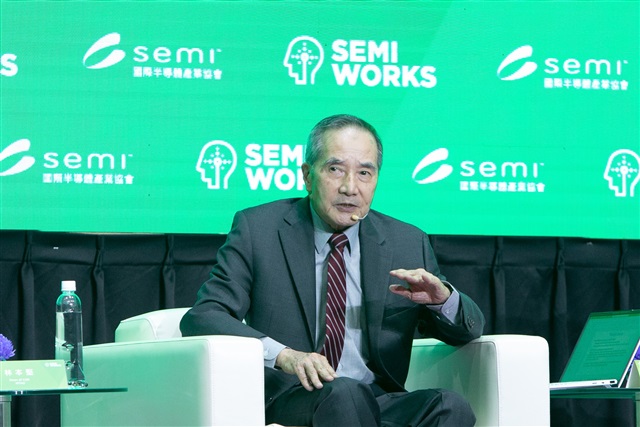
Intel's recruitment of Wei-jen Lo, formerly a senior vice president at TSMC, underscores the US chipmaker's push to regain process leadership but also exposes it to heightened legal and technical scrutiny, according to semiconductor veteran Burn J. Lin. Speaking in December, Lin said the hire, which prompted TSMC to file a lawsuit on November 25, alleging risks to sub-2nm trade secrets, reflects Intel's urgency rather than a guarantee of manufacturing parity with the world's largest foundry.
Lin, widely known for pioneering immersion lithography, argued that even senior strategists cannot easily replicate TSMC's edge, which he said rests on tightly coordinated mass-production teams rather than individual expertise. He warned that if Intel's future process roadmap appears to converge abruptly with TSMC's proprietary technologies, the burden would fall on Intel to prove independent development.
Samsung Foundry reportedly wins Intel 8nm order after Nvidia
Samsung Electronics' foundry division has secured an 8nm manufacturing order from Intel, reinforcing its push to monetize mature advanced nodes and adding another blue-chip customer after Nvidia, according to Korean media and analysts.
The Korea Economic Daily reported that Samsung is nearing qualification for mass production of Intel's Platform Controller Hub chips, with volume output expected in 2026 after Intel shifted the product from a 14nm line in Austin to Samsung's 8nm process in Hwaseong, South Korea. Analysts say Intel's decision, notable given its dominant share of the PC CPU market, signals confidence in the yield stability and cost competitiveness of Samsung's 8nm node, which is also used by Nvidia for GPUs in Nintendo's next-generation Switch 2 console.
Moore's Law of Economy: Former TSMC exec warns semiconductor talent gap could widen 15-fold
Burn-Jeng Lin, a former TSMC research and development executive, said on December 16 that global semiconductor talent shortages could expand 15-fold as countries push to build complete supply chains. Speaking as dean of National Tsing Hua University's College of Semiconductor Research, Lin said Moore's Law is approaching physical limits at sub-2 to 3nm scales and argued that future competitiveness will depend on a "Moore's Law of Economy," emphasizing cost, energy efficiency, and manufacturing execution over further transistor shrinking.
China's EUV prototype forces a rethink of the AI chip order
China has built a working prototype of an extreme ultraviolet lithography machine in a tightly controlled Shenzhen laboratory, Reuters reported, marking a step forward in its effort to reduce reliance on Western semiconductor technology. The state-backed system, coordinated by Huawei, can generate EUV light but has not yet produced commercial chips, underscoring how US-led export controls on ASML tools have accelerated China's push to replicate critical chipmaking technology.
Analysts say major technical hurdles remain, particularly in optics and reliability, with meaningful production unlikely before around 2030, but the prototype highlights Beijing's willingness to absorb high costs and long timelines to remove a key foreign choke point in advanced chip manufacturing.
SK Hynix reportedly eyes specialty DRAM manufacturing to fend off China memory surge
SK Hynix is considering entering low-power DRAM contract manufacturing for the first time as competition from Chinese suppliers intensifies, a move that could reshape regional memory supply chains. Munhwa Ilbo reported that the company plans to produce specialty LPDDR and multi-chip package DRAM for a domestic fabless partner starting as early as 2027, marking a shift from its traditional integrated device model.
The strategy comes as China's ChangXin Memory Technologies (CXMT) pushes toward mass production of DDR5 and LPDDR5X in 2026 and is seen as a way for SK Hynix to support the K Memory ecosystem and improve utilization at older fabs. If expanded, the move could gradually reduce Korean designers' reliance on Taiwanese foundries such as Nanya Technology and Powertech.
Micron's DDR5 outsourcing ramp redraws memory packaging trajectories through 2026
Tight memory supply and rising prices are driving strong growth for Taiwan's outsourced semiconductor assembly and test sector, with demand visibility extending into the second half of 2026, industry executives said. As DRAM inventories at major suppliers drop to two to four weeks, companies such as Micron are expanding the outsourcing of higher-value products like DDR5, boosting utilization and revenue for OSAT providers.
Tenstorrent advances RISC-V AI chips in China with former Arm China CEO
Tenstorrent, led by Jim Keller, has cut about 7.5% of its workforce to improve collaboration as it's stepping up its push into RISC-V-based AI and high-performance computing, including launching its Ascalon CPU in China. Keller told EE Times that the layoffs were not driven by financial pressure, as the company unveiled its full-stack AI strategy and formally introduced the TT-Ascalon RISC-V processor in Shanghai in December 2025.
Backed by a partnership with CoreLab, founded by former Arm China CEO Allen Wu, the move positions Tenstorrent as a challenger to the Arm ecosystem, betting that AI workloads will accelerate RISC-V adoption despite its smaller installed base.
Article edited by Jack Wu