

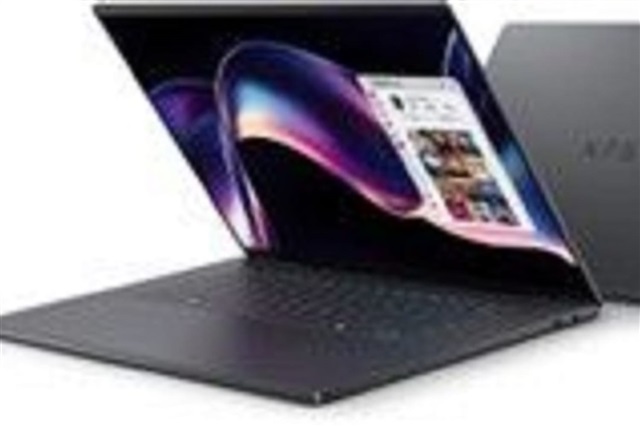
After a one-year hiatus, Dell announced the return of its high-end XPS notebook lineup at CES 2026, unveiling the thin-and-light XPS 14 and XPS 16 and previewing the thinnest XPS 13 in the brand's history, slated for later in 2026. The move marks a public reset of earlier missteps in PC branding and product strategy, as Dell seeks to revive a PC business that has struggled in recent years.
According to Bloomberg, Reuters, The Wall Street Journal, and CRN, Dell vice chairman and chief operating officer Jeff Clarke said the company's PC business had "gone off track" over the past year. He acknowledged that Dell failed to adequately heed consumer and channel feedback, leading to blurred brand adjustments, misaligned product positioning, and a rare public apology to users.
Clarke said the PC market is grappling with slower Windows upgrade momentum, the weakest CPU replacement cycle on record, and AI PC demand that has yet to materialize as expected. A recent memory supply shortage has further tightened end-market demand.
In response, Dell introduced two products positioned to align with current market demand. Both the XPS 14 and XPS 16 use Intel's Panther Lake Core Ultra Series 3 processors, integrating Arc GPUs and NPUs. Dell claims AI performance gains of up to 57% to 78% over the previous generation, with graphics performance improving by more than 50%.
The XPS 14 and XPS 16 will enter limited release in the US and Canada on January 6, 2026, starting at US$2,049.99 and US$2,199.99, respectively. Dell plans to introduce additional entry-level models priced below US$2,000 in February 2026. The XPS 13 will follow later, with a thickness under 13mm, completing the brand's return to the premium thin-and-light notebook segment.
Beyond consumer devices, Dell is restructuring its commercial PC portfolio, reinstating the Precision brand within the Dell Pro lineup to clearly separate high-performance and workstation offerings. PC product head Kevin Terwilliger said Dell Pro Essential will serve as the base security and management platform, while Precision will again anchor high-performance and professional workloads.
On AI PCs, Dell said market education will take time, as purchasing decisions are not yet driven primarily by AI. Even so, the company has deployed NPUs across its new systems and is using tools such as Dell Pro AI Studio to support on-device AI deployment, underscoring a long-term focus on future AI demand.
Clarke added that Dell will expand price-band coverage and step up investment in consumer-focused resources, aiming to avoid again overlooking the mainstream and entry-level PC market.
Article translated by Levi Li and edited by Jerry Chen