

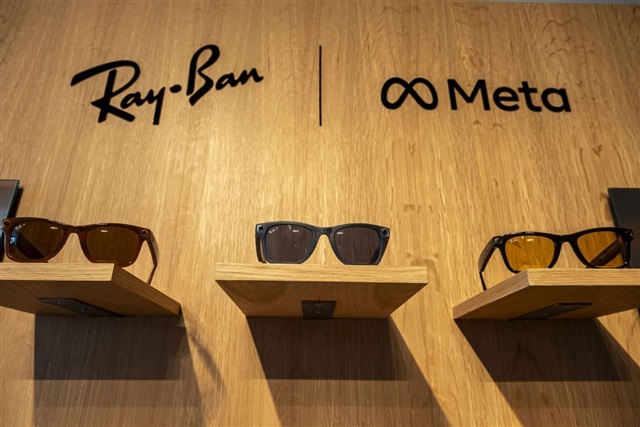
Meta Platforms is reshaping its hardware and AI strategy. After reports of layoffs at its Reality Labs division, the US tech giant is now in talks with EssilorLuxottica to double the annual output of its AI-powered Ray-Ban Meta smart glasses to 20 million units by the end of 2026, from an original target of 10 million. If demand remains strong, production could rise to 30 million units, though no final agreement has been reached.
According to Bloomberg, Reuters, and Wccftech, Meta has used its Ray-Ban partnership since 2019 to enter the smart glasses market, positioning wearable hardware as a core entry point for AI services while reducing dependence on the smartphone ecosystem.
EssilorLuxottica owns brands including Ray-Ban and Oakley, as well as retail chains such as Sunglass Hut and LensCrafters, giving Meta strong support to scale production and expand market share. CEO Francesco Milleri has said smart glasses fit the group's wearable and medical technology strategy and could eventually replace smartphones.
Counterpoint Research estimates Meta held about 73% of the global smart glasses market in the first half of 2025 and forecasts a CAGR of more than 60% through 2029, signalling a fast transition from niche adoption to mass-market demand.
Analysts warn that rapid capacity expansion will strain costs and margins, with smart glasses still less profitable than traditional eyewear in the near term. As volumes increase and component costs fall, economies of scale are expected to gradually improve financial performance.
Refocusing on wearable AI
As it expands its wearable AI devices, Meta is cutting back on its high-cost metaverse business. The company plans to reduce Reality Labs' headcount by about 10%, affecting more than 1,000 employees, and to close three VR game studios: Twisted Pixel, Sanzaru Games, and Armature Studio.
Reality Labs has posted nearly US$70 billion in cumulative losses since 2020, forcing a reassessment of investment priorities under sustained financial pressure.
In an internal memo, Meta CTO Andrew Bosworth said resources will shift away from immersive VR and the metaverse toward more practical, large-scale wearable AI devices and mobile experiences, including faster deployment of Horizon software and AI creator tools on mobile platforms.
He stressed that VR headsets will continue to be developed, but with a leaner organisation and smaller investment scale to ensure long-term sustainability.
Meta's latest moves highlight a strategic shift from a high-cost, low-return metaverse vision to a faster-monetising, demand-driven AI smart glasses market, using capacity expansion and resource reallocation to reinforce its lead in next-generation wearable AI.
Article translated by Levi Li and edited by Jack Wu