
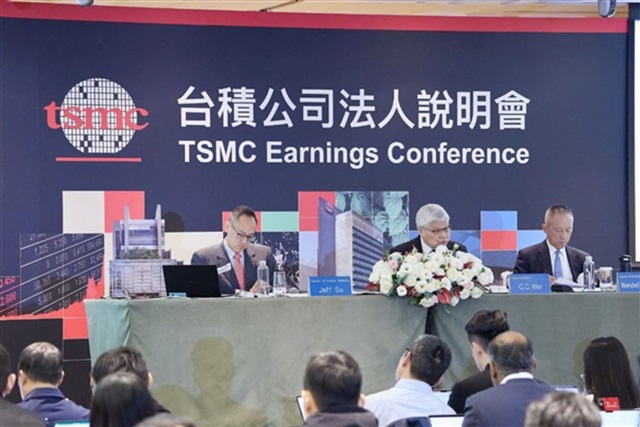
TSMC is now worth US$1.7 trillion. The chip giant has surpassed Broadcom and Meta to become the world's sixth-largest company. But the milestone has triggered fresh concerns in Taiwan.
Some fear the recently concluded US–Taiwan trade talks will drain Taiwan's tech talent. Critics worry Taiwan is trading away TSMC in exchange for preferential treatment in machine tools, traditional industries, and Section 232 products.
Taiwan's government disagrees. Deputy Minister of Economic Affairs Chin-tsang Ho says using foreign resources and talent is now essential for TSMC's continued growth.
Strategic partnership takes shape
Ho laid out his vision at a January 26, 2026, meeting of the Legislative Yuan's Finance Committee. Central bank officials and finance ministry leaders reported on the trade agreement's impact on Taiwan's finance, industries, employment, and markets.
The numbers tell a compelling story. Ministry of Economic Affairs (MOEA) data projects that Taiwan and the US will dominate advanced chip production. By 2030, they'll control an 85%–15% split of sub-5nm semiconductor capacity. That shifts slightly to an 80%–20% split by 2036.
Taiwan will be the world's leading semiconductor and AI manufacturer. The US will become the foremost AI application center. This strategic partnership is already reshaping global tech.
Ho emphasized TSMC's position. The company achieves the best chip yield rates in Taiwan. But as the world's sixth-largest company, it must expand globally. It needs local manpower, resources, and customer proximity abroad to sustain growth.
Supply chain restructuring accelerates
National Development Council (NDC) Deputy Minister Shien-quey Kao sees bigger forces at work. The global supply chain is entering a second wave of restructuring. Taiwan has secured a "Taiwan model" for entering the US supply chain.
The US has pledged concrete support. Taiwanese companies will get help accessing land, utilities, infrastructure, tax incentives, and visa programs. This ensures favorable conditions for semiconductor and ICT investments in the US.
Talent concerns addressed
Hsinchu County legislator Szu-ming Lin raised the brain drain issue directly. Semiconductor engineers based in Hsinchu may be assigned to the US. Won't this hurt Taiwan?
Kao offered a measured response. TSMC's customer base demands it. Some 74% of TSMC's customers are in North America. A global strategy is essential.
The benefits will flow back to Taiwan. US profits will increase local capital expenditure. Core R&D personnel will remain in Taiwan. Only some talent will relocate. Meanwhile, TSMC's US expansion lets Americans contribute to the Taiwan-based company.
Kao outlined the broader strategy. Taiwan and the US will strengthen cooperation with democratic nations in critical fields. Energy, semiconductors, AI, ICT, quantum technology, drones, and smart robotics are all priorities. The goal is clear: establish non-China supply chains.
Major firms will help smaller players. Taiwan's small and medium businesses will gain access to international markets through this partnership.
Market confidence surges
The trade talks have delivered results. Trade uncertainties have dropped significantly. Taiwan's strategic economic partnership with the US is now secured.
Taiwan's high-tech advantages are consolidating. Traditional industries are getting revival opportunities. Global investment firms have taken notice.
Nomura, UBS, and DBS have all raised Taiwan's 2026 GDP growth forecasts. The new projections range from 4.4% to 4.8%. The market has spoken.
Article edited by Jerry Chen