

CONNECT WITH US

Nvidia overtakes Apple as TSMC's largest customer

Sherri Wang, DIGITIMES Asia, Taipei 0

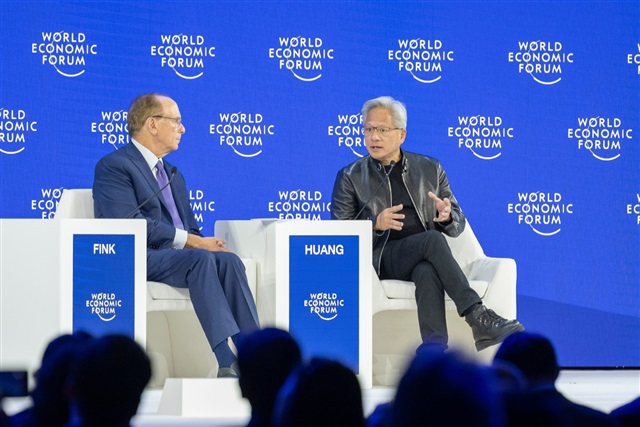
Credit: World Economic Forum

Nvidia CEO Jensen Huang said rising demand for AI computing has pushed the company past Apple to become the largest customer of Taiwan Semiconductor Manufacturing Company (TSMC).

Huang made the comment during an appearance on the A Bit Personal with Jodi Shelton podcast. Recalling an early meeting with TSMC founder Morris Chang, Huang said with a laugh, "By the way, Morris will be happy to know Nvidia is TSMC's largest customer now."

Nvidia was among TSMC's largest customers in the early 2000s, but Apple moved into the top position during the 2010s as the foundry ramped production of processors for the iPhone and iPad. Apple's role expanded further as its in-house silicon became central to Macs and MacBooks.

That balance has shifted as spending on AI accelerators has increased. Nvidia's graphics processing units have become a key component of AI data centers, with enterprise customers committing large budgets to secure supply. Consumer electronics, by contrast, face clearer pricing limits, even as Apple's devices continue to post strong sales.

Tom's Hardware cited reports from Wccftech, based on claims by Apple leaker Fixed Focus Digital, suggesting TSMC has raised prices charged to Apple and adjusted production priorities as AI demand tightens capacity. The reports remain unconfirmed, and neither company has commented publicly.

Huang addresses concerns over AI investment

Huang's remarks on TSMC come as he has defended the scale of investment flowing into AI. Speaking at the World Economic Forum in Davos, Switzerland, he said AI is already delivering economic benefits and requires further investment, according to Business Insider.

Huang described AI as a five-layer stack consisting of energy, chips, cloud infrastructure, models and applications. He said the application layer is where economic returns ultimately emerge, while acknowledging investor concerns over whether current spending levels could lead to a bubble.

"The AI bubble comes about because the investments are large, and the investments are large because we have to build the infrastructure necessary for all of the AI layers," Huang said in Davos.

He added that demand for Nvidia's GPUs remains strong, noting that even older generations have become more expensive to rent as companies allocate a growing share of their budgets to AI.

Infrastructure buildout lifts demand for skilled labor

Huang also said the AI boom is driving demand beyond chips, particularly for workers needed to build and maintain data centers and semiconductor facilities. In a separate Davos discussion reported by Business Insider, he described the current wave of AI investment as "the single largest infrastructure buildout in human history."

He pointed to rising demand for plumbers, electricians, construction workers and other tradespeople involved in building AI infrastructure, noting that wages for some roles in the US have nearly doubled and, in some cases, reached six figures.

"Everybody should be able to make a great living," Huang said, adding that such jobs do not require advanced degrees in computer science.

Huang has long argued that AI is unlikely to eliminate jobs on a large scale, saying it will instead change how work is done while creating new demand tied to the physical infrastructure supporting the technology.

Article edited by Joseph Tsai