The boom in cloud-based artificial intelligence (AI) is reverberating far beyond the most advanced chipmaking nodes.
While cutting-edge processors are running at near full capacity, demand for memory chips and power semiconductors has also surged. The knock-on effect has been unexpected: a revival in demand for older, mature manufacturing processes.
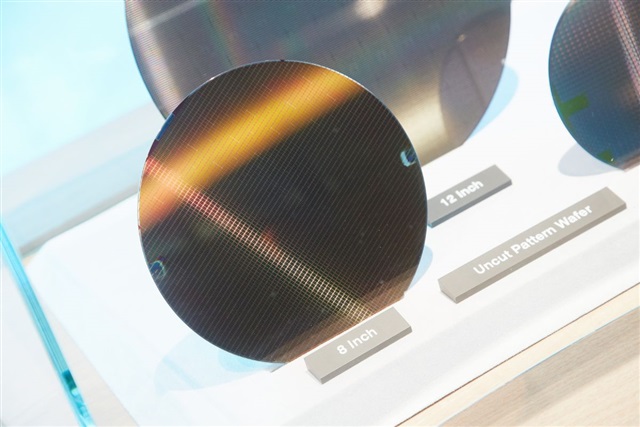
At the same time, major foundries, including TSMC and Samsung Electronics, have been trimming their 8-inch wafer capacity to free up production lines for more advanced products. The result of that push and pull has been to tighten supply just as demand rebounds, restoring pricing power to the once-overlooked 8-inch process segment.
For already cost-pressured chip designers, how to absorb — or pass on — those higher costs is shaping up to be one of the central challenges of 2026.
A capacity squeeze with no relief in sight
Taiwanese IC design firms say that even with demand rising abruptly, few new 8-inch production lines are likely to come online. Without sustained long-term orders, suppliers have little incentive to expand. Capital expenditures remain firmly directed toward 12-inch fabs, which produce more advanced chips.
At best, industry executives say, the pace of 8-inch capacity reductions might slow. In other words, a meaningful expansion appears unlikely.
The pressure is already visible. At a recent earnings conference, the Taiwanese chip designer Fitipower disclosed that booming cloud-AI demand for memory and PMICs is crowding out DDI production on 8-inch lines. Similar bottlenecks, the company warned, could eventually spill over into 12-inch capacity as well.
The sudden reversal in supply-demand dynamics — combined with widespread expectations of imminent price increases for 8-inch wafers — has prompted consumer electronics companies to restock chips built on those processes. The preemptive inventory buildup is further tightening the market, meaning price increases now appear difficult to avoid.
Industry executives say the imbalance created by cloud-AI demand is unlikely to ease anytime soon, suggesting that utilization rates at 8-inch foundries will remain elevated for an extended period.
Who bears the cost?
Companies are responding in different ways.
Some Taiwanese analog IC designers say that while TSMC has been gradually winding down 8-inch capacity, long-standing customers with strong track records may continue to secure production at existing prices for a limited period. That could delay the need to shift orders to alternative suppliers such as Vanguard International Semiconductor or Powerchip Semiconductor Manufacturing, and postpone immediate exposure to higher costs.
Others have looked to China for relatively cheaper foundry options. But several chip designers caution that as subsidies fade and utilization rates climb, Chinese foundries are no longer able to offer the steep discounts of the past. Costs remain somewhat lower, they say, but are rising — and may continue to climb in tandem with global price adjustments.
Some firms are negotiating longer-term contracts to secure modest pricing concessions. Ultimately, however, most executives acknowledge that the real question is how much of the increased cost can be passed along — either to upstream partners or downstream customers.
The answer depends heavily on the chip itself and its role in the end product.
If a chip is urgently needed or represents only a small fraction of a device's total cost, customers are generally more flexible. But such cases are the exception. In a climate where input costs are rising across the board, most customers are reluctant to absorb additional increases.
Only large international suppliers — companies such as Infineon — command enough market leverage to negotiate from a position of strength.
For the rest of the industry, the resurgence of the 8-inch wafer — once seen as a legacy technology — has become an unexpected test of pricing power in the AI age.
Article edited by Jack Wu