
Under a new Canada-China electric vehicle (EV) agreement, Lotus, owned by China's Geely Group, has become one of the first automakers to begin shipments to Canada from Chinese ports. Other Chinese brands, including Chery and BYD, are expected to enter the Canadian market gradually before the end of the year. At the same time, market speculation has emerged that Tesla may have quietly shifted supply sources for its Model 3 in Canada to its Shanghai factory, after the model recently appeared at sharply lower prices.
The agreement, reached between Ottawa and Beijing in January 2026, allows Canada to import up to 49,000 Chinese-made EVs annually. It also eliminates a 100% tariff imposed in line with earlier US policy, restoring duties to 6.1%. The new regime took effect in March. The quota is set to expand over time, rising to 70,000 vehicles by 2030.
According to foreign media reports, Lotus moved quickly to take advantage of the agreement, dispatching its first shipment of 18 Eletre SUVs produced in Wuhan in May. The company also plans to double its Canadian dealership network to 12 outlets by year-end, positioning the brand as a premium EV competitor to established luxury manufacturers such as Porsche.
Separately, BYD and Chery have begun hiring in Canada and building out sales infrastructure, laying the groundwork for direct retail entry. Their Chinese-made electric vehicles are expected to reach Canadian showrooms later this year, targeting the mass market with average prices of roughly CAD30,000 (approx. US$21,899).
Geely has described itself as the first Chinese automaker to respond directly to the Canada-China agreement with exports to the Canadian market.
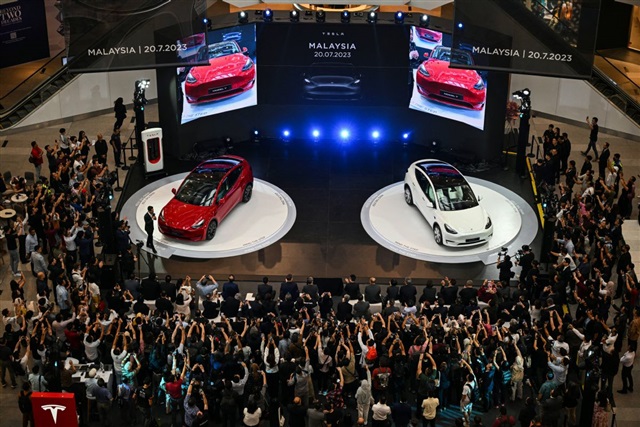
Tesla, however, has already moved to adjust pricing in Canada. Previously, media reports indicated that Model 3 vehicles supplied from the company's Fremont and California plant had reached as high as CAD79,900 after the addition of retaliatory tariffs on US imports.
In May, Tesla introduced a lower-priced version of the Model 3 at CAD39,500. Including shipping and fees, the total price comes to about CAD42,000. The sharp discount has fueled market speculation that Tesla may have rapidly shifted production to its Shanghai factory to maintain competitiveness. The company has also noted that the vehicle is not eligible for Canadian EV subsidies.
Because Tesla already maintains an established port and logistics infrastructure in Canada, analysts say a rapid reconfiguration of supply chains is plausible. If the Model 3 units are indeed sourced from Shanghai, their sales would fall under the 49,000-vehicle quota established in the Canada–China agreement, which operates on a first-come, first-served basis.
Meanwhile, other major US and Japanese automakers already active in Canada have begun preemptive price reductions. In May, they combined government EV incentives for vehicles under CAD50,000 with additional manufacturer discounts in an effort to defend market share ahead of the anticipated influx of Chinese competition.
Notably, Chinese-made vehicles remain ineligible for Canadian government EV purchase subsidies, adding another layer of complexity to their pricing strategy in the market.
Article translated by Elaine Chen and edited by Jack Wu