
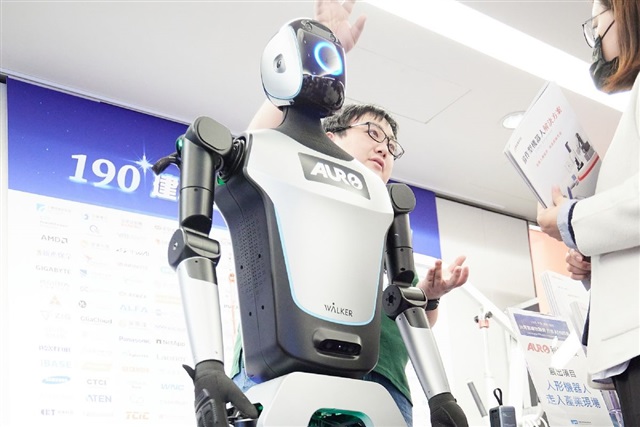
Industry supply chain sources say 2026 is increasingly being viewed as a potential inflection point for the commercialization of humanoid robots, as more developers complete product development and begin rolling out systems across manufacturing, warehouse logistics, and hospitality operations.
While humanoid robots continue to face technical and institutional hurdles, including limits on motion precision, application maturity, sensing accuracy, machine learning performance, battery endurance, and the lack of fully established operating guidelines, industry participants say those constraints are gradually easing. As production scales and development costs decline, market watchers expect deployment to accelerate beyond pilot programs.
Technology, cost, and deployment readiness
Industry sources say ongoing improvements in sensors, AI models, and power management are steadily closing performance gaps that have constrained humanoid robots to experimental use. Developers are also working to improve human-robot collaboration capabilities and task adaptability to better suit real-world environments.
Research firms tracking the sector say the industry remains at an early stage, but note that incremental technical progress, combined with falling component costs, is beginning to support limited commercial deployments rather than pure demonstrations.
Humanoid robots are already being introduced on a trial basis in manufacturing, logistics, and retail settings to support smart manufacturing initiatives, address labor shortages, and improve operational efficiency, according to industry sources.
Some developers are also exploring applications in healthcare and eldercare in response to aging populations, though most such projects remain in research and testing phases rather than commercial rollout.
Pricing trends and vendor strategies
The US is currently seen as the largest near-term market for humanoid robots, with China emerging as a fast-growing development and manufacturing hub, industry observers say.
High upfront costs remain a barrier to broader adoption, particularly before demand reaches sufficient scale. However, pricing is beginning to move lower. Chinese vendors such as Unitree Robotics have introduced entry-level humanoid robots priced at around US$6,000, according to industry sources.
Meanwhile, Tesla has said its third-generation Optimus humanoid robot has entered trial production and that the company aims to bring unit costs below US$20,000. Industry analysts say such pricing targets, if achieved, could materially improve adoption prospects across industrial and service-sector use cases.
On the regulatory front, policy clarity is also improving. The European Union's Artificial Intelligence Act is expected to be phased in between 2025 and 2027, providing a clearer legal framework for AI and robotics deployment across member states.
In Taiwan, the Cabinet has approved a draft of the Artificial Intelligence Basic Law and submitted it to the legislature for review, aiming to establish foundational principles for AI research, application, and governance. Industry sources say the gradual rollout of robotics-related regulations across major markets is expected to reduce uncertainty for developers and end users, supporting broader commercialization over time.
Credit: DIGITIMES
Article edited by Jerry Chen