
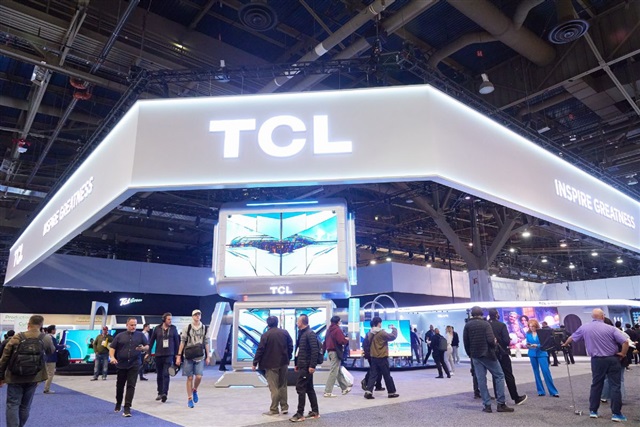
Global TV brands are competing in the high-end market with multiple technologies such as OLED, QLED, RGB Mini LED, and Micro LED, with RGB Mini LED backlighting becoming the focus for manufacturers in 2026. Although TCL Technology is facing technical obstacles, it continues to position SQD Mini LED as its primary flagship. However, some analysts believe that through collaboration with Sony, there may be an opportunity to adjust the positioning of RGB Mini LED TVs.
Market research firm UBI Research says that Sony possesses a powerful XR picture processing engine chip. If this technology is introduced into TCL's RGB Mini LED TVs in the future, TCL may reconsider the positioning of its RGB Mini LED lineup. By observing TCL's strategies at CES 2026, it is evident that SQD Mini LED TVs remain its core flagship products. The company promotes its high brightness, local dimming performance, and strong cost performance. RGB Mini LED models are positioned more toward the upper-midrange or entry-level high-end segment, with a relatively weaker presence. Micro LED serves as the ultimate high-end technological showcase, but its costs currently remain difficult to control.
TCL has yet to fully resolve image quality challenges such as color crosstalk in RGB Mini LED backlighting, resulting in higher costs that are not reflected in product positioning and pricing. As a result, TCL has emphasized that even QD-based technology can achieve BT.2020 100% coverage comparable to RGB, underscoring the first-mover advantage of SQD Mini LED. The RGB Mini LED TV model, Q9M, was previously entangled in a controversy over alleged misrepresentation of its technology, with accusations that it used only two blue (B) chips and one green (G) chip, without a red (R) chip, instead generating red through additional phosphors.
Chinese manufacturer Hisense is actively improving the maturity of RGB Mini LED technology. Through collaboration with MediaTek and the development of in-house chips, Hisense is enhancing image processing capabilities, with continued technological upgrades planned for 2026. At CES 2026, it showcased the world's first four-color RGB Mini LED TV, boasting color reproduction of up to 110% and featuring over 40,000 color dimming zones.
If TCL can leverage Sony's picture processing chips to overcome its RGB Mini LED technical challenges, it may regain pricing power and re-optimize its product portfolio. In the absence of OLED TVs, TCL could then launch more high-end products capable of competing with OLED, though how it differentiates the positioning between SQD and RGB will be critical.
For South Korean manufacturers Samsung and LG, as China's high-end Mini LED technologies continue to advance, hardware efforts must focus on ongoing breakthroughs in competitive RGB and OLED TV technologies. At the same time, they must strengthen on-device AI to deliver differentiated user experiences. To maintain their leadership in the ultra-high-end segment, some analysts believe Korean manufacturers will expand investments in Micro LED TVs going forward.
Article edited by Jerry Chen