

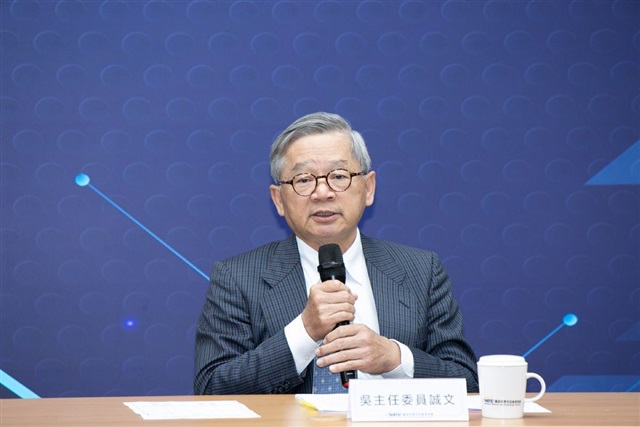
Wei-Jen Lo, former senior vice president of corporate strategy development at TSMC, retired in 2025 and subsequently accepted an invitation from Intel to serve as executive vice president. Judicial authorities have officially launched an investigation and completed evidence collection regarding allegations that Lo leaked sensitive information. Cheng-Wen Wu, Minister of the National Science and Technology Council (NSTC), stated that after the incident, prosecutors consulted the Hsinchu Science Park Bureau to help verify that the sub-2nm process technology taken by Lo constitutes a national core key technology.
In November 2025, TSMC filed a formal lawsuit with the Intellectual Property and Commercial Court, asserting that Lo possessed critical trade secrets likely to be disclosed or used by competitors. To protect its interests, TSMC has pursued legal action, including claims for damages. Prosecutors have also intervened, conducting searches and seizures related to the case.
During a media briefing on March 2, 2026, Wu recalled that when TSMC planned to establish a factory in Nanjing, China, the government lacked clear regulations. It referred to the panel industry's N-2 principle applied in China, requiring TSMC's Nanjing plant to comply accordingly.
Regarding Lo possibly transferring TSMC's 2nm trade secrets to Intel, Wu noted that Taiwan's Investigation Bureau under the Ministry of Justice quickly began gathering evidence and enlisted assistance from the Hsinchu Science Park Bureau for verification. However, since TSMC and Intel use different technologies, even extensive data access may not enable Intel to overcome its own technological bottlenecks.
Given that Lo holds dual citizenship in Taiwan and the US, even though there is no extradition treaty between the two countries, the Taiwan-US Agreement on Mutual Legal Assistance in Criminal Matters facilitates obtaining criminal evidence and freezing or confiscating illicit gains abroad. Taiwanese judicial authorities can thus freeze or seize any crime proceeds Lo might hold in the US under this agreement.
In December 2025, NSTC convened a review meeting confirming 42 items as national core key technologies under the National Security Act. These span fields including defense technology, space, agriculture, semiconductors, cybersecurity, quantum computing, energy, and AI.
Article translated by Charlene Chen and edited by Jack Wu


