


CONNECT WITH US

China's semiconductor godfather warns against 2nm fixation

, DIGITIMES Asia, Taipei
0

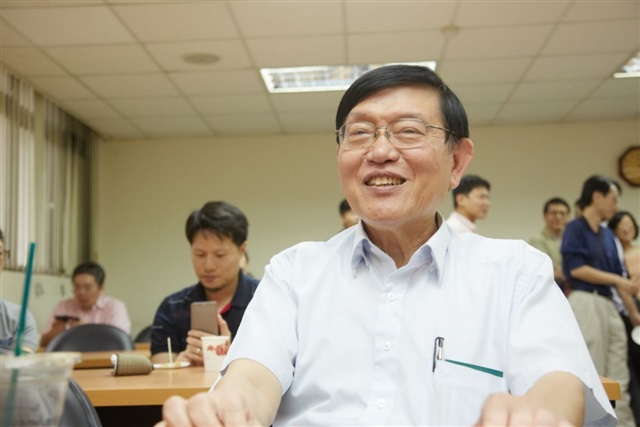
SMIC founder Zhang Rujing. Credit: DIGITIMES

While the global semiconductor industry remains fixated on 3nm, 2nm, and the AI GPU arms race, SMIC founder and "China's semiconductor godfather" Zhang Rujing is pushing a sharply different message: the future of China's chip industry may depend less on chasing the world's most advanced nodes and more on dominating the vast market still built on mature processes.

Speaking during a recent industry visit in Yangzhou, Jiangsu province, Zhang argued that treating semiconductor competition purely as a race toward 2nm and 3nm is a "cognitive misunderstanding," noting that advanced nodes account for less than 20% of global semiconductor demand, while more than 80% still relies on mature and specialty process technologies, according to Chinastarmarket.cn.

His comments come at a time when global attention has increasingly centered on TSMC, Samsung Electronics, and Intel, whose leadership in advanced logic production has become closely tied to the AI boom and geopolitical competition over semiconductor supply chains.

Yet Zhang suggested that China should avoid blindly replicating the strategies of those industry giants. Instead, he argued that domestic firms should focus on niche segments, specialty processes, and supply-chain bottlenecks that remain underserved but commercially durable.

Why mature nodes still matter

According to Zhang, the industry has overlooked the fact that many high-volume semiconductor markets — including automotive electronics, industrial control systems, IoT devices, and consumer electronics — continue to depend heavily on mature manufacturing nodes.

He pointed specifically to 28nm embedded Flash (eFlash) technology, which remains widely used in microcontrollers (MCUs), automotive controllers, and connected SoCs despite years of industry hype surrounding sub-5nm processes.

For automotive and industrial customers, Zhang said, "mature and verified" technologies often matter more than simply adopting the latest node. Automotive chips, for example, frequently require product life cycles spanning 10 to 15 years, placing greater emphasis on reliability, stable supply, and well-understood manufacturing characteristics.

That dynamic has helped preserve the strategic value of mature nodes even as AI accelerates demand for cutting-edge processors.

China has rapidly expanded its position in this segment. Industry estimates cited by Chinese media suggest the country's share of global mature-node foundry capacity has approached 30%, while domestic suppliers have gained ground in automotive-grade insulated-gate bipolar transistors (IGBTs), MCUs, power semiconductors, and OSAT services.

Zhang warned that aggressively pursuing the most advanced logic technologies could trap Chinese chipmakers in costly, homogeneous competition, especially while export controls continue limiting access to extreme ultraviolet (EUV) lithography tools needed for advanced manufacturing below 5nm.

SMIC itself has reportedly pushed deep ultraviolet (DUV)-based manufacturing to around 7nm, but remains unable to secure EUV systems due to US-led export restrictions.

The overlooked AI opportunity

Zhang also challenged mainstream assumptions surrounding the AI chip race.

He divided the AI market into two broad categories: cloud-based large models and hyperscale computing infrastructure on one side, and edge or distributed AI applications on the other.

The first category — large AI training clusters and massive data centers — requires enormous capital investment and is best suited to state-backed entities or major technology giants, he said. The second offers broader commercial opportunities for smaller innovators.

According to Zhang, edge AI applications spanning industrial automation, automotive electronics, wearable devices, AR glasses, and smart terminals could drive large-scale demand for mature-node semiconductors, sensors, power management ICs, MCUs, and specialty packaging technologies.

"AI ultimately needs to land in real-world applications," Zhang said, arguing that distributed AI hardware requirements remain significantly underdeveloped compared with the market's obsession with cloud AI infrastructure.

Rather than competing directly against Nvidia or other global AI chip leaders in high-cost compute silicon, he suggested startups focus on scenario-specific hardware and differentiated architectures tailored to local application needs.

That strategy, he argued, may allow Chinese firms to bypass traditional technology roadmaps and establish stronger competitive positions within the domestic market.

China's niche chip strategy

A recurring theme in Zhang's comments was that China's semiconductor ambitions should not revolve around becoming "big and comprehensive" across every segment.

Instead, he called for more "little giant" companies — highly specialized firms capable of dominating narrow but strategically important sectors.

He argued that solving even a single "chokepoint" technology problem in materials, equipment, specialty manufacturing, or semiconductor components could represent a major industry breakthrough.

Examples of such niche opportunities include radiation-hardened aerospace chips, ultrasound chips for medical devices, and servo driver chips for industrial robots — areas still largely dominated by overseas suppliers.

During his Yangzhou trip, Zhang visited local semiconductor projects, including a high-end 3D silicon capacitor initiative developed by Si-Qian (Jiangsu) Semiconductor Co., according to IT Home and Securities Times. The project aims to replace traditional multilayer ceramic capacitors (MLCCs) using IC manufacturing processes to create silicon-based capacitors optimized for high-frequency and wearable-device applications.

The technology is also designed to support lighter, lower-power AR glasses and distributed AI devices while potentially reducing reliance on advanced packaging approaches currently favored by leading international firms.

Zhang described the project as an example of how Chinese companies could skip legacy development paths and move directly toward optimized next-generation architectures better aligned with emerging domestic demand.

Warning against copycat chip hubs

Zhang also criticized the rapid expansion of semiconductor industrial parks across China, warning that many second- and third-tier cities risk falling into costly copycat strategies centered on large-scale wafer fabs.

A sustainable regional semiconductor ecosystem, he argued, should first establish leadership in a single specialty area before gradually expanding its industrial footprint.

Smaller cities typically lack the capital reserves, talent concentration, and supplier ecosystems needed to support massive leading-edge fab projects, making "big and comprehensive" strategies financially risky and potentially unsustainable.

Instead, Zhang said local governments should focus on specialty materials, unique process technologies, and targeted industrial clusters capable of producing globally competitive niche suppliers.

China's missing semiconductor workforce

Beyond manufacturing strategy, Zhang argued that China's semiconductor industry remains critically short of highly skilled frontline manufacturing workers and technical craftsmen, not just researchers and engineers.

He said semiconductor manufacturing ultimately depends on precision execution inside factories, where yield stability and product reliability are determined.

"People think office jobs are more respectable than factory work, but the foundation of the semiconductor industry is on the manufacturing floor," Zhang said.

To address that gap, Zhang has backed closer integration between vocational education and the semiconductor industry. In April 2026, an Integrated Circuit Facilities Academy jointly promoted by Zhang, Shanghai Ocean University, and the Lingang Special Area administration officially opened in Shanghai, becoming China's first education platform focused specifically on semiconductor fab operations and industrial training.

As geopolitical tensions and AI-driven supply-chain restructuring continue reshaping the global chip sector, Zhang's remarks highlight an alternative vision for China's semiconductor rise — one centered not on winning the 2nm race, but on controlling the massive ecosystem of mature technologies, specialty processes, and industrial applications still underpinning much of the global electronics market.

Article edited by Jerry Chen
