

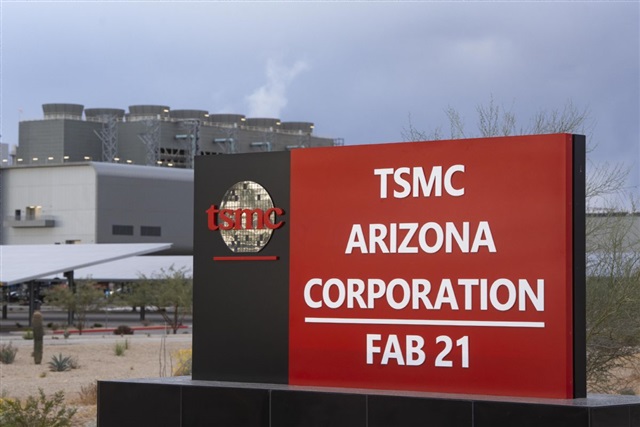
The Trump administration is preparing to spare major US technology companies from a new round of semiconductor tariffs as they expand data center capacity to support the artificial intelligence boom, according to the Financial Times. The plan would grant tariff carve-outs to US hyperscalers, including Amazon, Google and Microsoft, with relief tied to the scale of TSMC's US investment commitments and projected production capacity. TSMC is the world's largest contract chipmaker.
Sources familiar with the matter said the Department of Commerce is designing the exemptions to support rapid AI infrastructure development. The approach also maintains pressure to expand chip fabrication within the US. The strategy uses trade levies to incentivize domestic production. However, the administration is stopping short of imposing sweeping duties on Taiwanese semiconductors that could disrupt Big Tech's AI supply chains.
Tariff relief hinges on TSMC investment
Under the proposal described by the Financial Times, TSMC would allocate tariff exemptions to its US customers based on the scale of its American investments. The Taiwan-based company has pledged to invest US$165 billion to build and expand manufacturing capacity in the US. This includes major facilities in Arizona.
An administration official briefed on the discussions cautioned that the plans remain in flux. They have not been signed by the president. The official said the administration would closely monitor the program to ensure tariff policy objectives are not undermined. The mechanism must not amount to an unwarranted concession to TSMC.
The size of any rebate program would be tied to a recent US-Taiwan trade agreement. Under this deal, Washington agreed to reduce tariffs on imports from Taiwan to 15% in exchange for US$250 billion in investment in the US chip industry. According to a Commerce Department outline, Taiwanese companies building semiconductor plants in the US would be permitted to import up to 2.5 times the planned capacity of new facilities tariff-free during construction. Companies with existing US plants would be allowed to import 1.5 times their capacity without tariffs.
TSMC could pass these earned exemptions to US customers, allowing them to import chips tariff-free. The Financial Times reported that the scope of the carve-outs would depend on TSMC's projected US production capacity. However, many details remain unresolved. The Commerce Department, the White House, and TSMC all declined to comment.
Strategic limits on capacity relocation
As Washington presses for more semiconductor manufacturing on US soil, Taiwan has publicly pushed back against suggestions of a large-scale relocation of its chip industry. Taiwan Vice Premier Cheng Li-chiun said in an interview with Taiwanese television channel CTS that it would be "impossible" to move 40% of the island's semiconductor capacity to the United States, responding to recent comments by US officials calling for a major production shift.
Cheng said she had made Taiwan's position clear to Washington, emphasizing that the semiconductor ecosystem built up over decades could not be relocated. She noted that Taiwan's capacity would continue to grow at home even as companies expand overseas. "Our overall capacity (in Taiwan) will only continue to grow," Cheng said. "But we can expand our presence in the US."
She added that Taiwan's international expansion is based on remaining firmly rooted on the island. While Taiwan will not relocate its science parks, Cheng said the government is willing to share its experience in building industry clusters to help the United States develop a similar environment.
Policy objectives and market constraints
US Commerce Secretary Howard Lutnick has argued that Washington must bring more semiconductor manufacturing back to the US. He cited geographic and security concerns. Speaking this week, Lutnick said the administration's goal is to achieve a 40% market share in leading-edge semiconductor manufacturing by the end of its term.
In earlier interviews, Lutnick said that failure to shift a significant portion of Taiwan's chip supply chain to the US could lead to sharply higher tariffs on Taiwanese imports. Duties could rise as high as 100%. Taiwan has rejected proposals for a near-equal split of chip production between the two countries.
Only a limited category of chips is currently subject to national security tariffs. In January 2026, the Trump administration imposed 25% duties on certain AI chips imported into the US and then re-exported to China by companies such as AMD and Nvidia. Those tariffs were designed to support a White House deal allowing Nvidia to resume shipments of its H200 chips to China. In exchange, the US government would take a 25% share of the sales.
Chips imported for domestic AI infrastructure are not covered by the January levies. However, the Commerce Secretary has recommended broader semiconductor tariffs as part of a second phase of a national security investigation. The differing positions between Washington and Taipei underscore the constraints facing US policy. The administration seeks to reshape global supply chains while maintaining the infrastructure necessary for the AI sector.
Article edited by Jerry Chen