

China's smartphone market contracted in the first quarter of 2026, but stronger-than-expected demand for premium devices from Huawei and Apple helped cushion the decline and reshape industry priorities.
Shipments fell 3.3% year on year to 69 million units, according to IDC and Huawei, as rising component costs and supply constraints pushed vendors to prioritize profitability over volume.
Premium demand reshapes the market
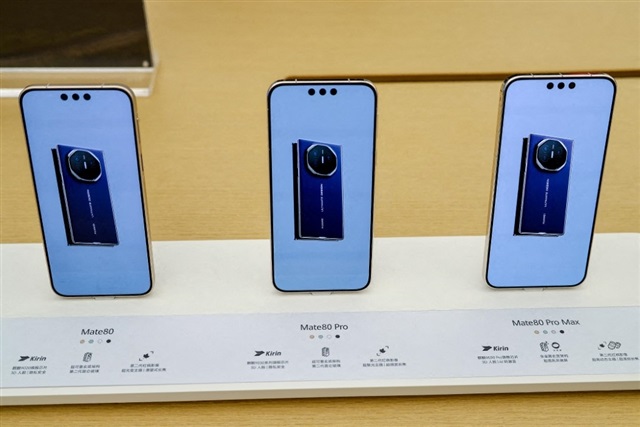
The market is entering a margin-focused phase, with vendors scaling back low-end exposure and shifting resources toward higher-value models. Premium demand remained resilient, led by Huawei's Mate 80 series and foldable Pura X, alongside Apple's iPhone 17 lineup.
This shift reflects a broader transition away from shipment-driven recovery toward quality growth, with operational efficiency and pricing discipline emerging as key metrics for 2026.
Huawei leads, Apple posts fastest growth
Huawei retained the top position in China, shipping 13.7 million units for a 19.8% market share in the first quarter of 2026, supported by improved supply and strong flagship performance. Shipments rose by nearly 1 million units, marking 8.1% year-on-year growth.
Apple followed closely with 13.1 million units and an 18.9% share, recording the fastest growth among the top five vendors at 33.3%. However, supply constraints limited its full shipment potential.
Other major vendors trailed behind. Oppo shipped 11 million units, down 8.5% year on year, while Vivo posted modest growth of 1.1% with 10.5 million units. Honor ranked fifth with 8.9 million units, declining 2.0%
China smartphone shipments and market share by vendor | |||||
Company | 1Q26 Shipments (million units) | 1Q26 Market share | 1Q25 Shipments (million units) | 1Q25 Market Share | YoY Growth |
Huawei | 13.7 | 19.80% | 12.7 | 17.70% | 8.10% |
Apple | 13.1 | 18.90% | 9.8 | 13.80% | 33.30% |
Oppo | 11 | 15.90% | 12 | 16.80% | -8.50% |
Vivo | 10.5 | 15.20% | 10.3 | 14.50% | 1.10% |
Honor | 8.9 | 12.80% | 9 | 12.70% | -2.00% |
Others | 12 | 17.30% | 17.5 | 24.60% | -31.70% |
Total | 69 | 100.00% | 71.4 | 100.00% | -3.30% |
Source: IDC
Costs and supply cap growth
Rising memory and bill-of-materials costs increased production expenses across the industry, forcing vendors to make deliberate trade-offs. Many reduced output of lower-margin devices to protect profitability, even at the expense of shipment volume.
At the same time, component shortages constrained supply, particularly affecting Apple, where stronger growth could have been achieved under more stable supply conditions.
Outlook hinges on cost control
IDC expects the first quarter of 2026 to be the strongest period of the year, with vendors already revising annual shipment targets downward. Market performance for the remainder of 2026 will depend on how effectively companies manage costs, sustain innovation, and navigate ongoing supply chain pressures.
The current cycle suggests a more disciplined market environment, where pricing strategy and inventory control will play a larger role than pure shipment growth in determining vendor performance.
Article edited by Jerry Chen