

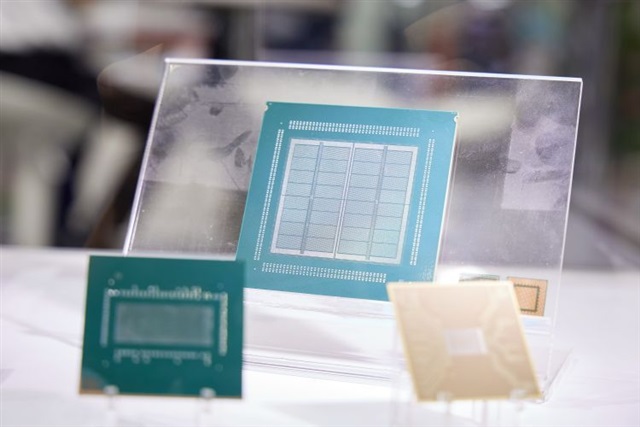
Taiwan's printed circuit board (PCB) industry is set for robust growth in 2025, supported by strong demand from AI servers amid a weakening traditional smartphone market. The Taiwan Printed Circuit Association (TPCA) highlighted that despite external uncertainties such as exchange rate fluctuations and tariff negotiations, the sector benefits from price hikes driven by tight supply of high-end materials, leading to increases in both volume and prices.
Strong growth trajectory fueled by AI demand
TPCA projects that Taiwanese PCB manufacturers' total domestic and overseas output value will reach NT$240.1 billion (US$7.6 billion) in the fourth quarter of 2025, up 10.4% year-over-year. For the full year, total output is expected to hit NT$907.2 billion, marking an 11.1% increase, signaling steady momentum on a new AI-driven growth trajectory.
With the continued expansion of advanced AI chips, shipments of ABF and BT substrates have surged 14.2% year-over-year. High-layer count (HLC) and high-density interconnect (HDI) boards are also rising sharply alongside growing AI server and high-speed switch demand, increasing 20.1% and 8%, respectively.
Flexible PCBs lag amid smartphone market weakness
In contrast, flexible PCBs and rigid-flex boards—closely tied to smartphone and automotive markets—showed slower performance in the third quarter of 2025 due to limited AI-related applications and a high base effect from early 2025 stocking, declining 10.9% and 14.9% year-over-year.
Computer and semiconductor segments lead growth
Examining application segments, computer-related PCB demand grew 25.2% in the third quarter of 2025, while semiconductor applications rose 14.2%, both key drivers in the last quarter.
Besides AI servers, PCs benefited from Windows 11 upgrades and AI PC adoption, boosting revenues significantly. Semiconductor demand was buoyed by stronger-than-expected ABF substrate orders and a dual growth cycle in memory supply and pricing, lifting BT substrate shipments.
Communication and automotive segments face headwinds
Conversely, communication applications declined 7% in the third quarter of 2025 due to front-loaded stocking ahead of tariffs in early 2025. Automotive PCB demand fell 4.3%, pressured by Chinese EV brands accelerating local supply chain integration and aggressive competition from Chinese PCB makers targeting fuel vehicle markets, crowding out Taiwanese automotive PCB orders.
Joint research by TPCA and Taiwan's Industrial Technology Research Institute's (ITRI) Industrial Economics and Knowledge Center reported that Taiwanese PCB manufacturers' combined domestic and overseas output reached NT$243.5 billion in the third quarter of 2025, up 7.2% year-over-year. Total output for the first three quarters accumulated to NT$667.1 billion, a rise of 11.3% compared to the previous year.
Article translated by Charlene Chen and edited by Jerry Chen